


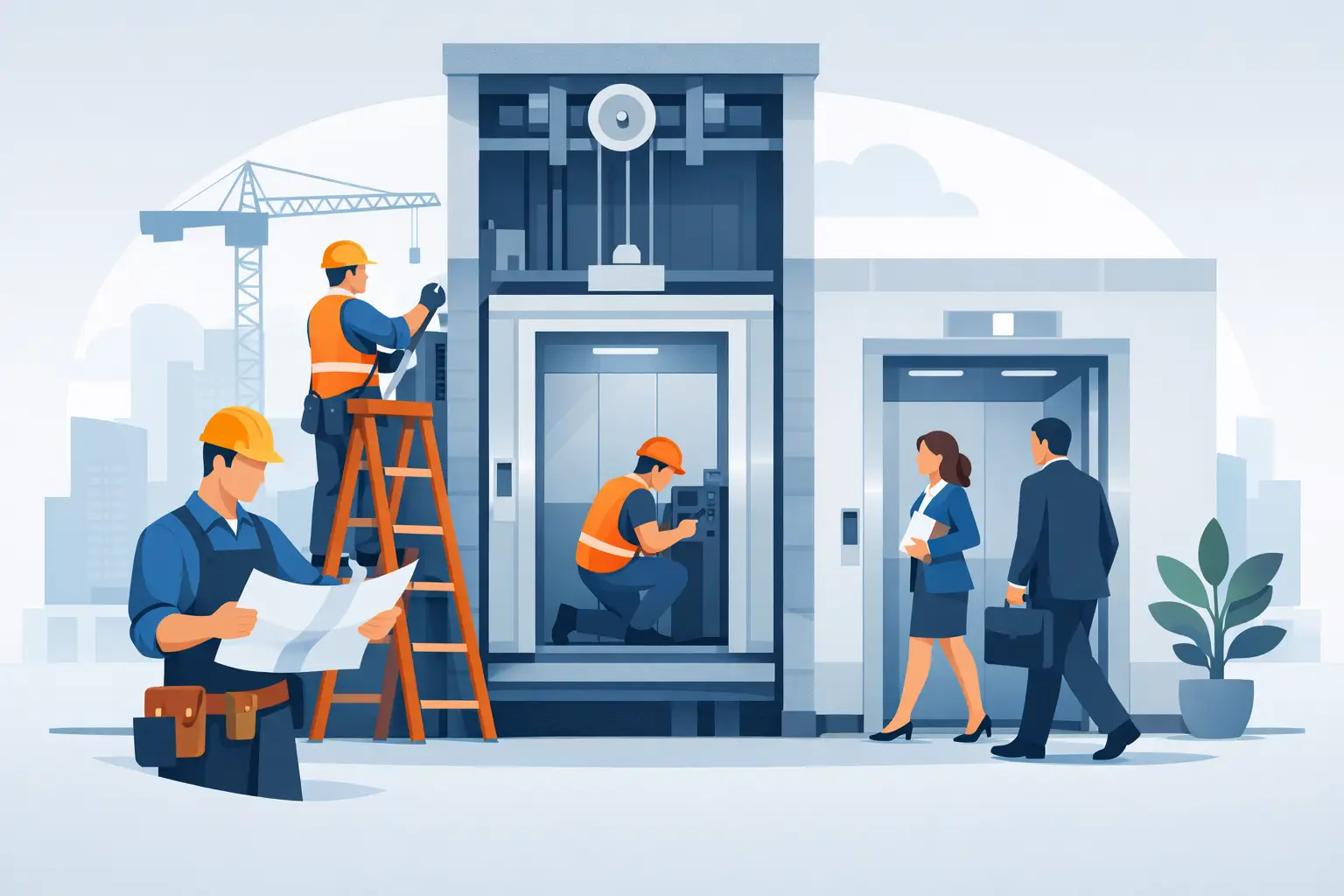
How Long Does It Take to Install a Commercial Elevator?
If you are planning a new build, fitout or major upgrade, one of the first questions is usually how long does it take to install a commercial lift. The honest answer is that installation itself is only one part of the program. On most projects, the full timeline includes design, approvals, manufacturing, site readiness, installation, testing and handover.
For property owners, builders and facility managers, that distinction matters. A lift might be on site for only a few weeks, but the end-to-end process can run for several months depending on the building, the lift type and how prepared the site is when the installation team arrives.
How long does it take to install a commercial lift on average?
For a standard commercial elevator in a straightforward building, the on-site installation phase often takes around 4 to 8 weeks. That is a useful benchmark, but it is not the whole story.
From initial planning through to commissioning, many commercial lift projects take anywhere from 3 to 9 months. Complex custom systems, high-rise applications, healthcare environments, aged care projects and major refurbishments can take longer, especially where structural changes or staged works are involved.
A simple passenger lift in a low-rise office or retail site will generally move faster than a bespoke solution in an occupied building. If you are replacing an old lift, the timeline can also shift depending on demolition requirements, existing shaft conditions and how much of the original infrastructure can be retained.
The stages that shape the timeline
Design and specification
Before any equipment is manufactured or installed, the lift needs to be properly specified. That includes travel distance, load rating, car size, finishes, door configuration, compliance requirements and how the lift will be used day to day.
This stage can take a couple of weeks on a simple project or much longer where consultants, architects, certifiers and multiple stakeholders are involved. Delays here often flow through the whole program, especially if key decisions about shaft size, power supply or traffic requirements are left too late.
Approvals and coordination
Commercial elevator projects rarely sit in isolation. They need to align with structural works, electrical rough-in, fire services, access compliance and builder sequencing. Depending on the project, approvals and coordination may include building approvals, engineering review and site-specific compliance checks.
If the lift is part of a new development, this phase is usually absorbed into the broader construction timeline. On retrofit projects, it can add time if the building needs modification before installation can begin.
Manufacturing and delivery
Once the design is signed off, equipment is manufactured. For pre-engineered lifts, lead times are typically shorter. For custom commercial elevators, lead times can be significantly longer because components are built to suit the site and specification.
This stage often runs from 8 to 16 weeks, sometimes more. Imported components, specialist finishes and supply chain pressure can all affect delivery dates. That is why realistic planning matters from the outset.
Site preparation
A lift cannot be installed properly if the shaft, pit, machine space and power supply are not ready. Site preparation is one of the biggest reasons projects drift.
The shaft must be built to correct dimensions and tolerances. Pit waterproofing, structural openings, supports, lighting, access and temporary site conditions all need to be in place. If the installer arrives and the builder still has unresolved works, installation slows down quickly.
Installation, testing and commissioning
This is the stage most people think of when they ask how long does it take to install a commercial elevator. Once the site is ready and equipment is delivered, the team installs guide rails, doors, machinery, controls, cab interiors and safety systems. After that comes testing, adjustment, certification and final handover.
In a standard low-rise commercial application, this may take 4 to 8 weeks. More complex systems or restricted sites can extend beyond that. Commissioning should never be rushed. Safety, ride quality and reliable operation depend on proper testing before the lift goes into service.
What can make a commercial elevator installation take longer?
The biggest variable is complexity. A two-stop passenger lift in a new building is very different from a six-stop hospital lift in an operating facility.
Building height plays a role because more floors usually mean more shaft work, more landing entrances and more wiring. Lift type also matters. Passenger lifts, goods lifts, service lifts and accessibility-focused systems all have different installation requirements.
Occupied buildings add another layer. If tenants, staff, patients or residents remain on site, work may need to be staged around trading hours, school operations, clinical services or aged care routines. That can be the right approach for business continuity, but it often extends the timeline.
Custom finishes can add time too. If the car interior needs particular wall panels, flooring, lighting or touch-free controls, those selections need to be locked in early. Last-minute changes create manufacturing and programming delays.
Then there is the condition of the site itself. Uneven shafts, incomplete builder works, access constraints, wet weather impacts and unresolved electrical issues can all slow progress. In replacement projects, hidden defects in the existing shaft or structure are common causes of delay.
New installation vs replacement timeline
A new installation in a new build can be easier to program because the lift works are built into the construction sequence. The challenge is coordination. If other trades run late, the lift installer often inherits those delays.
A replacement project has a different profile. In some cases, parts of the existing system can be reused, which may shorten the scope. In others, the old lift must be fully removed and the shaft upgraded before new equipment can go in.
For building owners, the key issue is downtime. If there is only one lift on site, replacement works need careful planning to manage accessibility, tenant movement and service continuity. The installation window may not be longer than a new build, but the operational impact is often greater.
How to keep the project on schedule
The best way to reduce delays is to involve your lift provider early. Early planning helps identify shaft requirements, power needs, compliance issues and realistic lead times before they become expensive problems.
It also helps to finalise specifications early. Changes to size, finish or performance after sign-off can affect manufacturing and push out the installation date. Clear communication between the builder, electrician, consultant and lift contractor is just as important. Most delays are not caused by one major failure. They come from small coordination gaps that build up across the project.
Site readiness should be checked well before delivery. A pre-installation review can confirm whether the shaft, pit, openings, supports and power supply are actually ready for works to begin. That is often the difference between a smooth program and repeated stop-start activity on site.
Working with a provider that handles installation, testing, handover and ongoing service also makes the process more controlled. At Skyrise Elevators, that whole-of-lifecycle approach helps clients avoid handover gaps and plan with more confidence.
A realistic timeframe matters more than a fast promise
When clients ask for a timeline, it is tempting for contractors to give the shortest possible answer. In practice, a realistic program is far more valuable than an optimistic one.
If a commercial lift is critical to practical completion, access compliance or tenancy commencement, your build program should allow for the full chain of works, not just the day the equipment lands on site. Rushed planning usually leads to delays, extra costs and avoidable pressure at the end of the project.
A dependable installer will explain what is included, what needs to happen before installation starts and where the risks sit. That gives owners and project teams a clearer path forward and helps protect programme certainty.
If you are budgeting or scheduling a project now, treat the lift as a core building system rather than a late-stage add-on. The earlier the planning starts, the easier it is to keep installation moving, reduce downtime and get the lift into service when the building actually needs it.
The right question is not just how fast a commercial elevator can be installed. It is how to get it delivered safely, correctly and with the least disruption to your project and the people who rely on the building.