


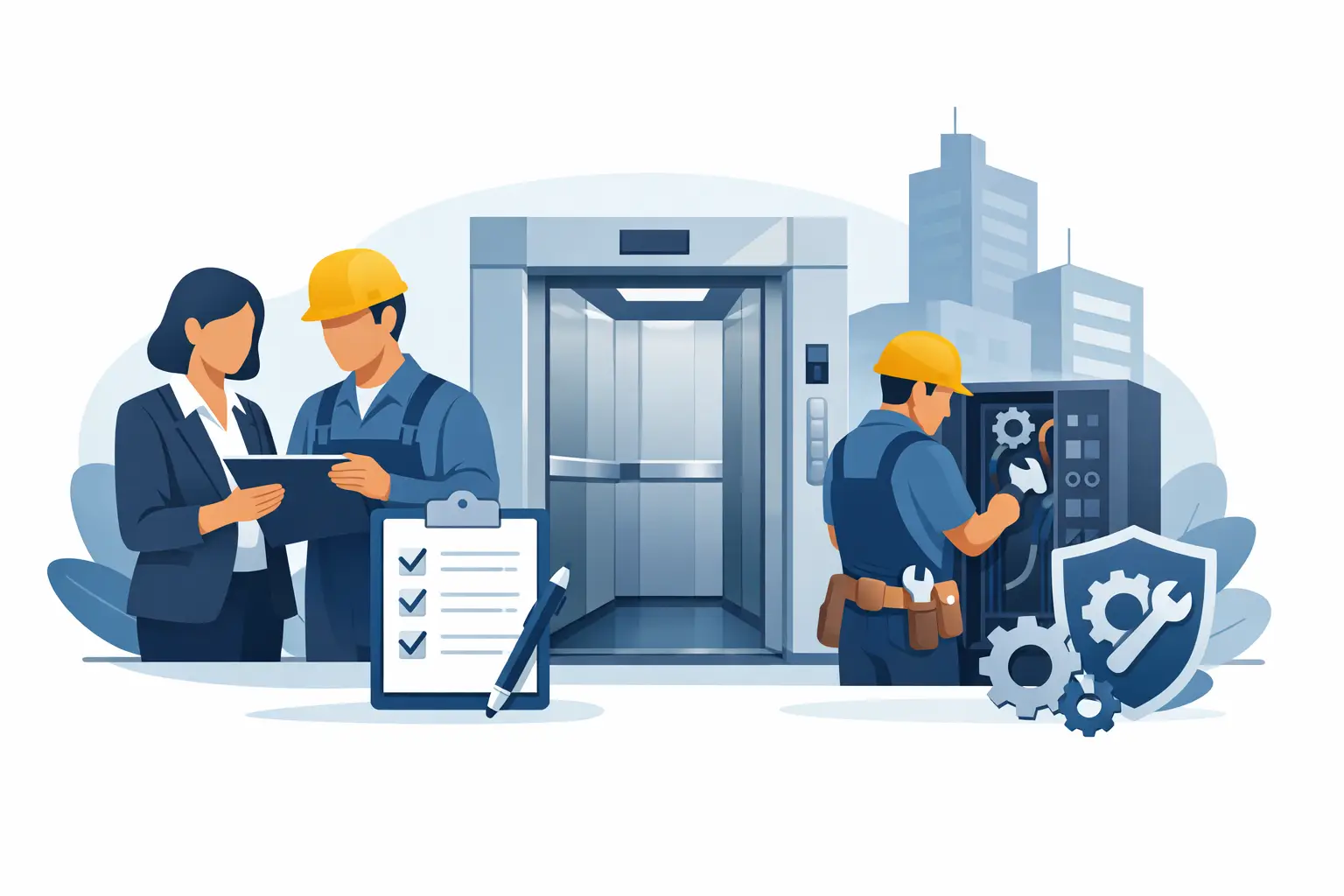
Commercial Lift Maintenance Contract Guide
A lift fault at 8:30 on a Monday morning does more than interrupt traffic. In an office tower, it affects tenant movement. In a retail site, it changes customer flow. In a hospital, aged care facility or industrial building, it can create a genuine operational risk. That is why a commercial lift maintenance contract is not just a service agreement. It is part of how a building stays safe, compliant and functional.
For owners, strata committees, facility managers and developers, the challenge is usually not whether maintenance is needed. It is choosing the right level of cover. Contracts can look similar on the surface, yet the difference between a well-structured agreement and a bare-minimum one often shows up when a lift is out of service, parts are delayed, or call-outs start mounting.
What a commercial lift maintenance contract actually covers
A commercial lift maintenance contract sets out how a lift or group of lifts will be serviced over time. At its core, it should define inspection frequency, preventive maintenance tasks, testing requirements, response arrangements and what is included or excluded when faults occur.
In practical terms, the contract should support more than basic servicing. It should help reduce breakdowns, identify wear before failure, maintain safe operation and give building stakeholders a clear path when issues need attention. For a busy commercial property, this matters because reactive repairs alone are expensive, disruptive and difficult to plan around.
The right contract usually includes scheduled visits by approved technicians, testing of safety components, adjustment of mechanical and electrical systems, lubrication where required, cleaning of critical components, and reporting on lift condition. It may also include emergency call-out attendance, minor repairs, and recommendations for parts replacement or future modernisation.
Not every building needs the same arrangement. A single low-rise passenger lift in a small office building will not need the same level of support as multiple lifts in a mixed-use development with high daily traffic. Usage, age, lift type and site risk all influence what good maintenance looks like.
Why contract scope matters more than headline price
A low monthly fee can look attractive during procurement. The issue is that lower-cost contracts often reduce the frequency of visits, limit call-out coverage or exclude key components and consumables. That may save money on paper, but it can lead to more unplanned repairs and longer downtime over the life of the agreement.
This is where many commercial clients get caught. Two contracts may both be described as maintenance, but one may focus on preventive servicing while the other is closer to an inspection-only arrangement with repairs charged separately. Neither model is automatically wrong. It depends on the building, budget and risk tolerance. What matters is understanding what you are buying.
A stronger contract usually gives greater predictability. That does not mean every repair is included. Major parts, vandalism, water damage, power supply issues and works caused by obsolete equipment are often treated separately. Even so, a quality agreement should make those boundaries clear and avoid vague wording that shifts too much uncertainty back onto the client.
Key inclusions to look for in a commercial lift maintenance contract
When reviewing a commercial lift maintenance contract, the best place to start is with site realities rather than generic package names. How many passengers use the lift each day? Is the building open after hours? Does the lift support goods movement, patient transport or accessibility access? Is downtime merely inconvenient, or does it materially affect business operations?
From there, the contract should align with the equipment and the building. Scheduled preventive maintenance is the foundation, but response times are nearly as important. A facility manager needs to know how quickly a trapped passenger call will be answered, what happens for non-entrapment faults, and whether after-hours attendance is covered.
Reporting also deserves close attention. Service records should be easy to understand and useful for decision-making. If a contractor repeatedly notes worn door gear, levelling issues or controller faults, that reporting should help the client plan repairs before they turn into repeated breakdowns. A contract without meaningful reporting can leave building owners paying for visits without gaining visibility.
Parts management is another area where detail matters. Some agreements include minor parts and consumables, while others treat every component as chargeable. There is no single right structure, but clients should know whether commonly replaced items are covered and whether the contractor has a practical process for sourcing parts for older or less common equipment.
Common contract models and when they suit
Most commercial lift maintenance contracts sit somewhere between basic preventive maintenance and more comprehensive service coverage. A basic arrangement generally suits newer lifts with reliable equipment, lower traffic and minimal operational risk from short outages. It keeps servicing in place while allowing the owner to pay separately for repairs as needed.
A more comprehensive contract tends to suit buildings where uptime is critical or equipment is ageing. In these cases, greater inclusion can help stabilise maintenance costs and speed up fault response. It also reduces the friction that comes from seeking separate approvals for every minor repair.
There is a trade-off. Broader cover costs more upfront, and if the lift is new and performing well, that extra spend may not always deliver immediate value. On the other hand, a stripped-back contract on an older high-use lift can become a false economy very quickly. The best fit comes from matching service level to asset condition and operational dependency.
How lift age and building type affect the contract
Older lifts generally need more hands-on maintenance. Components may be worn, tolerances tighter, and parts harder to obtain. A contract for ageing equipment should acknowledge that reality. If the system is showing signs of obsolescence, the maintenance provider should be honest about the limits of servicing alone and flag where modernisation may be the more economical path.
Building type also changes priorities. In a retail centre, passenger flow and presentation matter. In aged care and healthcare environments, ride reliability and accessibility are critical. In industrial settings, goods lifts may face heavier wear and more demanding operating conditions. The contract should reflect those differences rather than forcing every site into the same service model.
This is one reason many clients prefer a provider that understands installation, repairs, modernisation and replacement as part of the full lift lifecycle. A contractor with that broader capability can usually give more practical advice when maintenance stops being the best long-term answer.
Questions to ask before signing
Before committing to a provider, ask how often the lift will be serviced and what is done during each visit. Ask what response times apply during business hours and after hours, and whether those timeframes are guaranteed or simply targeted. Ask which repairs are included, which parts are excluded, and how quotations are handled when extra works are needed.
It is also worth asking who will carry out the work. Consistency matters. Technicians who know the site and equipment can diagnose patterns faster than a rotating roster with limited history. Communication matters too. A good maintenance partner explains faults clearly, documents recommendations properly and helps clients make decisions based on risk, not guesswork.
If the building has recurring problems, ask for a realistic view of why. Repeated door faults, nuisance shutdowns or levelling issues usually have an underlying cause. A contract should support proper diagnosis, not just repeated resets.
Choosing a maintenance partner, not just a contractor
The strongest maintenance relationships are built on responsiveness, technical competence and clear advice. Price is always part of the decision, but it should not be the only one. In lift maintenance, the cheapest contract is rarely the cheapest outcome if reliability suffers.
A provider should be able to assess the equipment, explain the most suitable maintenance structure and support the lift through its operating life. That may mean routine servicing today, targeted repairs next year and a modernisation plan later on. For commercial property owners and managers, that continuity is valuable because it reduces risk and improves planning.
At Skyrise Elevators, that practical approach is central to how maintenance is delivered across commercial, residential and industrial buildings. The goal is straightforward – keep lifts safe, reliable and running with minimal disruption.
A commercial lift maintenance contract works best when it reflects the reality of the building, not just the wording of a brochure. If the agreement is clear, the service is consistent and the advice is honest, you are far more likely to keep people moving and avoid the kind of downtime that costs more than the contract ever will.