


Hydraulic vs Traction Elevator: Which Fits?
If you are weighing up a hydraulic vs traction elevator decision, the right answer usually comes down to building height, traffic levels, available space and how you plan to maintain the lift over time. On paper, both systems move people and goods safely between floors. In practice, they suit very different buildings and operating demands.
For property owners, builders and facility managers, that choice affects more than installation. It shapes energy use, ride quality, machine space, future modernisation and service requirements for years to come. That is why the best lift decision is rarely about what is cheaper upfront alone.
Hydraulic vs traction elevator: the basic difference
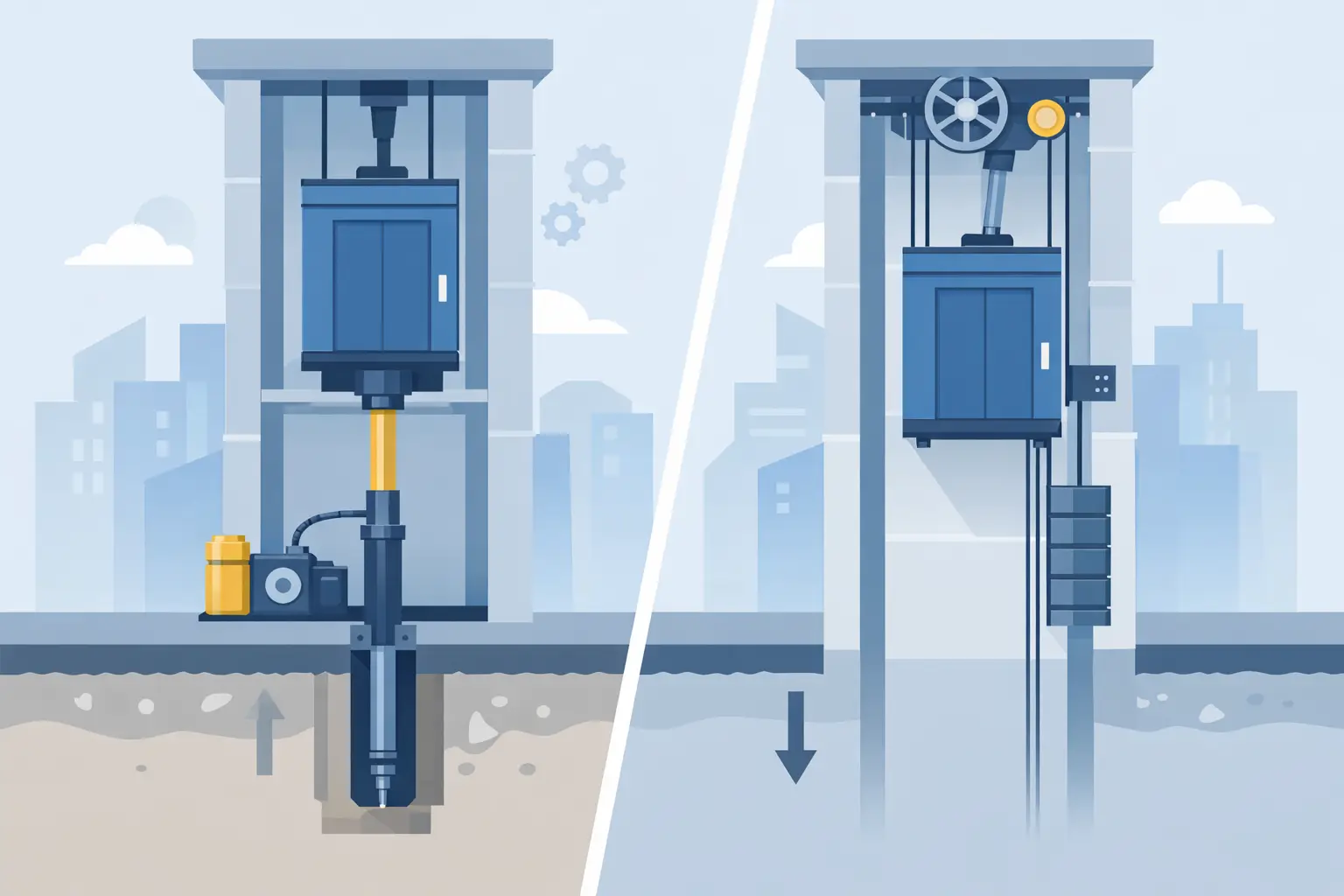
A hydraulic elevator lifts the car using a piston powered by hydraulic fluid. The system usually includes a pump unit, controller and cylinder, with the car pushed upward from below or alongside the shaft depending on the design. These lifts are commonly used in low-rise applications where travel height is modest and floor-to-floor demand is steady rather than intense.
A traction elevator uses ropes or belts, a drive sheave and a motor to move the car. In many configurations, a counterweight balances the car, which helps reduce the effort needed to travel up and down. Traction systems are widely used in commercial buildings and taller properties because they can handle greater travel and more frequent use efficiently.
Both technologies are proven. The better option depends on the building, not just the mechanism.
Where hydraulic lifts usually make sense
Hydraulic lifts are often a practical fit for low-rise residential buildings, small commercial sites and specialist applications where speed is not the top priority. They can be well suited to two to five storeys, especially where the shaft design and plant space can accommodate the equipment comfortably.
One reason some owners prefer hydraulic systems is their straightforward lifting principle. In the right building, they can offer reliable service and a cost-effective initial installation. For home elevators and some low-rise access solutions, hydraulic designs may also be easier to integrate when there is enough room for the required components.
That said, hydraulic systems are not universally simpler in a real project sense. They still need proper design coordination, compliance planning and ongoing maintenance. If a building has tight spatial constraints or long travel distances, the limits become more obvious.
Where traction lifts usually make sense
Traction elevators are often the stronger choice for mid-rise and high-rise buildings, or any property with heavier daily use. Offices, apartment buildings, hotels, aged care facilities, hospitals and education sites commonly benefit from traction systems because they generally provide better speed, smoother ride quality and stronger performance over greater travel heights.
They can also be a good fit for premium residential and mixed-use developments where user experience matters. Tenants and visitors notice how a lift starts, stops and levels at each floor. A modern traction system can deliver a more refined feel, particularly where traffic demand is consistent throughout the day.
For developers planning long-term asset performance, traction technology is often easier to justify when the lift is central to the building’s operation rather than a convenience feature.
Space and building design considerations
Space can decide the hydraulic vs traction elevator question before pricing even enters the conversation. Hydraulic lifts typically require space for a power unit and, depending on design, can involve specific shaft and pit requirements. In some buildings that is manageable. In others, particularly constrained refurbishments, it can be difficult.
Traction elevators may offer more flexibility in certain layouts, especially with machine room-less configurations that reduce the need for a separate plant room. That can free up valuable floor area in commercial developments where every square metre matters.
Retrofitting is where these details become especially important. An older building may have structural limitations, reduced overhead clearance or restrictions around plant placement. In those cases, the best system is the one that can be installed safely and serviced properly without forcing costly building changes elsewhere.
Speed, travel and ride quality
If your building only needs short travel across a few floors, hydraulic performance may be entirely adequate. For a private residence, boutique office or smaller commercial site, the speed difference may not be a deal-breaker.
Once travel height increases or passenger expectations rise, traction usually has the advantage. Traction lifts are generally faster, better suited to repeated starts and stops, and more comfortable over longer vertical runs. In a busy commercial environment, that can reduce waiting times and improve how the building functions day to day.
Ride quality is not only about comfort. It also affects perceived building quality. In tenant-facing properties, smoother travel and accurate levelling help support accessibility, user confidence and a more professional overall experience.
Energy use and operating efficiency
Operating efficiency matters more than many buyers expect. A lift runs for years, and even small differences in energy performance can add up.
Hydraulic elevators often use more power on the upward journey because the pump has to push the car. Downward travel may require less energy, but the overall profile can be less efficient than traction in many applications. This is one reason hydraulic systems are less common in taller or heavily used buildings.
Traction elevators, particularly modern systems with efficient drives and controls, often deliver better energy performance over time. The counterweight helps reduce demand on the motor, and newer technology can improve standby consumption and travel efficiency.
For owners managing operational costs across a portfolio, that longer-term efficiency should be considered alongside the initial capital outlay.
Maintenance and lifecycle planning
No elevator is maintenance-free. The better question is what kind of maintenance profile fits your building and response expectations.
Hydraulic lifts require routine attention to components such as the pump unit, valves, seals and fluid system. Over time, wear in these areas can affect performance. Maintenance planning should also account for the environment, usage pattern and age of the equipment.
Traction lifts have their own service demands, including ropes or belts, sheaves, drives, door equipment and control systems. They can be technically sophisticated, which is an advantage when designed and maintained properly, but only if servicing is carried out by qualified technicians with access to the right parts and diagnostic support.
For most property owners, the real issue is not whether one system has maintenance and the other does not. It is whether the lift can be supported consistently, inspected correctly and repaired quickly when required. A dependable maintenance partner matters as much as the equipment choice itself.
Upfront cost versus long-term value
Hydraulic lifts can be attractive on upfront cost in certain low-rise projects. If the building is small, usage is moderate and structural conditions are favourable, a hydraulic solution may present a practical entry point.
But lowest purchase price should not be confused with best value. If a building will see frequent use, requires faster travel or may need to meet rising tenant expectations over time, traction can deliver stronger long-term value despite the higher initial spend.
This is especially relevant in commercial and mixed-use properties where lift downtime affects operations, tenant satisfaction and building reputation. In those settings, performance and serviceability often matter more than modest savings at the start.
Which system suits different building types?
For private homes and low-rise residential buildings, either option can work depending on space, budget and accessibility goals. Hydraulic may suit straightforward low-rise access, while traction can appeal where quiet operation, compact design or a more premium ride is preferred.
For apartment buildings, offices and retail sites, traction is often the more suitable choice once traffic increases and travel height extends. In hospitals, aged care and education settings, reliability, ride comfort and consistent performance are critical, which often points toward traction, though the final specification depends on layout and usage.
For industrial or service applications, the choice may depend on load requirements, shaft constraints and duty cycle more than passenger comfort. In these cases, a site assessment is essential rather than relying on a generic rule.
The best way to decide
A good lift decision starts with the building, not the brochure. Travel height, passenger numbers, shaft size, pit depth, headroom, intended use, compliance needs and maintenance access all need to be considered together.
That is why experienced guidance matters. A lift that looks suitable in principle can become the wrong fit if it creates avoidable construction changes, service challenges or performance compromises later on. Skyrise Elevators works with property owners, builders and facility managers to assess these details early, so the selected system supports both the project and the building’s long-term operation.
If you are comparing a hydraulic vs traction elevator, the strongest option is the one that keeps people moving safely, suits the way your building actually works and remains dependable well after handover.