


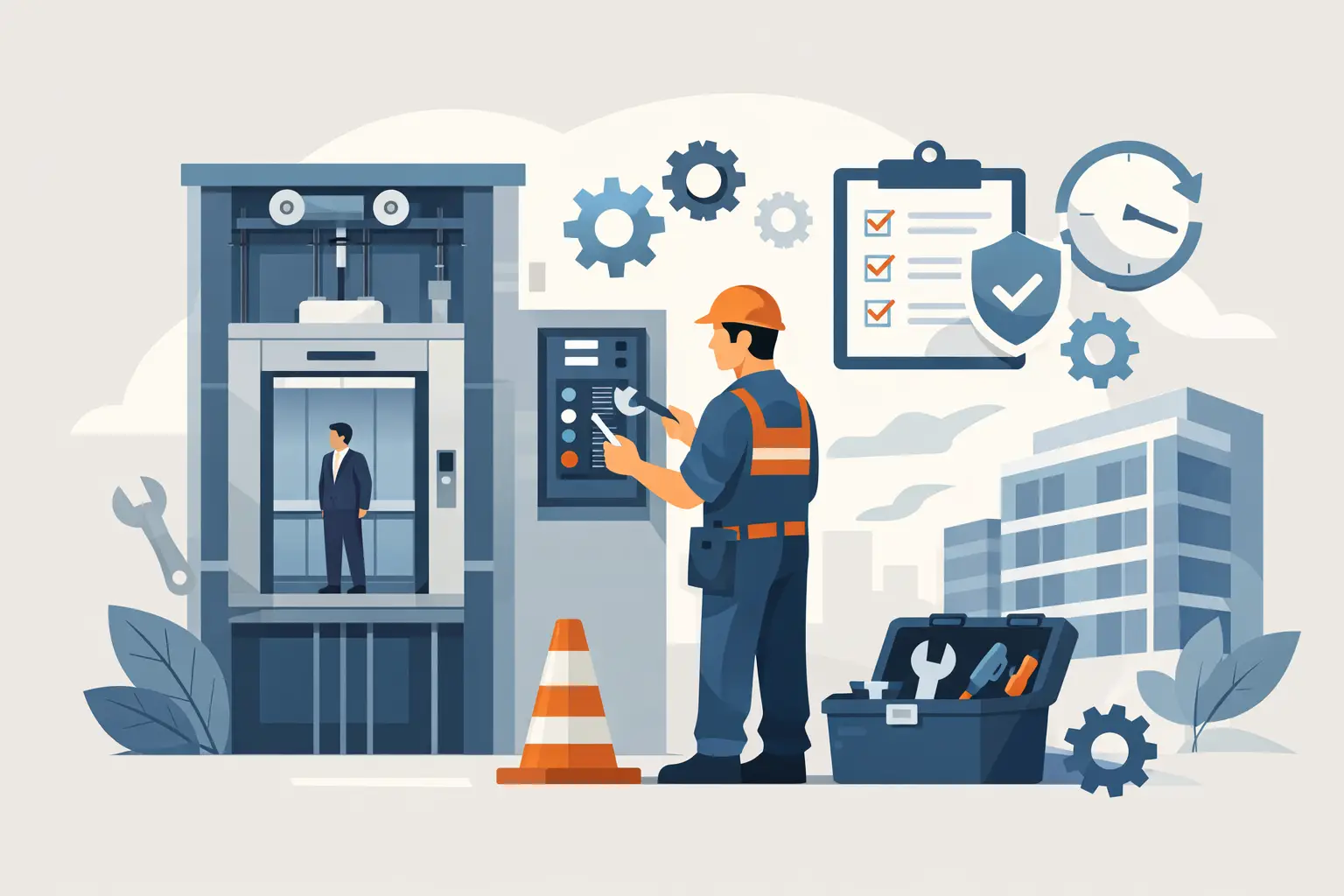
Why Choose Elevator Preventive Maintenance
A lift that stops without warning rarely does so out of nowhere. In most cases, there were earlier signs – slower door operation, unusual noises, intermittent faults, worn components or service patterns that pointed to trouble ahead. That is exactly why choose lift preventive maintenance is such a practical question for owners, facility managers and developers. It is not just about avoiding inconvenience. It is about protecting people, controlling costs and keeping a building operating as it should.
For any property with regular lift traffic, reactive service alone is a risky way to manage vertical transport. Waiting until something fails can lead to avoidable downtime, unhappy tenants, disrupted operations and larger repair bills. Preventive maintenance takes a more disciplined approach. It focuses on scheduled inspections, adjustments, testing and component care before faults turn into breakdowns.
Why choose lift preventive maintenance instead of reactive repairs
Reactive repairs have their place. When a lift fails, you need a qualified technician to attend promptly and restore service. But relying on repairs alone means the lift is effectively dictating your maintenance schedule. That usually results in more disruption and less control.
Preventive maintenance shifts the focus from emergency response to planned reliability. Technicians inspect mechanical and electrical systems, monitor wear, clean key components, test safety functions and address minor issues early. A loose connection, a misaligned door operator or a worn roller may be relatively simple to rectify during a scheduled visit. Left alone, the same issue can lead to a shutdown, trapped passengers or damage to related components.
For buildings where uptime matters – including apartments, medical facilities, retail sites, schools, warehouses and aged care environments – that difference is significant. A lift is not a luxury in these settings. It is part of the building’s day-to-day function.
Safety is the first reason to choose lift preventive maintenance
Every lift contains systems that must work together consistently and safely. Doors need to open and close correctly. Levelling needs to remain accurate. Emergency communication systems must function when required. Braking, signalling and control systems all need regular attention.
Preventive maintenance helps reduce the chance of faults affecting passenger safety. It also supports early identification of worn parts, irregular performance and compliance concerns. For building owners and managers, this matters on two levels. First, there is a clear duty to provide safe access within the property. Second, there is the reputational and operational cost when a lift becomes unreliable or unsafe.
Safety also depends on context. A low-use residential lift may not require the same service pattern as a busy commercial passenger lift or a goods lift in an industrial setting. That is why a structured maintenance program should reflect the equipment type, age, usage and environment rather than apply the same schedule to every site.
Heavy use changes the maintenance picture
High-traffic lifts experience more door cycles, more start-stop movement and more wear on critical components. Dust, moisture, temperature changes and building conditions can also affect performance. In these cases, preventive maintenance is not simply a best practice. It is a necessary part of keeping the equipment dependable.
Downtime costs more than the repair invoice
One of the most common mistakes in lift management is looking only at the direct cost of maintenance. The better question is what an unplanned outage costs your building.
In a commercial property, lift downtime can affect tenant satisfaction, visitor flow and daily operations. In residential buildings, it can create serious access issues for older residents, parents with prams and anyone with mobility challenges. In healthcare, education or aged care settings, a faulty lift can quickly become an operational problem rather than a minor inconvenience. In industrial environments, service interruptions can slow goods movement and staff productivity.
Preventive maintenance helps reduce these disruptions by catching issues earlier and scheduling work in a more controlled way. Planned service visits are easier to manage than emergency call-outs, especially when multiple stakeholders rely on the lift every day.
Preventive maintenance often lowers whole-of-life costs
Some owners hesitate at the idea of ongoing scheduled maintenance because they see it as an added expense. In reality, it often protects against larger and less predictable costs later.
When a lift runs with poor adjustment, dirty components or worn parts, strain can spread through the system. A small fault can cause secondary damage. For example, door issues may affect controllers, operators or safety systems over time. Poor ride performance may point to parts that are beginning to fail under extra load. Addressing these issues early is usually more economical than paying for major repairs after a shutdown.
There is also the matter of asset life. A lift is a long-term investment. Regular maintenance helps preserve performance and can delay the need for premature modernisation or replacement. That does not mean maintenance eliminates future capital work. Older equipment will still age, parts availability may become an issue, and some systems eventually need upgrading. But a well-maintained lift generally gives owners more options and better timing when those decisions arise.
Compliance and record keeping matter
Lift owners and managers are expected to take safety and service obligations seriously. Preventive maintenance supports that responsibility with regular inspections, documented service activity and a clearer picture of equipment condition over time.
This is especially important in multi-tenant, public-access and regulated environments, where maintenance records may form part of broader risk management and compliance processes. If a recurring issue appears, service history helps identify patterns. If equipment performance changes, records can guide repair or upgrade decisions.
A proper maintenance program is not just about ticking a box. It creates a more defensible and organised approach to asset management.
Not all maintenance programs are equal
The phrase preventive maintenance can sound straightforward, but the quality of service depends on what is actually being delivered. A meaningful program should include routine inspection, testing, adjustments, cleaning, lubrication where required, and clear reporting on component condition. It should also be carried out by approved technicians who understand the specific lift system on site.
For owners with mixed equipment across a portfolio, consistency matters. A provider with experience across residential, commercial and industrial lift applications can better align maintenance planning with actual building needs.
Why choose lift preventive maintenance for tenant experience
People notice when a lift feels unreliable, even before it stops working. Jerky travel, noisy doors, poor levelling and repeated minor faults all affect confidence in the building. For tenants, residents, visitors and staff, lift performance forms part of the overall experience of the property.
That has a direct impact on perception. In premium residential developments, office buildings, shopping centres and accommodation settings, unreliable lifts can undermine the impression of the asset as a whole. Preventive maintenance helps keep service consistent, which supports both user confidence and property presentation.
For developers and builders, there is also a lifecycle consideration. A lift provider that understands installation, maintenance, repairs and modernisation can offer more continuity after handover. That tends to produce better long-term outcomes than treating the lift as a one-off construction item.
The best approach is tailored, not generic
There is no single maintenance schedule that suits every lift. A home lift in a private residence has different demands from a passenger lift in a busy mixed-use tower. A goods lift in a warehouse will have its own operating profile, wear patterns and service priorities.
That is why maintenance planning should account for traffic levels, building type, equipment age, manufacturer requirements and site conditions. Some buildings need more frequent attendance. Others may benefit from targeted monitoring and planned parts replacement. The point is to match the program to the real operating environment.
A capable maintenance partner should be able to explain what your lift needs, what can wait, what should be addressed now and where future capital planning may be required. That kind of advice helps owners make practical decisions rather than react under pressure.
Skyrise Elevators works with clients across residential, commercial and industrial properties where reliability, safety and responsive service are essential. In each case, the value of preventive maintenance comes back to the same outcome – fewer surprises and better lift performance over time.
If your lift is central to how people move through the building, preventive maintenance is not extra. It is part of looking after the asset properly, before a small issue turns into a larger one.