


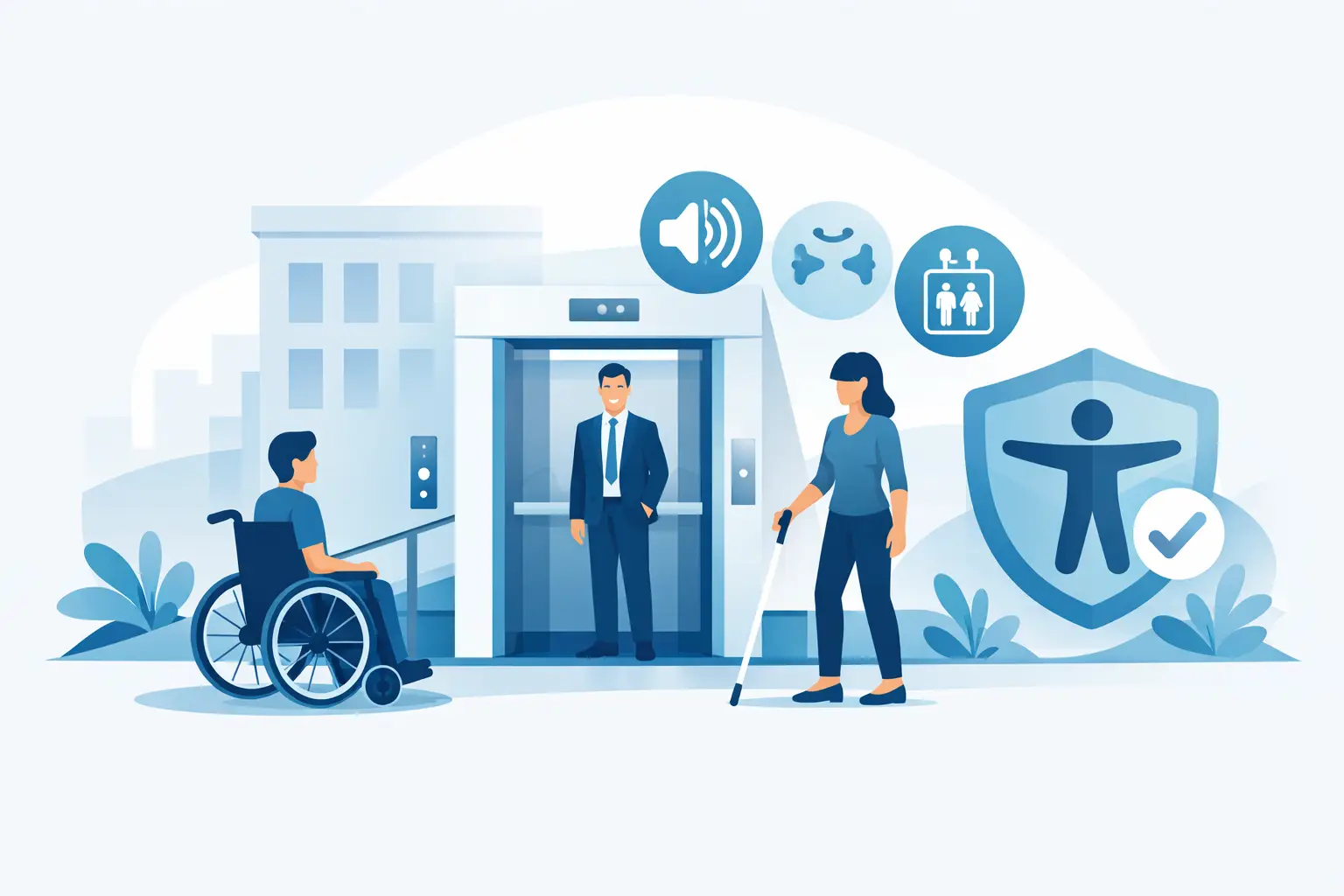
Accessibility Lift Compliance Guide for Buildings
A lift that looks right on the plans can still create problems at handover if the details miss accessibility requirements. That is why an accessibility lift compliance guide matters early – not after installation, not after a complaint, and not when a certifier asks for changes that affect cost, time and building access.
For property owners, builders and facility managers, compliance is not just about getting a lift into the building. It is about making sure people can use it safely, comfortably and without unnecessary barriers. In practical terms, that means the lift type, car size, controls, door operation, landing access, signage, communication systems and ongoing maintenance all need to support lawful and reliable access.
What an accessibility lift compliance guide should cover
A useful accessibility lift compliance guide should do more than list technical rules. It should help you make sound decisions at design stage, during construction and across the life of the equipment.
In Australia, lift compliance usually sits across several layers. The National Construction Code sets key building requirements, while Australian Standards cover design, installation, operation and maintenance. Depending on the project, state or local authority requirements may also apply. Aged care, healthcare, education and public-facing commercial sites can bring extra scrutiny because access failures affect higher volumes of people and more vulnerable users.
The main point is simple: compliance is not one checkbox. It is a combination of building access, equipment suitability and continued safe operation.
Start with the right lift for the building
One of the most common mistakes is choosing a lift based on footprint or budget alone. That can lead to a unit that technically travels between levels but does not provide appropriate accessibility in real-world use.
For example, a private residence may suit a home lift designed for mobility support and future ageing in place. A retail tenancy, medical practice or mixed-use development has a different duty. Traffic levels, stretcher access, wheelchair turning space, entry width, call button height and emergency communication all need more careful consideration.
This is where project context matters. A compact platform lift may suit certain low-rise applications, but it will not always meet the expectations or practical demands of a larger public or commercial environment. Likewise, a standard passenger lift may be the better long-term solution even if the initial outlay is higher, because it reduces user limitations and supports future tenancy needs.
Key compliance areas that often cause delays
Accessibility issues rarely come from one major error. More often, delays happen because several small details were treated as minor when they were not.
Lift car size and clearances
The car needs to accommodate intended users, including wheelchair users and people with walking aids. Turning space, door entry position and internal layout all affect usability. A lift that feels tight or awkward may create access problems even if the installation is otherwise well finished.
Door width and opening configuration
Clear opening width is critical. Narrow door openings can restrict access for wheelchairs, prams, service trolleys and mobility equipment. Automatic door performance also matters. If dwell times are too short or sensors are poorly set, the lift may be frustrating or unsafe to use.
Landing access and approach
A compliant lift can still be difficult to reach if the landing approach is poorly designed. Floor levels, circulation space, corridor widths and thresholds should work together. There is little value in an accessible lift if the path to the door creates a barrier.
Controls, indicators and communication
Buttons, braille, tactile markings, audible announcements, visual floor indicators and emergency communication systems all form part of accessible use. These features should be considered standard compliance items, not optional extras. They are especially important in healthcare, aged care, education and public buildings where users may have vision, hearing or mobility limitations.
Emergency systems and reliability
Accessibility is also about what happens when things go wrong. If a lift stops unexpectedly, users need a reliable means of communication and prompt support. That is why compliance and maintenance are closely linked. An installed lift is only part of the job. Ongoing servicing is what helps keep the system safe and available.
New builds and existing buildings are not the same
Compliance decisions are often more straightforward in a new development because the shaft, access path and structural allowances can be designed around the lift. In existing buildings, the challenge is usually space.
Retrofit projects often involve tight shafts, limited headroom, constrained pit depth or difficult landing arrangements. In these cases, the best outcome is rarely achieved by forcing a standard solution into a non-standard space. It takes proper site review, measured planning and a realistic understanding of what can be upgraded without creating a new compliance issue elsewhere.
There can also be trade-offs. A building owner may want the smallest possible lift to preserve lettable area, while the access requirement points to a larger car or different door configuration. A heritage building may limit structural changes. A strata property may need to balance resident access needs against installation disruption. These are not unusual problems, but they need to be resolved early.
Why maintenance is part of compliance
A lift does not stay compliant just because it passed inspection on day one. Wear, faults, poor adjustments and delayed repairs can all affect safe and accessible operation over time.
Doors that close too quickly, inaccurate levelling, failed indicators, non-functioning intercoms and damaged buttons are all examples of maintenance issues that can become access issues. For facility managers, this is where compliance shifts from capital project thinking to operational discipline.
Regular servicing by approved technicians helps identify problems before they affect users or create downtime. It also provides a clearer maintenance record, which is valuable when audits, incident reviews or major refurbishments arise. For high-use buildings, structured maintenance is not only good practice – it protects performance, tenant confidence and day-to-day accessibility.
Accessibility lift compliance guide for project planning
If you are using an accessibility lift compliance guide during planning, the best time to act is before equipment is specified and before drawings are locked in. Once the shaft dimensions, entry orientation and surrounding circulation are fixed, your options narrow quickly.
A practical planning process starts with who will use the lift, how often, and in what type of building. From there, the right lift category, size and feature set can be matched to the application. That should then be checked against code requirements, certifier expectations and site constraints.
This process is particularly important for developers and builders trying to avoid redesign costs. It is also important for owners upgrading older properties where there is pressure to improve accessibility without major structural work. Early technical advice can prevent expensive compromises later.
Questions worth asking before you proceed
Before moving ahead with any accessibility-focused lift project, ask whether the selected lift genuinely suits the building use, whether the access path is compliant as well as the lift itself, and whether maintenance support has been factored in from the start.
It is also worth asking who will service the lift after installation, how quickly faults can be attended to, and whether parts and technical support will remain available over time. A lift that meets the drawings but becomes difficult to maintain is not a strong long-term solution.
For commercial sites, there is another practical question: what does downtime cost? If the lift is central to customer access, tenant movement or compliance obligations, responsive service support matters just as much as the original specification.
Getting compliance right without overcomplicating it
Accessibility compliance does not need to become a drawn-out technical exercise, but it does need proper attention. The safest path is to treat lift access as a whole-of-building issue rather than a standalone product decision.
That means looking at building type, user needs, code obligations, fit-for-purpose design and service support together. It also means being realistic about limitations in retrofit environments and choosing solutions that work in practice, not only on paper.
For many projects, the difference between a smooth approval process and a costly redesign comes down to timing. Get the right advice early, specify the right lift for the application, and keep maintenance standards high after handover. That approach supports safer access, fewer disruptions and better long-term value for the building.
If you are planning a new installation or upgrading an older property, the smartest next step is not guessing what might pass – it is getting a clear view of what will actually perform, comply and keep people moving with confidence.