


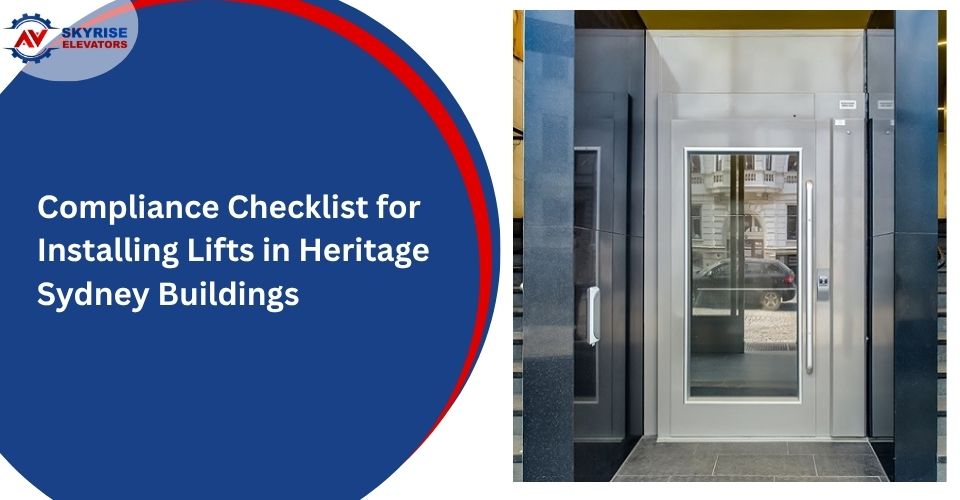
Compliance Checklist for Installing Lifts in Heritage Sydney Buildings
Heritage buildings are an important part of Sydney’s architectural and cultural identity. From historic commercial properties and apartment buildings to restored public facilities and heritage-listed residences, these structures preserve the city’s history while continuing to serve modern needs.
However, as accessibility expectations and building requirements evolve, many property owners are exploring new elevator installation services Sydney to improve access and usability. Installing a lift in a heritage building presents unique challenges because modern accessibility requirements must be balanced with heritage preservation obligations.
Working with an experienced home elevator company Sydney can help property owners navigate these complexities while ensuring compliance with relevant regulations and heritage guidelines. At Skyrise Elevators, we understand the technical, legal, and design considerations involved in integrating modern lift systems into historically significant buildings.
Why Heritage Lift Installations Require Special Planning
Unlike new construction projects, heritage properties often involve restrictions designed to protect architectural features and historical significance.
Installing a lift in these buildings requires careful planning to:
- Preserve original structures
- Maintain heritage character
- Improve accessibility
- Meet building regulations
- Enhance property functionality
- Minimize structural alterations
A successful installation balances modernization with conservation objectives.
Understanding Heritage Building Classifications in Sydney
Before beginning any lift project, property owners must determine the heritage status of the building.
Buildings may be:
- Locally heritage-listed
- State heritage-listed
- Located within heritage conservation areas
- Protected under planning controls
- Subject to special development conditions
The level of protection often influences the approval process and design requirements.
Understanding these classifications early helps avoid delays and compliance issues.
Compliance Checklist for Heritage Lift Installations
Confirm Heritage Status
The first step is determining the building’s heritage designation.
Key actions include:
- Reviewing local planning controls
- Checking heritage registers
- Consulting council records
- Identifying applicable restrictions
- Understanding conservation requirements
This information establishes the framework for the entire project.
Conduct a Heritage Impact Assessment
A Heritage Impact Assessment evaluates how the proposed lift installation may affect the property’s heritage significance.
The assessment typically examines:
- Original architectural features
- Structural elements
- Historic materials
- Visual impacts
- Reversibility of modifications
The report often becomes an essential component of planning applications.
Engage Heritage Consultants Early
Specialist heritage consultants can provide valuable guidance throughout the project.
Benefits include:
- Regulatory expertise
- Design recommendations
- Approval support
- Risk identification
- Preservation strategies
Early consultation often helps prevent costly redesigns later.
Review Local Council Requirements
Different councils may apply varying requirements for heritage developments.
Important considerations include:
- Development application requirements
- Heritage approvals
- Design guidelines
- Documentation standards
- Construction restrictions
Understanding council expectations improves project efficiency.
Accessibility Compliance Requirements
One of the primary reasons for lift installation is improving accessibility.
Projects should evaluate compliance with relevant accessibility standards and building regulations.
Key objectives include:
- Improving access for all users
- Supporting mobility-impaired occupants
- Enhancing building functionality
- Future-proofing the property
Accessibility improvements often increase both usability and property value.
Structural Assessment Checklist
Heritage buildings frequently present structural challenges that modern buildings do not.
A comprehensive structural assessment should evaluate:
Existing Load Capacity
Engineers should determine whether the building can support:
- Lift equipment
- Lift shafts
- Machinery components
- Additional structural loads
Historic structures may require reinforcement before installation.
Foundation Conditions
Foundation assessments help identify:
- Existing stability
- Settlement risks
- Structural limitations
- Required upgrades
Proper analysis reduces future performance issues.
Impact on Original Features
Structural modifications should minimize impacts on:
- Heritage walls
- Decorative ceilings
- Original staircases
- Historic flooring
- Architectural details
Preservation remains a central project objective.
Planning the Lift Location
Choosing the right location is critical for both compliance and functionality.
Factors to evaluate include:
- Accessibility requirements
- Available space
- Structural feasibility
- Heritage impacts
- User convenience
The goal is to achieve accessibility improvements while preserving significant architectural elements.
Minimize Visual Impact
Heritage authorities often prioritize preserving the building’s appearance.
Strategies may include:
- Concealed lift shafts
- Glass lift structures
- Sensitive material selection
- Minimal demolition
- Reversible modifications
A thoughtful design can help modern additions blend with historic surroundings.
Select the Appropriate Lift Type
Different lift systems suit different heritage environments.
Options may include:
Home Elevators
Suitable for:
- Heritage residences
- Boutique properties
- Multi-level homes
Benefits include:
- Compact footprints
- Flexible installation options
- Lower structural impact
Passenger Lifts
Ideal for:
- Commercial buildings
- Public facilities
- Multi-residential properties
They provide greater capacity and accessibility support.
Machine-Room-Less (MRL) Lifts
MRL systems are often advantageous because they:
- Require less space
- Reduce building alterations
- Simplify installation
- Improve energy efficiency
These characteristics make them popular for heritage retrofit projects.
Fire Safety Compliance Checklist
Lift installations must align with fire safety requirements.
Areas to review include:
- Emergency access
- Evacuation procedures
- Fire-resistant materials
- Alarm integration
- Smoke management systems
Compliance helps protect both occupants and the building itself.
Electrical and Mechanical Compliance
Modern lift systems require integration with building infrastructure.
Review:
- Electrical capacity
- Backup systems
- Control systems
- Safety mechanisms
- Maintenance access
Upgrades may be necessary to support new equipment safely.
Documentation Requirements
Successful approval processes depend heavily on documentation.
Common requirements include:
- Architectural drawings
- Engineering reports
- Heritage assessments
- Planning submissions
- Compliance certifications
- Construction specifications
Accurate documentation supports smoother project approvals.
Construction Management Considerations
Heritage projects often require specialized construction practices.
Important measures include:
- Protecting historic finishes
- Limiting vibration
- Controlling dust
- Preserving original materials
- Monitoring structural impacts
Careful construction management reduces the risk of accidental damage.
Common Challenges During Heritage Lift Installations
Property owners frequently encounter several obstacles.
These may include:
- Limited available space
- Structural constraints
- Heritage approval delays
- Preservation requirements
- Complex engineering solutions
- Budget considerations
Early planning and expert guidance can help address these challenges effectively.
Benefits of Installing a Lift in a Heritage Building
Despite the complexity involved, lift installations provide significant advantages.
Benefits include:
- Improved accessibility
- Increased property usability
- Enhanced tenant satisfaction
- Better visitor experience
- Greater long-term functionality
- Increased property appeal
Modern accessibility solutions help heritage buildings remain relevant and useful for future generations.
Choosing an Experienced Lift Installation Partner
Heritage projects require specialized expertise.
When evaluating providers of new elevator installation services Sydney, property owners should consider:
- Heritage project experience
- Engineering capabilities
- Compliance knowledge
- Design flexibility
- Installation expertise
- Ongoing maintenance support
Experience with heritage properties can significantly reduce project risks.
Why Professional Guidance Matters
Installing a lift in a heritage building involves more than simply adding transportation between floors. It requires balancing preservation, accessibility, engineering, and regulatory compliance within a highly sensitive environment.
Professional lift specialists help:
- Navigate approvals
- Develop compliant designs
- Minimize heritage impacts
- Manage installation risks
- Deliver long-term performance
Their expertise can streamline the entire project process.
Final Thoughts
Installing lifts in heritage Sydney buildings requires careful planning, regulatory compliance, and a strong commitment to preserving architectural significance. Property owners must consider heritage restrictions, structural conditions, accessibility requirements, fire safety standards, and long-term functionality throughout the project lifecycle.
By following a comprehensive compliance checklist and partnering with an experienced home elevator company Sydney, building owners can successfully integrate modern accessibility solutions without compromising the historic character of their properties. At Skyrise Elevators, we provide tailored lift solutions that respect heritage values while meeting contemporary accessibility and performance expectations, helping Sydney’s historic buildings remain functional and accessible for generations to come.