


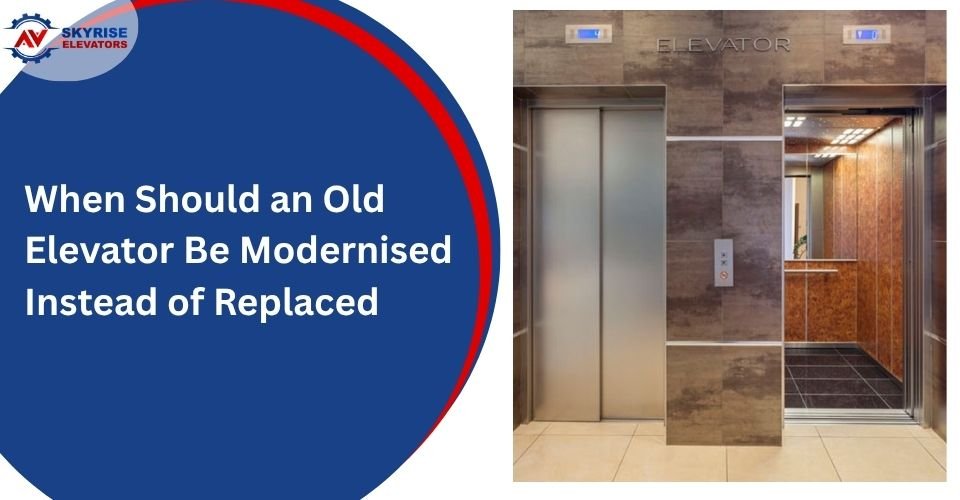
When Should an Old Elevator Be Modernised Instead of Replaced?
Every elevator has a lifespan, and most systems start showing their age after around 15 to 20 years. Frequent breakdowns, rising repair costs, and outdated safety features are all signs that something needs to change.
But that doesn’t always mean a full replacement is necessary. In many cases, modernising your existing system can restore performance, safety, and reliability, without the cost and disruption of tearing everything out.
Let’s walk through exactly when modernisation makes sense, when replacement is the smarter choice, and how to make that decision with confidence.
What Counts as an “Old” Elevator?
An elevator is generally considered old once it passes the 15 to 20 year mark and still relies on original or outdated components. This includes control systems, motors, doors, and safety features designed decades ago.
- Even a nicely updated cab interior can hide an outdated mechanical system underneath
- Older components often no longer meet current safety or energy standards
- Technology inside these systems can be decades behind current building codes
Understanding this baseline helps building owners recognise when it’s time to start evaluating their options.
Understanding Elevator Modernisation
Modernisation means upgrading key components of your existing elevator system, while keeping the core shaft and mechanical structure intact.
- Controllers, motors, doors, and cab interiors are typically replaced or upgraded
- The building’s existing infrastructure stays largely untouched
- This approach works best when the shaft and mechanical systems are structurally sound
This is exactly where Elevator Modernisation Services in Sydney can make the biggest difference, giving an ageing system new life without a full teardown.
Signs Your Elevator Needs Modernisation
Not every ageing elevator needs replacing. Often, these warning signs point clearly toward modernisation instead.
- Frequent breakdowns or repeated service calls
- Long wait times and slow, jerky rides
- Doors that don’t level or close properly
- Outdated control panels and dated cab interiors
- Rising energy costs tied to inefficient motors and lighting
- Difficulty sourcing replacement parts for older components
If several of these signs sound familiar, reaching out to specialists in Elevator Modernisation Services in Sydney is a smart first step before assuming a full replacement is necessary.
Why Modernisation Often Makes Sense
When the underlying structure of your elevator is still solid, modernisation offers several clear advantages over starting from scratch.
Improved Performance and Reliability
Modern controllers and drive systems reduce wait times, smooth out rides, and cut down on unexpected breakdowns. Newer components are also generally easier to diagnose and maintain.
Lower Energy Costs
Upgraded motors, LED lighting, and more efficient drive systems use significantly less electricity, both during operation and while idle. Many building owners notice a real difference in utility costs after upgrading.
Better Safety Compliance
Modern safety features like infrared door detectors, emergency communication systems, and updated sensors help bring older elevators in line with current building codes and safety expectations.
A Smoother, Modern Look and Feel
Updated cab interiors, fixtures, and touchless controls improve the overall experience for anyone using the elevator daily, which matters for tenant satisfaction in commercial buildings.
When Full Replacement Makes More Sense
Modernisation isn’t always the right answer. In some cases, a complete replacement is genuinely the better long-term investment.
- The elevator is significantly older and shows serious structural wear
- Repair and maintenance costs have become consistently high
- Critical components are obsolete and nearly impossible to source
- The building is undergoing major renovation or expansion
- The system can no longer meet current safety codes, even after upgrades
A helpful rule of thumb: if annual repair costs are approaching or exceeding half of what a modernisation project would cost, it’s worth seriously evaluating replacement instead.
How to Decide: Modernisation vs. Replacement
The right choice usually comes down to a combination of age, condition, performance, and budget.
- Choose modernisation if your shaft and mechanical systems are structurally sound, and you want improved performance at a more cost-effective price point
- Choose replacement if the system is outdated beyond repair, unreliable, or unsafe even after component upgrades
Modernisation is typically faster and less disruptive to building operations, while replacement offers an entirely new system with the latest available technology.
What a Modernisation Project Typically Includes
A well-planned modernisation project can be tailored to your building’s specific needs, but usually covers several key areas.
- Controller upgrades: Replacing outdated relay or analog systems with modern, microprocessor-based controls
- Door equipment: Smoother, faster-operating doors with improved obstruction detection
- Motor and drive systems: More energy-efficient motors, sometimes including regenerative drive technology
- Cab fixtures and interiors: Updated buttons, displays, and lighting for a more modern appearance
- Machine room-less options: Space-saving upgrades for buildings where machine room access is limited
Working with an experienced Elevator Company in Sydney ensures these upgrades are matched correctly to your building’s specific elevator type and usage patterns.
Benefits for Commercial and Multi-Tenant Buildings
For commercial properties, offices, and multi-tenant buildings, elevator downtime affects far more than convenience. It impacts daily operations and tenant satisfaction directly.
- Reduced energy consumption, often by a significant margin
- Improved accessibility through smart, modern control functions
- Enhanced safety through updated sensors and compliance features
- A more modern aesthetic that better matches the building’s overall design
These benefits make modernisation a genuinely strong investment for property owners looking to protect their building’s long-term value.
Questions to Ask Before Making a Decision
Before committing to either path, it helps to ask a few honest questions about your current system.
- How old is the elevator, and how does its condition compare to similar systems?
- Are replacement parts still available, or increasingly hard to find?
- How much have repair costs increased over the past year or two?
- Does the system still meet current safety and accessibility codes?
- Is the building planning any renovations that might affect elevator needs?
Answering these honestly, ideally alongside a professional inspection, makes the modernisation-versus-replacement decision far clearer.
Why Choose Skyrise Elevators?
Deciding between modernisation and replacement isn’t always straightforward, which is why working with an experienced, trusted partner matters. Skyrise Elevators brings genuine expertise to every project.
- One of Australia’s fastest-growing, Australian-owned and managed elevator companies
- Flexible, one-off design solutions tailored to each specific project
- Capability across private, commercial, industrial, and healthcare applications
- A strong commitment to ongoing support and maintenance after installation
As a trusted Elevator Company in Sydney, the team takes the time to properly assess your building’s system before recommending modernisation or replacement, ensuring you get the right solution rather than a one-size-fits-all answer.
Conclusion:
Deciding whether to modernise or replace an ageing elevator comes down to the condition of your existing system, your budget, and your building’s long-term goals. In many cases, modernisation offers a faster, more cost-effective way to restore performance and safety without a complete overhaul.
Not sure which option is right for your building? Contact Skyrise Elevators today for expert Elevator Modernisation Services in Sydney and a clear, honest assessment of your system.