


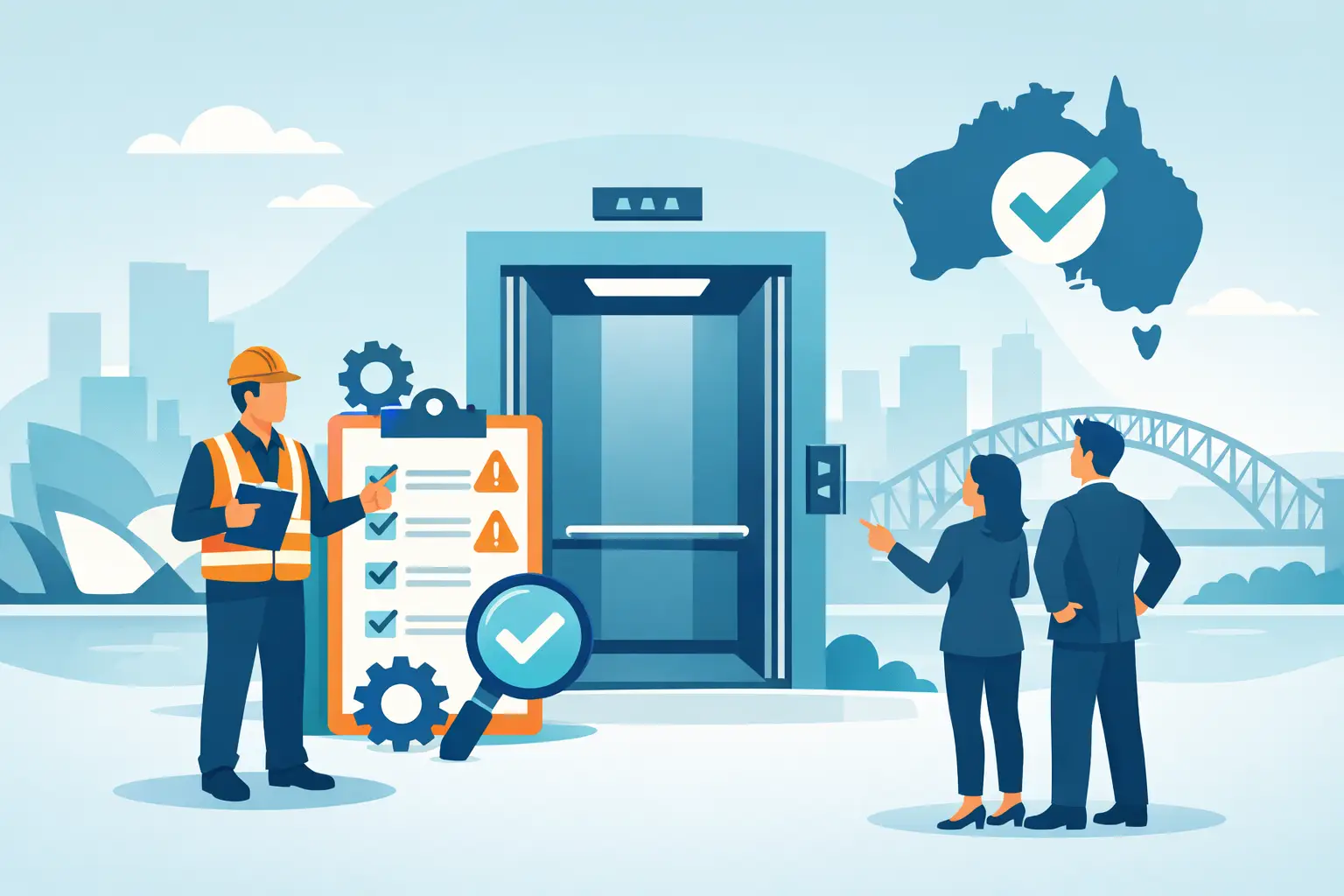
Elevator Compliance Guide for Australian Buildings
A lift can appear to be operating normally while a worn door contact, unreliable emergency phone or overdue safety test creates a serious compliance risk. For owners and facility managers, an effective lift compliance guide is not a document to file away. It is a working plan for keeping passengers safe, protecting building operations and avoiding disruptions that can quickly affect tenants, visitors and staff.
Compliance is not limited to a new installation or a council approval stage. It continues through the full life of the lift, including servicing, repairs, safety testing, record keeping, modernisation and eventual replacement. The right approach depends on the building type, the lift’s age, its use and the regulations that apply in your state or territory.
What lift compliance means in practice
Lift compliance means a lift has been designed, installed, maintained and operated in line with applicable legal, safety and technical requirements. In Australia, these requirements can involve the National Construction Code, state and territory building and workplace safety obligations, relevant Australian Standards and local authority requirements.
For many projects, the AS 1735 series is central to lift design and safety. Accessibility provisions may also apply, particularly in public and multi-residential buildings, with requirements influenced by the National Construction Code and standards such as AS 1428.1. Electrical work, fire interfaces and emergency communication arrangements can introduce further obligations.
There is no single checklist that applies unchanged to every property. A passenger lift in an aged care facility has different operational risks from a goods lift in a warehouse, while a home elevator may have a different compliance pathway again. The practical question is whether the lift is suitable, safe and properly supported for the way people use the building.
Start with the lift’s compliance baseline
Before setting a maintenance schedule or planning upgrades, establish exactly what equipment is on site and what documentation is available. Older buildings commonly have incomplete records, particularly after a change in ownership, managing agent or maintenance provider. That gap should be addressed early rather than discovered during an incident or audit.
A useful baseline review identifies the lift type, age, manufacturer where known, controller model, load rating, travel path, landing doors, safety gear, emergency systems and current condition. It should also capture the building’s use, including whether the lift serves public areas, residents, patients, students, workers or freight operations.
This information helps determine whether the lift was compliant when installed, what later requirements may affect ongoing operation and where risk has changed over time. A lift does not automatically need to meet every standard introduced after it was installed. However, alterations, major repairs, changes of use and identified hazards can trigger the need for further assessment or upgrades. A qualified lift specialist can help separate essential work from improvements that are sensible but not immediately mandatory.
Keep planned maintenance current and documented
Planned maintenance is the foundation of reliable compliance. It gives technicians the opportunity to inspect safety-critical components before they lead to a shutdown, passenger entrapment or unsafe operation. It also provides an auditable record that the owner has taken reasonable steps to maintain the equipment.
A structured service program should be matched to the lift’s duty cycle and environment. A busy commercial lift, hospital lift or industrial goods lift generally needs a more frequent and detailed approach than a lightly used residential lift. Dust, moisture, coastal air, vandalism, heavy loads and high passenger traffic can all accelerate wear.
Service visits should cover more than a quick operational check. Depending on the equipment and schedule, technicians may inspect door operation and protection devices, brakes, ropes or belts, guide rails, landing equipment, pit condition, machine space, levelling accuracy, alarms, lighting and emergency communication. Any faults should be recorded clearly, with the risk explained and repair priorities agreed.
Keep service reports, defect notices, test certificates, repair records and modernisation details in a central building file. Digital records are often easier for facility teams to retrieve, especially when preparing for insurance reviews, asset planning or a handover to a new managing agent. Good records also give incoming technicians a clearer picture of recurring faults and previous repairs.
Test safety and emergency systems before they are needed
Safety features are designed for uncommon events, which is exactly why routine testing matters. A lift alarm that has not been verified, or a phone that cannot connect from the car, may only be discovered when someone is trapped inside.
Emergency communication should be reliable from the lift car and suitable for the building’s operating conditions. This is particularly significant where mobile reception is weak, the building is unattended after hours or vulnerable users may need assistance. Where a lift phone relies on older communications technology, owners should confirm that the service remains supported and that call routing is tested.
Other critical checks can include door reversal and reopening devices, emergency lighting, alarm operation, car levelling, overspeed protection, buffers and safety gear. The exact tests and intervals depend on the lift design, applicable standards and manufacturer requirements. These tasks should be completed by appropriately qualified technicians using suitable procedures, not treated as general building maintenance.
For properties with several lifts, consider the operational impact of taking one out of service for testing. Staging work outside peak periods can reduce disruption, but it must not lead to safety checks being deferred. In a healthcare, aged care or high-rise residential setting, a clear temporary access plan is essential while equipment is unavailable.
Manage doors, access and entrapment risk
Lift doors are among the most heavily used and fault-prone parts of any installation. Misalignment, damaged rollers, worn contacts and poorly adjusted operators can cause repeated callbacks, nuisance shutdowns and safety concerns. Because doors interact directly with passengers, they deserve close attention in every maintenance plan.
Building managers should act promptly when tenants report scraping, bouncing, delayed opening, unusual noise or doors closing onto people or trolleys. Repeated minor symptoms are often an early warning that adjustment or component replacement is needed. Waiting until a door fails completely usually results in more downtime and a more difficult repair.
Entrapment procedures should also be clear. Staff must know who to call, how to reassure passengers and why they should not attempt to force doors open or release people without trained support. Where required, site personnel should be familiar with emergency arrangements, but physical release and technical intervention must be handled by competent lift technicians or emergency services.
Plan modernisation before compliance becomes urgent
Modernisation is often the most practical path for an ageing lift that remains structurally suitable but has unreliable or obsolete components. A controller upgrade, door operator replacement, new landing equipment or improved emergency communication can improve safety, performance and serviceability without the cost and disruption of full replacement.
The right scope depends on condition and risk. Replacing a controller may solve parts availability and fault-diagnosis issues, but it will not correct worn guide rails, a degraded car interior or recurring door problems if those items are left untouched. Conversely, replacing individual components can be good value where the core system is sound and replacement parts remain available.
A condition assessment should consider fault history, component availability, passenger demand, energy use, accessibility needs and the likely cost of unplanned outages. For developers and owners undertaking a refurbishment, it is wise to assess lift compliance early. Late changes to shafts, fire interfaces, door openings or electrical supply can affect both programme and budget.
Assign clear responsibilities across the building team
Compliance can fall through the gaps when owners, strata committees, facility managers, builders and tenants assume somebody else is managing it. The building owner or responsible entity should make ownership of the lift program clear, including who approves repairs, receives reports, maintains records and responds to defects.
For a commercial or industrial site, the lift program should sit alongside broader workplace safety processes. Hazards around loading, unauthorised use, machine-space access and contractor coordination need active management. For strata and residential buildings, committee members should understand the difference between a routine maintenance recommendation and an urgent safety defect, so decisions are not delayed unnecessarily.
When engaging a provider, ask how faults are prioritised, what service records you will receive, whether technicians can support the installed equipment and how after-hours entrapments are handled. A low initial contract cost can become expensive if reporting is poor, parts are unavailable or recurring issues are not properly investigated.
Use this lift compliance guide as an ongoing review
A reliable compliance program is reviewed whenever the building changes. New tenants, changed accessibility needs, increased traffic, major refurbishments or repeated breakdowns can all justify reassessment. The goal is not to replace equipment prematurely. It is to make informed decisions before a preventable defect becomes a safety incident or lengthy shutdown.
Skyrise Elevators can assess lift condition, service requirements and practical modernisation options across residential, commercial and industrial properties. A site-based review gives owners and managers a clearer path forward: address immediate risks, schedule necessary work and maintain a lift system that supports safe, dependable building access.