


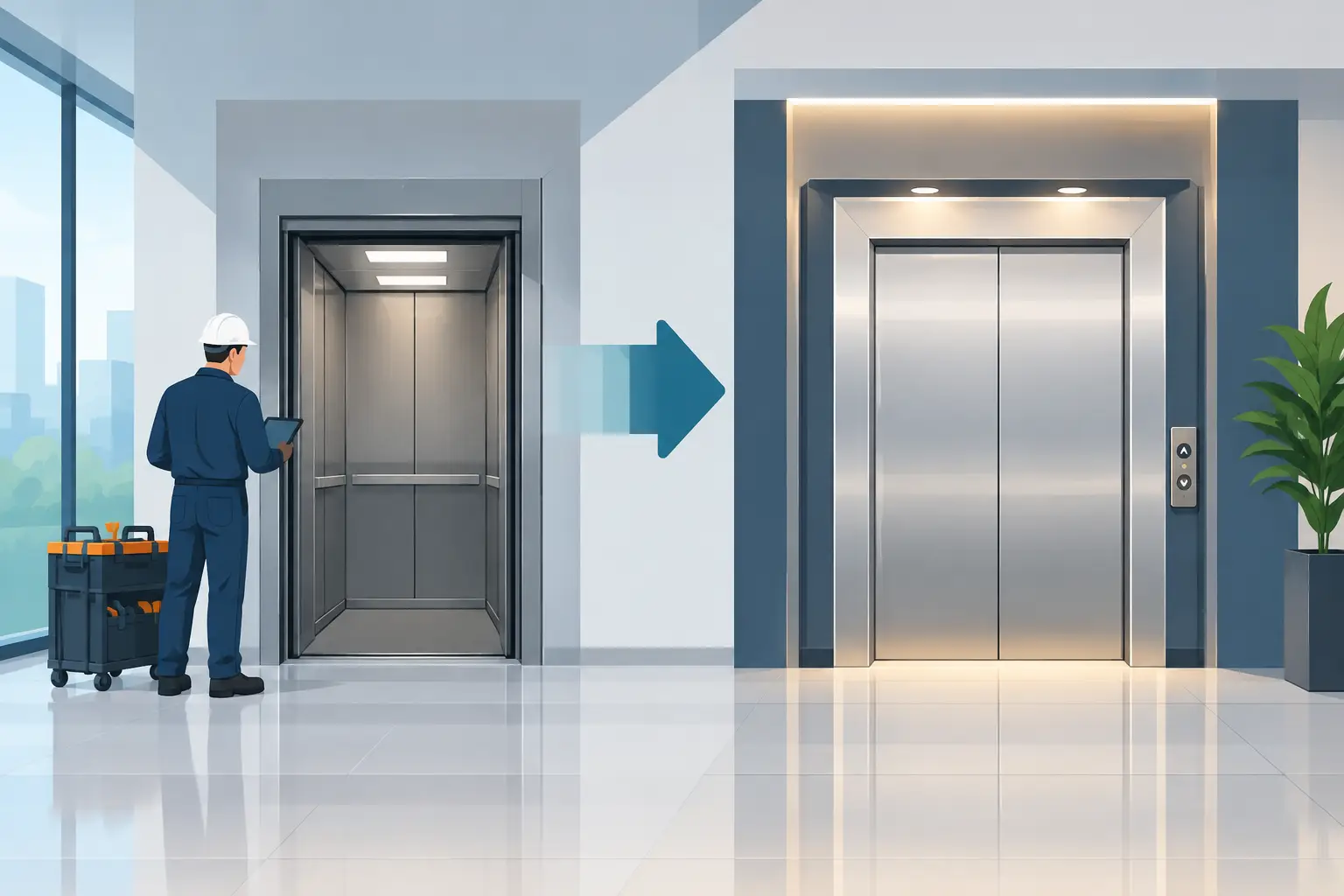
How to Upgrade Elevators Without Major Disruption
An ageing lift rarely fails all at once. More often, warning signs build over time: recurring call-outs, longer wait times, unavailable parts, noisy travel, unreliable doors or complaints from tenants and visitors. Knowing how to upgrade lifts before these issues affect building operations gives owners and managers more control over cost, safety and downtime.
A lift upgrade, often called a modernisation, can range from replacing a single control component to renewing the complete lift system. The right scope depends on the condition of the equipment, the building’s use, passenger expectations and the level of reliability required. A residential building, a busy medical centre and an industrial facility will not have the same priorities.
Start with a professional lift assessment
The first step is to assess what is installed, how it is performing and whether it remains suitable for the building. This should be completed by qualified elevator technicians who can inspect the lift car, shaft equipment, controller, doors, safety gear, landing fixtures and communication systems.
A proper assessment looks beyond whether the lift is currently operating. It identifies components approaching end of life, parts that are becoming difficult to source and areas where the lift may no longer meet current safety, accessibility or operational expectations. Maintenance records are particularly useful here. Frequent faults involving the same component can indicate that repairs are only postponing a more effective upgrade.
For facility managers, this assessment should also consider the practical impact of lift downtime. In a low-rise office building with a second lift or stair access, a staged upgrade may be straightforward. In an aged care facility, apartment building or healthcare environment where residents and patients depend on the lift every day, contingency planning is much more important.
Decide whether to modernise or replace
Not every older lift needs complete replacement. Modernisation can extend the useful life of a sound lift installation by replacing the components most responsible for faults, poor performance or outdated functionality. It can also be delivered in stages, which may help spread capital expenditure.
A full replacement may be the better option when the existing system has widespread deterioration, the shaft layout needs significant alteration, or the equipment cannot meet the building’s current traffic and accessibility needs. It is also worth considering if repeated repairs are causing operational disruption and rising maintenance costs.
When an upgrade is usually suitable
A modernisation is often appropriate where the lift car, guide rails and core shaft structure remain in good condition, but control and operating equipment is outdated. Typical upgrade works may include a new controller, door operators, landing call buttons, car operating panel, display indicators, travelling cable, wiring and lift phone system.
These changes can improve reliability without the cost and site impact of replacing every part of the installation. Newer controllers can also make fault diagnosis easier for technicians and may provide better monitoring options, depending on the system selected.
When full replacement should be considered
Complete replacement becomes more likely when the lift is undersized for the building, has persistent ride-quality issues, uses obsolete equipment throughout or no longer supports a practical maintenance strategy. For example, a goods lift that no longer handles required loads safely may need a purpose-designed replacement rather than a cosmetic upgrade.
Replacement can also create an opportunity to improve car dimensions, finishes, door configurations and accessibility features. However, it requires more planning because it may involve longer downtime, building works and coordination with other trades.
Prioritise safety, accessibility and reliability
The most valuable lift upgrades are not always the most visible. While new car finishes and touch-free fixtures can improve presentation, safety and dependable operation should lead the decision-making process.
Door systems deserve close attention because door faults are a common cause of lift disruption. Upgrading worn door operators, rollers, sensors and associated controls can improve closing performance, reduce nuisance faults and support safer passenger movement. Levelling accuracy is another priority. A lift that stops unevenly at a floor can create a trip hazard and should be investigated promptly.
Accessibility should be reviewed against the needs of people using the building. Depending on the property and upgrade scope, considerations may include clear button labelling, audible announcements, visual indicators, handrails, appropriate lighting, compliant car dimensions and reliable emergency communication. Requirements vary by building type and project, so they should be assessed early rather than treated as a late design addition.
Emergency communication is equally important. A functioning lift phone or monitored communication solution gives trapped passengers a direct way to seek assistance. Older systems may rely on equipment that is no longer dependable or compatible with current telecommunications infrastructure. Upgrading this system should form part of any broader modernisation plan.
Plan the project around building operations
The best technical solution can still create frustration if the work is poorly scheduled. Before works begin, establish who relies on the lift, when demand is highest and what alternatives are available during shutdown periods.
In a commercial building, work may be programmed outside peak office hours or staged around tenant requirements. In residential settings, clear advance notice allows residents to plan deliveries, appointments and mobility support. For healthcare, aged care and education sites, the contractor may need to work within stricter access controls and operational windows.
Where a building has more than one lift, it may be possible to upgrade one at a time to retain some vertical transport. Where there is only one lift, discuss shutdown duration honestly and create a practical access plan for people who cannot use stairs. This may include temporary assistance arrangements, revised service schedules or carefully selected work periods.
Communication matters throughout the project. Building managers should provide occupants with notice of the work, expected lift availability, alternative access arrangements and a contact point for urgent concerns. Reliable information reduces avoidable complaints and helps the site operate safely while upgrades are underway.
Specify the right equipment for the building
Lift components should be selected for the building’s actual use, not simply the lowest upfront price. A lift in a strata apartment building experiences different traffic from one in a warehouse, retail centre or private home. Load capacity, travel distance, number of stops, opening cycles, peak traffic and exposure to dust or moisture can all affect the appropriate specification.
For passenger lifts, consider ride comfort, door speed, car capacity and the durability of finishes. A high-traffic commercial or public building may benefit from hard-wearing wall panels, protective finishes and fixtures designed for frequent use. In a home elevator, quiet operation, visual integration and accessibility may take greater priority.
For goods and service lifts, capacity, loading method and the movement of trolleys or equipment need careful consideration. Industrial properties may also require more durable doors, controls and car finishes to suit demanding conditions. Choosing equipment that matches the application helps reduce premature wear and avoidable service interruptions.
It is wise to ask about parts availability and long-term serviceability before approving a specification. Equipment with readily available parts and clear technical support can simplify maintenance over the life of the lift.
Use an experienced provider for delivery and ongoing service
Lift modernisation brings together electrical work, mechanical systems, safety devices, controls and, at times, building alterations. Using one capable provider from assessment through to installation, testing and maintenance helps maintain accountability across the project.
Before work starts, confirm the scope in plain terms. You should understand which components will be replaced, what remains in service, expected shutdown periods, testing requirements and how defects or unexpected site conditions will be managed. A detailed programme is particularly valuable where the lift is essential to daily building access.
After commissioning, the lift needs a structured maintenance plan. An upgrade reduces risk, but it does not remove the need for regular inspections, adjustment and prompt repairs. Ongoing maintenance helps protect the investment, supports safe operation and identifies small issues before they become disruptive failures.
Skyrise Elevators can assess existing lift equipment and recommend a modernisation or replacement approach suited to the building, its users and operational requirements. The goal is not simply newer equipment, but safer, more reliable vertical transport that remains practical to maintain.
A well-planned upgrade gives a building more than a refreshed lift car. It gives residents, staff, visitors and managers confidence that moving between floors will be safe, efficient and dependable when it matters.