


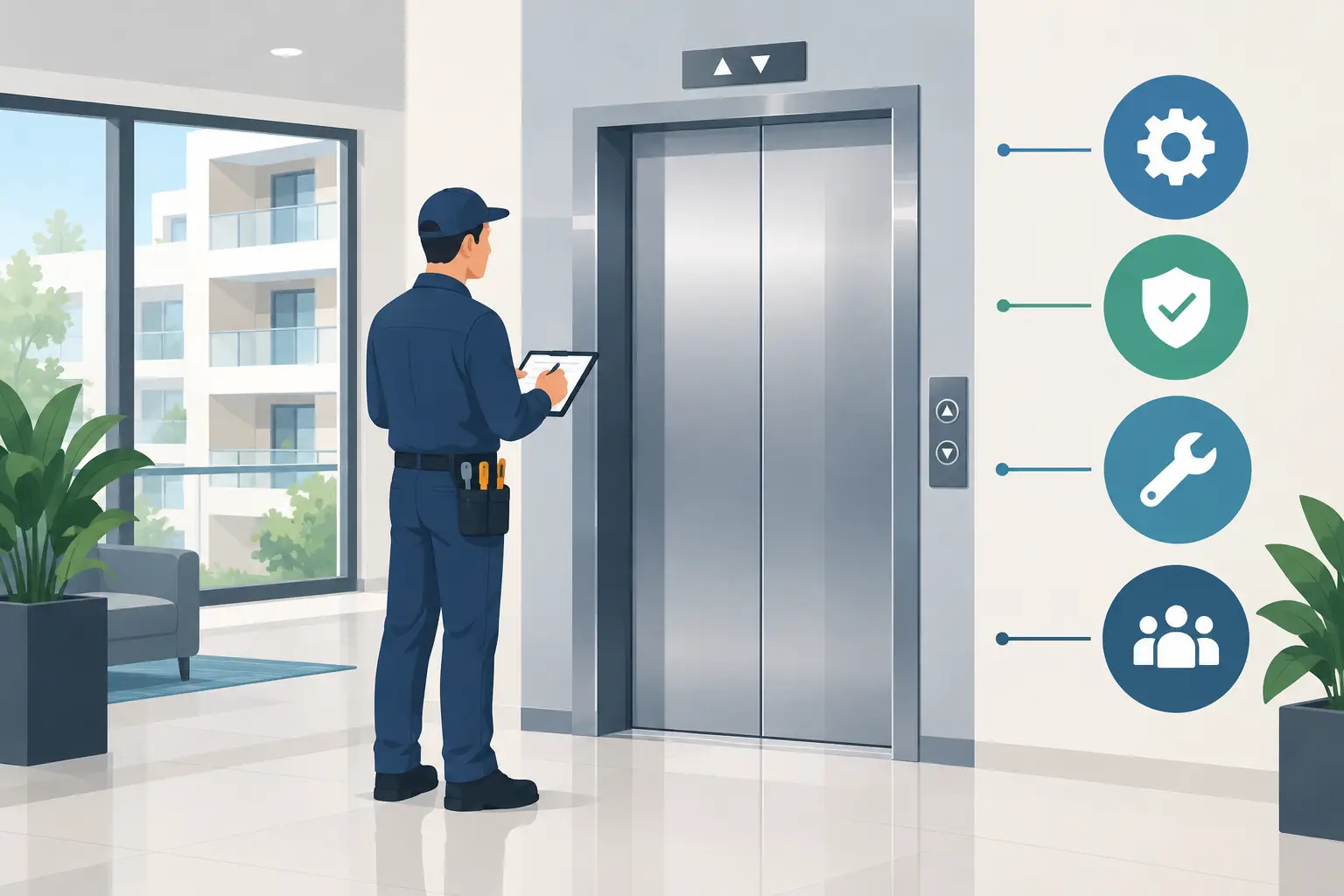
How to Improve Apartment Lift Reliability
A lift stopped between floors at 7.30 am can disrupt far more than a resident’s commute. It can affect accessibility, deliveries, trades, emergency movement and confidence in the building’s management. To improve apartment lift reliability, owners corporations and facility managers need to look beyond isolated call-outs and manage the lift as essential building infrastructure.
Reliable lift performance comes from consistent servicing, accurate fault diagnosis, timely repairs and a clear plan for ageing equipment. The right approach will differ between a six-storey apartment block with one passenger lift and a high-rise complex with several lifts, but the objective is the same: safe operation, minimal downtime and a predictable lifecycle cost.
Improve Apartment Lift Reliability With Planned Maintenance
The most effective way to reduce unexpected lift outages is a structured preventative maintenance programme. Waiting for a fault before arranging service often leads to longer disruptions and more expensive repairs. A lift may continue to run while components are wearing, settings are drifting or doors are starting to misalign. By the time a complete failure occurs, the issue may involve several parts rather than one adjustment.
A planned maintenance visit allows an approved technician to inspect critical systems before they become a breakdown risk. This includes the controller, drive system, door operators, landing doors, safety circuits, levelling accuracy, car lighting, communication equipment and emergency functions. Cleaning, lubrication, adjustment and testing are not minor tasks. They help prevent the common faults that leave residents waiting in a foyer or unable to access their floor.
The maintenance frequency should reflect the lift’s age, usage and environment. A heavily used lift in a coastal apartment building, for example, may need closer attention than a lightly used lift in a small inland complex. Salt air, dust, heat, water ingress and high traffic all place additional strain on lift equipment. A service provider should assess these conditions rather than apply the same schedule to every property.
It is also worth reviewing what the maintenance agreement actually includes. A low-cost arrangement may cover routine visits but exclude key components, after-hours attendance or detailed reporting. This can be suitable for some buildings, but committees should understand the likely cost and response implications before choosing it.
Keep a Clear Record of Faults and Downtime
One-off faults can be difficult to diagnose. Repeated door re-openings, intermittent levelling issues or occasional error messages can reveal a pattern when they are properly recorded. Facility managers, building managers and concierge teams should keep a simple log of the date, time, lift affected, fault symptoms, resident reports and action taken.
This record gives the technician useful context and helps distinguish between an isolated incident and a recurring problem. It also supports informed decisions about repairs and modernisation. If the same door component has been adjusted several times in six months, replacement may offer better value than another temporary repair.
Useful lift service reports should state what was inspected, what faults were found, what work was completed and whether any parts need monitoring or replacement. For strata committees, this creates a clearer audit trail for maintenance spending and helps with future budgeting. It also makes handovers easier when building management changes.
Address Door Problems Before They Cause a Shutdown
Lift doors are among the most active and commonly affected parts of an apartment lift. They open and close hundreds or thousands of times each week, depending on building traffic. A minor alignment issue, worn roller, damaged sill, contaminated sensor or closing-force problem can quickly turn into a lift outage.
Residents may first notice doors hesitating, reopening without an obvious obstruction, scraping, making unusual noises or taking too long to close. These symptoms should not be dismissed as inconveniences. Prompt attendance can often correct the issue before the door system triggers repeated faults or prevents the lift from operating.
Building managers can reduce avoidable door problems by keeping landing sills clean and discouraging residents from forcing doors open or holding them apart. During moves, renovations and deliveries, protective procedures are especially important. Trolleys, furniture and building materials can damage doors, car walls and thresholds if the lift is not managed properly.
Make Fault Response Part of the Reliability Plan
Preventative maintenance reduces risk, but it cannot eliminate every failure. Power disturbances, component defects, water ingress and accidental damage can still take a lift out of service. Reliable buildings need a practical response process before an outage occurs.
Residents and staff should know who to contact, what information to provide and what to do if a person is trapped. The lift’s emergency communication system must be tested and maintained so passengers can contact assistance when needed. Building managers should also confirm that access to the machine space or controller area is available to authorised technicians without delay.
Fast response is valuable, but quality diagnosis matters just as much. Repeated resets may restore service temporarily while leaving the root cause unresolved. A capable technician should investigate fault history, inspect affected components and explain whether the recommended repair is urgent, preventative or part of a longer-term upgrade plan.
For buildings with multiple lifts, response planning should also consider service continuity. If one lift is unavailable, can residents with mobility needs still access their homes? Are removalists, trades and deliveries directed to another lift? Clear communication during downtime helps reduce frustration and allows the building to operate safely while repairs are underway.
Know When Repair Is No Longer the Best Option
Every lift reaches a point where ongoing repairs become less predictable and less cost-effective. This does not always mean full replacement is necessary. Often, targeted modernisation can substantially improve reliability while retaining suitable parts of the existing installation.
Controllers, door operators, drives, car operating panels, landing fixtures and communication systems may all be candidates for upgrade. Older equipment can also become difficult to support when parts are obsolete or only available with long lead times. In these cases, a planned modernisation is usually less disruptive than responding to a major failure under pressure.
The decision depends on the lift’s condition, available parts, current performance, safety requirements, building usage and budget. A newer lift with a recurring door issue may only need a focused repair. An older installation with frequent faults across several systems may justify a staged modernisation plan. The key is to base the decision on evidence from service history and a site assessment, not just the age of the lift.
Protect the Lift From Building Works and Environmental Damage
Apartment lifts are often exposed to risks outside normal passenger use. Renovations can introduce plaster dust, paint, debris and impact damage. Water leaks near lift shafts, pits or controller equipment can create serious electrical and mechanical issues. Even poorly managed rubbish removal can damage doors and internal finishes.
Before major works begin, arrange a lift protection and usage plan with the building manager and lift provider. This may include protective curtains, controlled access, load limits, cleaning requirements and inspections after works are complete. A goods or service lift should be used where available, rather than treating the passenger lift as a construction hoist.
Environmental checks matter too. Water ingress, ventilation issues and excessive heat in equipment areas should be addressed promptly. A lift technician can identify the effects of these conditions, but the underlying building defect may require a plumber, builder or electrical contractor. Reliability improves when these responsibilities are coordinated rather than treated as separate problems.
Work With a Provider That Supports the Full Lifecycle
Apartment lift reliability is easier to manage when installation knowledge, maintenance capability, repair support and modernisation advice sit within one experienced service relationship. The provider should understand the building’s equipment, respond clearly to faults and give practical recommendations that match the property’s needs.
Skyrise Elevators supports residential buildings with maintenance, repairs, modernisation and replacement services designed to keep vertical transport safe and operational. For strata committees and facility managers, the priority is not simply keeping a lift running today. It is making informed decisions that reduce avoidable disruption over the years ahead.
A well-maintained lift quietly supports every part of apartment living. Regular attention, early action on emerging faults and a realistic upgrade plan will give residents safer access and give building decision-makers greater control over downtime and costs.