


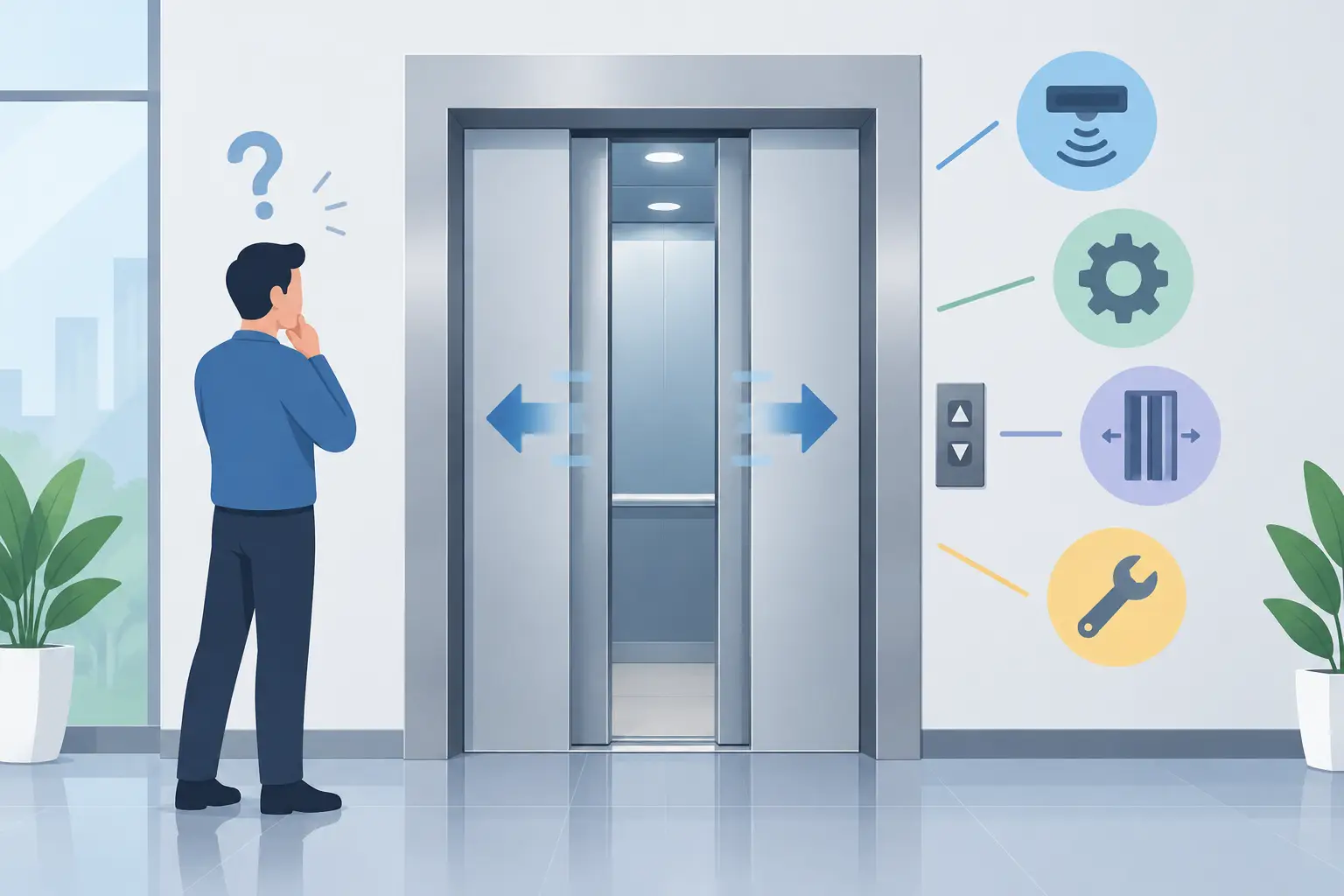
Why Do Lift Doors Reopen? Causes and Fixes
A lift door that starts to close, then opens again, can be frustrating during a busy morning rush or when moving goods between floors. The short answer to why do lift doors reopen is usually safety: the lift has detected an obstruction, or its door system believes one may be present. In some cases, however, repeated reopening points to a component that needs adjustment, repair or replacement.
For property managers, building owners and facility teams, the key is knowing the difference between normal safety operation and a developing door fault. Lift doors are among the hardest-working components in any vertical transport system. They cycle thousands of times, and small changes in alignment, wear or sensor performance can affect how the lift responds.
Why do lift doors reopen during normal operation?
A lift is designed not to close its doors on a person, trolley, pram or other obstruction. Door reopening is therefore often the correct response. The door operator monitors the opening and closing process and will reverse the doors if it detects resistance, interrupted safety sensors or an abnormal condition.
In a busy building, the cause can be as simple as someone stepping into the doorway as the doors begin to close. A hand, bag, delivery trolley or even clothing crossing the doorway can trigger the safety system. The doors reopen, wait for their programmed dwell time, then attempt to close again.
Modern lifts commonly use an infrared light curtain across the entrance. This creates a protective field over much of the opening, rather than relying on a single beam at one height. If anything breaks that field while the doors are closing, the doors reopen. This is particularly valuable in healthcare, aged care, retail and residential buildings, where passengers may move more slowly or use mobility equipment.
A single, occasional reopening is normally not a concern. Repeated reopening when the entrance is visibly clear deserves closer attention.
Common causes of lift door reopening faults
The door system is a combination of mechanical parts, electrical controls and safety devices. A fault in any of these areas can cause the lift to reopen its doors, delay departure or take the lift out of service.
Dirty, blocked or damaged safety sensors
Dust, lint, packaging debris and residue can interfere with door safety sensors. This is especially common in industrial properties, loading areas, schools, hospitals and buildings undergoing construction or refurbishment. A scratched sensor cover, damaged wiring or misaligned light curtain can also cause false obstruction signals.
Cleaning may appear straightforward, but sensor equipment should be inspected by an approved lift technician. Incorrect cleaning products, rough handling or attempts to reposition components can create further faults or compromise safety performance.
Door tracks and sill contamination
The sill is the grooved track at the bottom of the doorway where door panels travel. Dirt, stones, paper, loose fasteners and other debris in the sill can stop a door from closing smoothly. The door operator detects unexpected resistance and reopens the doors as a protective measure.
This is a frequent issue where lifts are close to car parks, street-level entries, loading docks or construction zones. Regular cleaning around the landing entrance helps, but debris lodged inside the sill or damage to guides requires professional attention.
Misaligned doors or worn door components
Lift doors need to be correctly aligned to travel smoothly and meet cleanly at the centre. Over time, rollers, guides, hangers, belts, clutches and other moving parts can wear. Door panels may also be affected by impact damage from trolleys, pallets or furniture moves.
When a door drags, catches or closes unevenly, the operator may interpret the increased force as an obstruction. The result is a reopen cycle, sometimes followed by a fault code or a lift shutdown. Ignoring this behaviour can lead to more extensive wear, longer downtime and a poor passenger experience.
Door operator settings or control issues
The door operator is the mechanism that opens and closes the doors. Its settings must match the door weight, travel distance and operating conditions. If the closing force, timing or speed is not correctly set, the doors may reopen too readily or struggle to complete a closing cycle.
Control faults can also stem from worn electrical contacts, failing relays, loose connections or communication issues between the lift controller and the door operator. These faults are not always visible from the landing. A technician may need to review fault logs, test the door cycle and inspect the controller before identifying the source.
Wind pressure and building conditions
In some buildings, especially taller towers or properties with open lobbies, pressure differences can affect door movement. Airflow from open doors, ventilation systems or nearby façades may place extra load on lift doors. This does not mean every reopening event is caused by wind, but it is a consideration when the issue occurs at a particular level or during certain weather conditions.
A proper assessment looks beyond the lift itself. Door performance can be influenced by the landing environment, shaft pressure and changes made to ventilation or building layouts.
Passenger behaviour and held-open buttons
Sometimes the lift is operating as intended, but a passenger is holding the door-open button, standing in the sensor field or repeatedly entering and exiting the car. In buildings with frequent deliveries, staff may deliberately hold doors open while loading. This can cause extended waiting times and place unnecessary strain on the door system.
Clear building procedures can help. For large or heavy deliveries, use the appropriate goods or service lift where available, avoid forcing door panels apart, and ensure items are fully clear of the entrance before the lift departs.
When is reopening a safety concern?
A lift door that reopens once because a passenger is in the doorway is doing its job. The concern begins when the doors repeatedly reopen with no obvious obstruction, bang or scrape during travel, close unusually slowly, or fail to close at all.
Facility managers should treat repeated door faults as a maintenance priority, particularly when they affect an accessible route, a hospital or aged care facility, a busy commercial tenancy or a goods movement area. Door problems can cause delays, trap a lift at a floor, increase call-outs and eventually lead to avoidable service interruptions.
If doors are behaving erratically, do not attempt to push, pull or hold them closed. Keep passengers clear of the entrance, place the lift out of service if it cannot operate reliably, and arrange a qualified lift technician to attend. If there is an entrapment or immediate safety risk, follow the building’s emergency procedures and contact the relevant emergency support services.
What a lift technician checks
A professional door diagnosis is more than a quick visual inspection. The technician will typically observe door movement over multiple cycles, inspect the sill and door panels, test the safety light curtain or sensors, and check rollers, hangers, guides and the door operator.
They may also review controller fault history to establish whether the issue is isolated or recurring. This helps distinguish between a temporary obstruction, a sensor fault, an adjustment issue and a component nearing the end of its service life.
The right repair depends on the findings. It may involve cleaning and adjusting door equipment, repairing damaged wiring, replacing worn rollers or guides, recalibrating the operator, or planning a broader door modernisation. For older lifts, repeated door-related call-outs can be a sign that targeted modernisation will deliver better reliability than ongoing reactive repairs.
Preventing unnecessary lift door faults
Planned maintenance is the most reliable way to reduce door issues. During scheduled servicing, technicians can inspect and adjust moving components before wear develops into a disruption. They can also identify site-specific risks, such as frequent sill contamination in a loading area or recurring impact damage at a particular floor.
Building teams can support lift reliability by keeping landing entrances clear, reporting unusual door movement early and avoiding the use of door panels as a way to hold a lift. Cleaning contractors should take care around door sills and sensor equipment, while tenants should be reminded not to force doors open during moves or deliveries.
The maintenance frequency and scope should reflect the lift’s use. A low-traffic residential lift has different demands from a commercial passenger lift, hospital lift or industrial goods lift. The right maintenance plan considers traffic volume, operating hours, environmental conditions, equipment age and the cost of downtime to the building.
A door that reopens now and then may simply be protecting passengers. When it becomes a pattern, prompt inspection protects safety, reduces disruption and helps keep the whole lift system moving as it should. Skyrise Elevators can assess recurring door issues and provide practical repair, maintenance or modernisation advice suited to your building and lift use.