


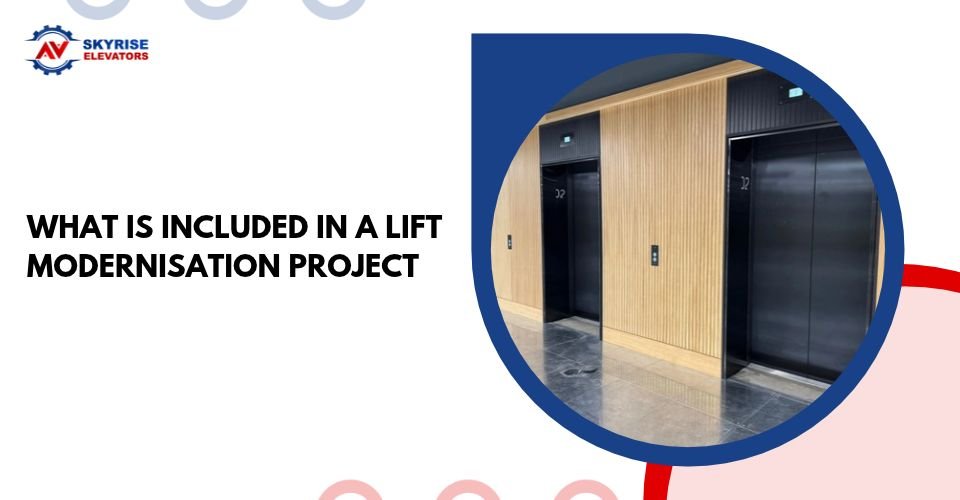
What Is Included in a Lift Modernisation Project?
A lift modernisation project involves upgrading existing elevator components to improve reliability, safety, performance, and passenger experience. Rather than replacing the entire lift system, modernisation focuses on the parts that need improvement, such as the controller, drive system, doors, cabin, and signalling equipment.
The scope of lift modernisation services depends on the elevator’s age, condition, usage, and existing technology. Some projects involve replacing one outdated component, while others require several upgrades to bring the entire system up to current operational requirements.
Understanding the main stages and components helps building owners plan modernisation work and identify the improvements their lifts need.
What Does a Lift Modernisation Project Include?
A lift modernisation project may include mechanical, electrical, and aesthetic upgrades. The final scope is usually determined after inspecting the existing equipment and assessing its condition.
Common components include:
| Modernisation Component | What It Involves | Main Purpose |
| Elevator controller upgrade | Replacing outdated control equipment | Improve lift operation and control |
| Lift drive replacement | Upgrading the motor drive system | Improve movement and operating performance |
| Elevator door upgrade | Replacing or upgrading door operators and mechanisms | Support reliable door operation |
| Lift cabin refurbishment | Updating cabin finishes, lighting, flooring, and panels | Improve appearance and passenger experience |
| Lift signalling upgrade | Replacing indicators, buttons, and communication equipment | Improve passenger interaction and accessibility |
Not every project requires all these upgrades. An assessment helps determine which components should be replaced, repaired, or retained.
1. Elevator Controller Upgrade
The elevator controller manages how a lift responds to passenger requests, selects floors, and coordinates different operating functions. Older controllers may use outdated technology that becomes difficult to maintain as components age or replacement parts become harder to source.
An elevator controller upgrade may involve replacing the existing control panel, updating electrical components, and integrating compatible equipment with the lift’s other systems.
Potential improvements include:
- More responsive floor selection and call processing.
- Better coordination between lift operations.
- Updated control technology.
- Improved fault monitoring and diagnostics, where supported.
- Greater compatibility with modern lift components.
The controller must be compatible with the existing motor, drive, safety equipment, and other elevator systems. This is why technical assessment is important before selecting replacement equipment.
2. Lift Drive Replacement
The drive system controls the motor’s speed, acceleration, and deceleration. If the existing drive is outdated or experiencing performance issues, replacing it may be part of the modernisation project.
A lift drive replacement can involve installing a newer variable-frequency drive (VFD) or another compatible drive solution.
Depending on the equipment and system configuration, an upgraded drive may support:
- Smoother acceleration and deceleration.
- More controlled lift movement.
- Improved floor levelling performance.
- Better motor control.
- Potential energy efficiency improvements.
The actual results depend on the existing motor, lift configuration, building requirements, and selected replacement equipment.
3. Elevator Door Upgrade
Lift doors are among the most frequently operated parts of an elevator system. Repeated opening and closing can cause wear in door operators, rollers, tracks, sensors, and other mechanisms.
An elevator door upgrade may include replacing or improving:
- Door operators.
- Door motors.
- Door rollers and tracks.
- Door sensors and safety edges.
- Related control components.
These upgrades can help address recurring door faults, inconsistent opening and closing, and other operational problems.
Door modernisation also provides an opportunity to review passenger safety features. The upgraded system should be properly integrated with the lift controller and relevant safety mechanisms.
4. Lift Cabin Refurbishment
A lift cabin refurbishment focuses on the interior appearance and passenger experience. While it may not change the lift’s core mechanical operation, it can make an older elevator feel more modern and better suited to the building.
Common refurbishment work includes:
- Replacing wall panels and finishes.
- Updating cabin flooring.
- Installing modern lighting.
- Replacing handrails.
- Upgrading ceiling panels.
- Updating control panels and button finishes.
Building owners can select finishes based on the property’s design, expected passenger use, durability requirements, and maintenance needs.
For commercial buildings, hotels, and residential developments, cabin refurbishment can also help maintain a consistent appearance across shared spaces.
5. Lift Signalling Upgrade
Lift signalling equipment allows passengers to interact with the elevator and understand its operating status. Older indicators and buttons may become worn, difficult to read, or incompatible with newer control systems.
A lift signalling upgrade may include replacing:
- Floor position indicators.
- Hall call buttons.
- Cabin operating panels.
- Direction indicators.
- Audible and visual arrival signals.
- Emergency communication equipment, where included in the project scope.
Modern signalling equipment can improve usability, visibility, and accessibility. The selected components should be compatible with the controller and meet applicable requirements.
What Is the Lift Modernisation Process?
Lift modernisation requires planning because the work involves equipment that directly affects building access and daily operations. A structured process helps identify the required upgrades, coordinate installation, and verify system performance.
Step 1: Existing Lift Assessment
The process begins with an inspection of the existing elevator. Technicians assess its age, condition, performance, and maintenance history.
The assessment may cover:
- Controller and electrical equipment.
- Motor and drive system.
- Door mechanisms.
- Cabin condition.
- Signalling and communication equipment.
- Safety components and existing compliance concerns.
This inspection helps identify outdated equipment, recurring faults, and components that may require replacement.
Step 2: Modernisation Scope and Planning
After the assessment, the building owner and elevator provider determine the scope of work.
The plan should identify which components need upgrading, which existing parts can remain, and whether different upgrades must be completed together.
Planning also considers:
- Equipment availability and compatibility.
- Installation requirements.
- Building access and operating schedules.
- Lift downtime.
- Safety and compliance requirements.
- Project costs and timelines.
A clearly defined scope helps avoid unnecessary replacement and makes it easier to coordinate the work.
Step 3: Equipment Selection and Preparation
The next stage involves selecting replacement components that suit the existing lift and building requirements.
Controllers, drives, door operators, and signalling equipment must work together. Choosing components based only on individual specifications can create compatibility problems if the wider system is not considered.
Before installation, the required equipment and materials are prepared, and arrangements are made to manage lift downtime.
Step 4: Installation and Component Integration
Technicians install the selected components according to the approved modernisation plan.
Depending on the project, this may involve controller replacement, drive upgrades, door mechanism improvements, cabin refurbishment, or new signalling equipment.
The installation process also includes integrating new components with the existing lift system and checking relevant electrical and mechanical connections.
Step 5: Testing and Handover
After installation, the modernised lift must undergo appropriate testing and commissioning.
Checks may include:
- Lift movement and stopping accuracy.
- Door opening and closing functions.
- Controller responses and floor selection.
- Signalling and passenger communication.
- Operation of relevant safety features.
- Performance under the required operating conditions.
The lift should only return to service once the required inspections, testing, and approvals have been completed.
How Do You Know When a Lift Needs Modernisation?
An elevator does not necessarily need a complete replacement when it begins showing signs of age. However, recurring faults and outdated components may indicate that modernisation should be considered.
Common signs include:
| Warning Sign | What It May Indicate |
| Frequent breakdowns | Ageing or unreliable components |
| Delayed responses to floor calls | Controller or control-system issues |
| Jerky movement or inconsistent stopping | Drive, motor, or control problems |
| Repeated door faults | Worn door operators or mechanisms |
| Outdated cabin interiors | Need for aesthetic refurbishment |
| Difficult-to-source replacement parts | Obsolete equipment |
| Outdated indicators and buttons | Signalling equipment that needs upgrading |
These symptoms do not automatically mean a specific component needs replacement. A qualified elevator technician should inspect the system to identify the underlying cause.
Lift Modernisation vs. Complete Elevator Replacement
Modernisation and complete replacement are different approaches to improving an existing elevator.
| Factor | Lift Modernisation | Complete Elevator Replacement |
| Scope | Upgrades selected existing components | Replaces the existing elevator system |
| Existing equipment | Retains compatible components | Removes or replaces most major equipment |
| Project requirements | Depends on the upgrades selected | Usually involves more extensive work |
| Building disruption | Varies according to project scope | May involve more extensive disruption |
| Suitable situations | Existing lift remains suitable for continued use with upgrades | Existing system is unsuitable for practical modernisation |
Modernisation may be a suitable option when the existing lift structure and major components remain serviceable. Complete replacement may be more appropriate when the system has extensive deterioration, significant design limitations, or cannot reasonably meet current requirements through upgrades.
A professional assessment helps determine which approach is practical for the building.
How Much Does Lift Modernisation Cost?
The cost of lift modernisation depends on the condition of the existing elevator and the components included in the project.
A controller upgrade alone will generally have a different cost from a project involving the controller, drive, doors, signalling equipment, and cabin refurbishment.
Key cost factors include:
- Lift type and configuration: Passenger lifts, goods lifts, and other systems have different requirements.
- Equipment condition: The extent of existing wear and deterioration affects the work required.
- Upgrade scope: Replacing multiple components increases the project’s overall complexity.
- Equipment compatibility: Some existing systems may require additional modifications to integrate new components.
- Installation requirements: Labour, access, building conditions, and downtime arrangements affect project costs.
- Testing and compliance: Required inspections, commissioning, and safety-related work must be included in the project plan.
Building owners should request a detailed quotation that separates equipment, installation, testing, and any additional work. This makes it easier to compare proposals and understand what the project includes.
Why Work With a Professional Lift Modernisation Provider?
Lift modernisation involves interconnected mechanical, electrical, and safety systems. Replacing one component without considering the rest of the elevator can create compatibility and operational problems.
An experienced elevator provider can assess the existing installation, recommend suitable upgrades, and coordinate the work.
When comparing providers, consider:
- Experience with the type and age of your elevator.
- Ability to assess the full lift system.
- Knowledge of controller, drive, door, and signalling upgrades.
- Clear project scope and cost breakdown.
- Testing and commissioning procedures.
- Ongoing maintenance and technical support.
Skyrise Elevators provides elevator maintenance services and support for building owners. If your lift is showing recurring faults or contains outdated equipment, speak with Skyrise Elevators about its condition and the maintenance or upgrade options that may be suitable.
Frequently Asked Questions
What is included in lift modernisation?
Lift modernisation may include an elevator controller upgrade, lift drive replacement, door operator improvements, cabin refurbishment, and signalling upgrades. The exact scope depends on the existing equipment and the building’s requirements.
How long does a lift modernisation project take?
The timeline depends on the number of components being upgraded, equipment availability, lift configuration, and installation complexity. A project involving one component may take less time than a full system modernisation. The provider should confirm the expected downtime during project planning.
Can you modernise a lift without replacing the entire system?
Yes. Modernisation can involve upgrading selected components while retaining existing equipment that remains suitable and compatible. However, the condition of the lift and its safety requirements determine whether this approach is practical.
Does lift modernisation improve energy efficiency?
It can. Certain upgrades, such as modern variable-frequency drives and more efficient lighting, may reduce energy consumption. The actual improvement depends on the existing system, the selected equipment, and how frequently the lift operates.
Is lift modernisation the same as lift maintenance?
No. Lift maintenance involves routine inspections, servicing, adjustments, and repairs to keep an elevator operating properly. Modernisation involves upgrading or replacing outdated components to improve the system’s performance, reliability, or functionality.
Plan Your Lift Modernisation Project
Lift modernisation can help extend the useful service life of an existing elevator when its structure and major components remain suitable for continued operation. From controller and drive upgrades to door improvements, cabin refurbishment, and new signalling equipment, each upgrade should address an identified need.
The first step is to understand the condition of the existing lift and determine which components require attention. A professional assessment can help building owners plan the scope, budget, installation, and testing requirements.
For lift maintenance and technical support, visit Skyrise Elevators.