


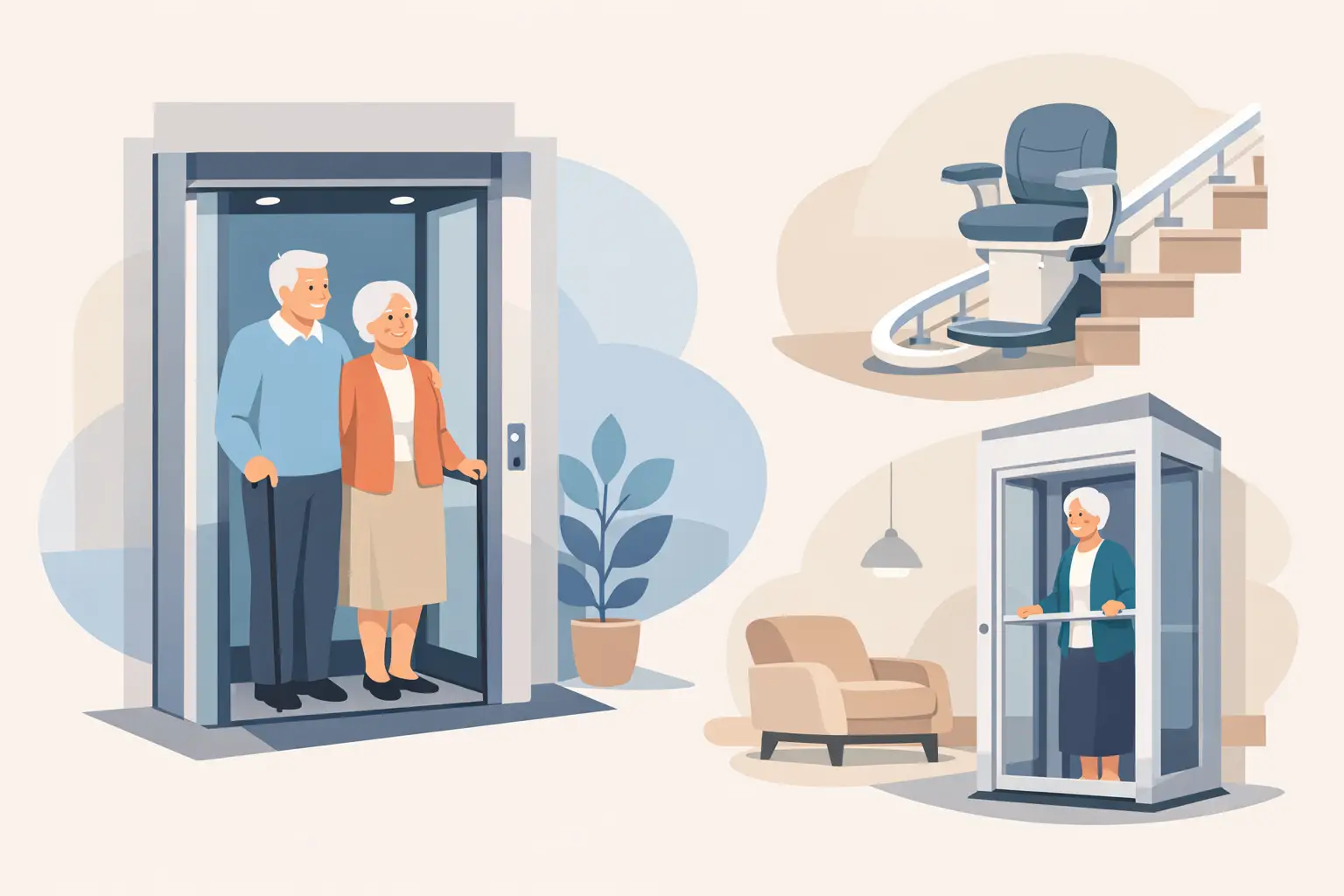
Best Home Lift for Elderly: What to Choose
Stairs often become the first part of a home that stops working for the people who live in it. What was once a minor inconvenience can quickly turn into a daily safety risk, especially after a fall, surgery, or a decline in mobility. If you are looking for the best home lift for elderly family members, the right choice is usually less about luxury and more about safe, reliable access that suits the home and the person using it.
A home lift can help older residents stay independent, remain in the home they know, and move between levels without relying on others. But there is no single model that suits every property. The best option depends on mobility needs, available space, travel height, budget, and how much long-term support you expect after installation.
What makes the best home lift for elderly residents?
For older users, the best lift is the one that removes risk without adding complexity. That means easy entry and exit, stable travel, simple controls, and dependable performance over time. A lift may look impressive in a brochure, but if the door opening is too narrow for a walker or the controls are awkward to reach, it is not the right fit.
Safety should lead the decision. Features such as battery backup, emergency lowering, obstruction sensors, non-slip flooring, handrails, and clear landing access matter far more than decorative finishes. Quiet operation also makes a difference in everyday use, particularly in smaller homes where the lift becomes part of the normal living environment.
Comfort is another practical issue. Older residents may feel uneasy in enclosed spaces, so car size, lighting, door style, and ride smoothness should all be considered. If the lift feels intimidating, it may not be used as often as it should be.
The main lift types to consider
Most homeowners comparing residential accessibility options will narrow the decision to a few lift categories. Each has strengths, and each comes with trade-offs.
Through-floor lifts
Through-floor lifts are often a strong choice where space is limited. These units travel through a cut-out in the floor and typically serve two levels. They are popular for existing homes because they can often be installed with less structural work than a conventional shaft lift.
For elderly users, the appeal is straightforward. They are compact, simple to operate, and designed specifically for residential access. They can work well for one person, a walking frame, or sometimes a wheelchair, depending on the model. The limitation is that they are generally best suited to shorter travel and specific layout conditions.
Shaftless home lifts
Shaftless lifts are another option for homes that need a smaller footprint and a more contained installation. These systems are often chosen where a full lift shaft would be impractical or too disruptive.
They can be a good fit for ageing in place, especially when the user needs regular access between two levels but does not require a large passenger car. That said, capacity and cabin size need close attention. Some are ideal for standing passengers but less suitable if future wheelchair use is likely.
Hydraulic home lifts
Hydraulic lifts remain a trusted option in many residential settings because they offer smooth travel and a solid, stable feel. They are commonly selected for larger homes or projects where a more traditional elevator configuration is preferred.
For elderly residents, ride comfort is a major advantage. Hydraulic systems can also allow more flexibility in cabin size and finishes. The trade-off is that they usually require more space and more building work than compact alternatives. They may be better suited to new builds or major renovations than quick retrofit projects.
Traction home lifts
Traction lifts use a motor and counterweight system and are well regarded for efficiency and reliable performance. In homes where usage is likely to be frequent, this can be a very practical solution.
They can provide excellent ride quality and are often used when homeowners want long-term durability and a lift that feels close to a commercial-grade passenger system. The main consideration is planning. Traction lifts generally need proper structural coordination, so they work best when lift requirements are considered early.
How to choose the best home lift for elderly family members
The most useful starting point is not the lift itself. It is the person who will use it every day.
If the resident is steady on their feet and simply finding stairs difficult, a compact lift may be enough. If they use a walker, have reduced balance, or may need a wheelchair later, the cabin dimensions, entry width, and turning space become far more important. Planning for future mobility changes usually avoids expensive alterations later.
The next issue is the home. Some properties have room for a shaft and machine space. Others need a compact retrofit solution that works around existing rooms, ceiling heights, and structural constraints. A lift that is technically excellent but requires major reconstruction may not be the best outcome for an occupied family home.
Then there is usage. A lift used several times a day by one resident has different demands from a lift used by multiple family members, carers, or visitors. Capacity, speed, and door operation all need to match real day-to-day use rather than ideal conditions.
Safety and reliability should come first
When people ask about the best lift, they often focus on style or price first. In practice, reliability is what matters most. An elderly resident needs to know the lift will work when needed, every day, without fuss.
That is why installation quality and maintenance support are just as important as the equipment itself. A well-designed lift can still become a problem if servicing is delayed, faults are left unresolved, or spare parts are difficult to source. Ongoing maintenance is not an optional extra. It is part of safe operation.
Look closely at the support offered after handover. Ask who handles breakdowns, how quickly technicians respond, what maintenance schedule is recommended, and whether the provider can support repairs, modernisation, or replacement down the track. For many households, dealing with one experienced lift company from installation through to servicing is the most practical path.
Features worth prioritising
Some features deserve more attention than others when older residents are involved. Automatic doors are usually easier and safer than manual operation. Low-positioned controls, clear buttons, and simple call stations improve confidence. Good lighting helps users who have reduced vision, while a level threshold reduces trip hazards at entry and exit.
A phone or emergency communication system inside the lift can also be valuable, especially if the resident spends periods at home alone. Battery backup is another sensible inclusion. During a power outage, the ability to lower safely to a landing can make a significant difference.
It is also worth considering the landing areas outside the lift. Safe access does not stop at the car door. There should be enough room to approach the lift comfortably, open any nearby doors, and step out without awkward turns or obstacles.
New build or retrofit?
If you are building a new home or undertaking a major renovation, you will usually have more lift options available. It is easier to allocate space, coordinate structural requirements, and achieve a clean layout when the lift is planned from the start.
In an existing home, the best result often comes from a careful site assessment rather than trying to force a preferred model into the wrong space. Retrofit projects can be highly effective, but they need realistic planning around floor penetrations, headroom, power supply, and internal circulation. A good installer will identify what is possible and what compromises may be involved.
Cost matters, but so does long-term value
Budget will always be part of the decision, but the cheapest lift is not always the most economical. If a lower-cost option does not meet mobility needs in two years, or if maintenance support is poor, the savings disappear quickly.
Long-term value comes from choosing a lift that is fit for purpose, installed properly, and backed by dependable service. In many cases, paying slightly more for better ride quality, easier access, and stronger after-sales support delivers a safer and more durable outcome.
For homeowners, builders, and family decision-makers, that balance matters. The lift needs to work now, but it should also continue supporting independence as needs change.
The best home lift for elderly residents is the one that suits the person, the property, and the level of support required after installation. A thoughtful assessment usually leads to a better result than chasing the most compact model or the lowest upfront figure. If you are weighing up options, start with safety, future mobility, and serviceability. A home lift should make daily life easier from day one, and keep doing so for years to come.