


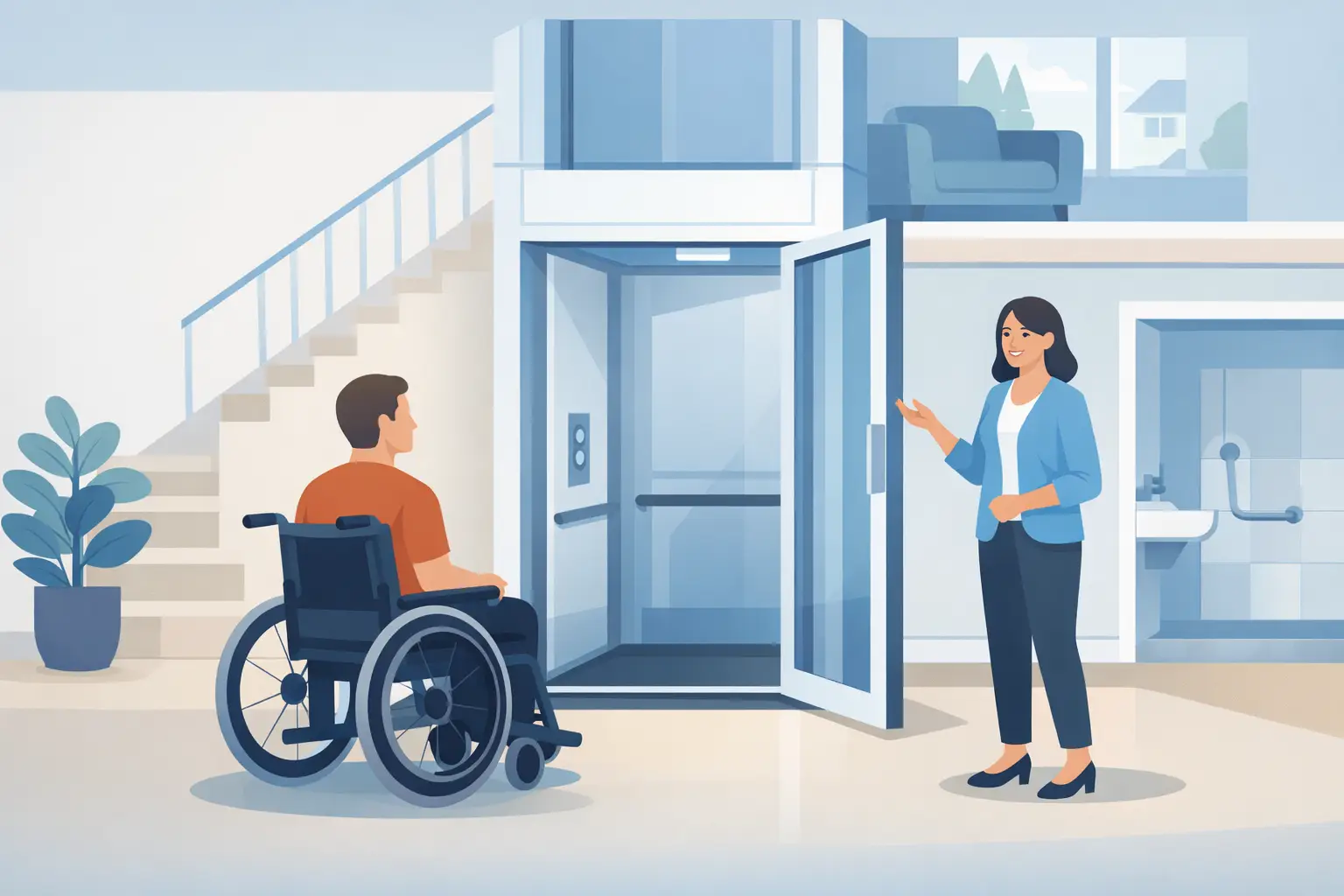
Choosing Wheelchair Accessible Home Lifts
A staircase can turn a well-loved home into a daily obstacle faster than most people expect. For households planning around mobility needs, wheelchair accessible home lifts are not a luxury item. They are a practical way to make every level of the home safer, easier to use and better suited to long-term living.
For some owners, the decision comes after an injury or diagnosis. For others, it is part of a renovation, a knockdown rebuild or a plan to age in place without giving up independence. Whatever prompts the enquiry, the right lift needs to do more than move between floors. It needs to fit the home, suit the user, meet technical requirements and remain dependable over time.
Why wheelchair accessible home lifts matter
A standard residential lift is not always suitable for wheelchair use. The difference is not just cabin size. True wheelchair accessibility affects door width, entry configuration, landing space, controls, ride quality and how comfortably a user can enter, turn and exit.
That matters in real homes, where space is often tight and every design choice has a knock-on effect. A lift that technically fits a wheelchair but leaves little room for carers, walking aids or easy manoeuvring can quickly become frustrating. Accessibility needs to work in day-to-day use, not only on a floor plan.
There is also a safety element. Relying on stair transfers or limiting access to part of the home can increase fall risk and reduce confidence. A properly specified home lift supports independent movement and reduces physical strain for both residents and family members.
What to look for in wheelchair accessible home lifts
The first issue is size. Wheelchair accessible home lifts generally need a larger platform or cabin than compact lifts designed for standing passengers only. The right dimensions depend on the wheelchair type, whether a carer may travel with the user, and how the entry and exit points are laid out.
Door configuration is equally important. Through-car access can be useful in some floor plans because it avoids awkward reversing. In other homes, a single-entry arrangement may be the more efficient option. There is no universal best choice. The right setup depends on the available footprint and how the home is used.
Controls should be easy to reach and simple to operate from a seated position. Clear button placement, reliable door operation and smooth levelling all contribute to comfortable use. These details might sound minor during planning, but they shape the everyday experience once the lift is in service.
Ride quality matters too. A smooth, stable ride is especially important for wheelchair users and older residents, who may be more sensitive to sudden starts or stops. Noise can also be a deciding factor in a home environment, particularly when the lift is installed near bedrooms or living areas.
New builds and existing homes require different solutions
In a new build, wheelchair accessible home lifts can usually be planned into the layout early. This gives more flexibility around shaft design, machine placement, landing access and finishes. It often leads to a cleaner result because the lift becomes part of the home rather than an addition squeezed into leftover space.
Existing homes are a different exercise. Retrofitting a lift means working around structural limits, room dimensions and the practical realities of occupied living. Sometimes the ideal location on paper is not the best option once plumbing, load-bearing walls or circulation paths are considered.
That does not mean retrofits are not worthwhile. It means the design process needs to be grounded in site conditions. An experienced provider will assess what is achievable, explain the trade-offs and recommend a system that delivers safe access without creating unnecessary building disruption.
Space, structure and compliance
One of the most common questions is whether a home is big enough for a wheelchair lift. The answer is often yes, but not without careful planning. Depending on the system, the installation may require a shaft, pit, overhead clearance or supporting structural works. Some lift types reduce the building burden, while others offer more capacity or design flexibility.
This is where a proper site assessment matters. The goal is not simply to install a lift wherever it can fit. The goal is to make sure it works safely, complies with relevant requirements and feels natural within the home.
Compliance is a major part of the process. Residential lifts and accessibility-related installations need to align with applicable standards, building considerations and electrical requirements. Homeowners and builders do not always need to know every technical detail, but they do need confidence that nothing is being improvised. A lift should be supplied and installed by a team that understands both the equipment and the full project context.
Design should support independence, not just appearance
A well-designed home lift can complement the property, but appearance should never come at the expense of usability. Finishes, colours and door styles are part of the decision, yet functional design remains the priority.
For wheelchair users, the best outcomes usually come from balancing accessibility with layout efficiency. That may mean accepting a slightly larger footprint to improve turning space, or choosing a more practical entrance arrangement over a visually neat but restrictive option. In high-end homes, there can be pressure to minimise the lift’s presence. In reality, the most successful projects are those where accessibility is built in confidently rather than disguised poorly.
Good design also considers who may use the lift in future. A homeowner might currently use a manual wheelchair, but needs can change. Carers, mobility scooters, walkers and family members all influence how suitable the lift remains over the years. Future-proofing is not about overspending. It is about avoiding a system that becomes limiting too soon.
Installation is only part of the decision
A home lift is a long-term asset, not a one-off building product. That is why after-sales support matters just as much as the initial installation. Even high-quality systems require regular servicing, inspections and occasional repairs. Without a maintenance plan, reliability can suffer and downtime becomes harder to manage.
For homeowners, that can mean real disruption. For builders and developers, it can also affect handover quality and client satisfaction. Choosing a provider that handles installation, maintenance, repairs and modernisation makes the process more straightforward over the life of the lift.
Responsive service is especially important for accessibility equipment. If a lift is central to how a resident moves through the home, any outage is more than an inconvenience. It affects daily routine, safety and independence. That is why service capability should be part of the buying decision from day one, not an afterthought once the project is complete.
Budget, value and trade-offs
Cost always plays a role, but comparing lifts on price alone can be misleading. The more useful question is what the home and user actually need. A lower-cost system may suit a compact two-storey residence with straightforward access requirements. In a larger or more complex home, a more substantial solution may deliver better value because it improves comfort, reliability and long-term suitability.
There are trade-offs in every project. A bespoke lift can offer better integration and dimensions, but may involve more design coordination and lead time. A pre-engineered option can be efficient and cost-effective, but may give less flexibility around finishes or footprint. Neither approach is automatically better. It depends on the building, the budget and the accessibility brief.
For many households, the value of a wheelchair accessible lift is measured less by resale and more by continued use of the home. Staying in a familiar environment, avoiding unnecessary moves and maintaining independence often outweigh the upfront investment.
When to start the conversation
The best time to plan a lift is before mobility becomes an urgent problem. Early planning opens up more options and usually leads to a better result. That applies whether you are building a new home, renovating an existing one or assessing accessibility upgrades for a family member.
For builders, architects and project managers, early coordination can prevent design clashes and reduce costly changes later. For homeowners, it allows time to weigh the practical choices properly instead of rushing into a system that only partly fits the need.
At Skyrise Elevators, the focus is on dependable lift solutions that work in real buildings and continue performing after installation. That means looking closely at the property, the user requirements and the service support needed to keep the lift operating safely and efficiently.
The right home lift should make access feel straightforward again. If it is planned well, installed correctly and backed by reliable support, it becomes part of how a home keeps working for the people who live in it.