


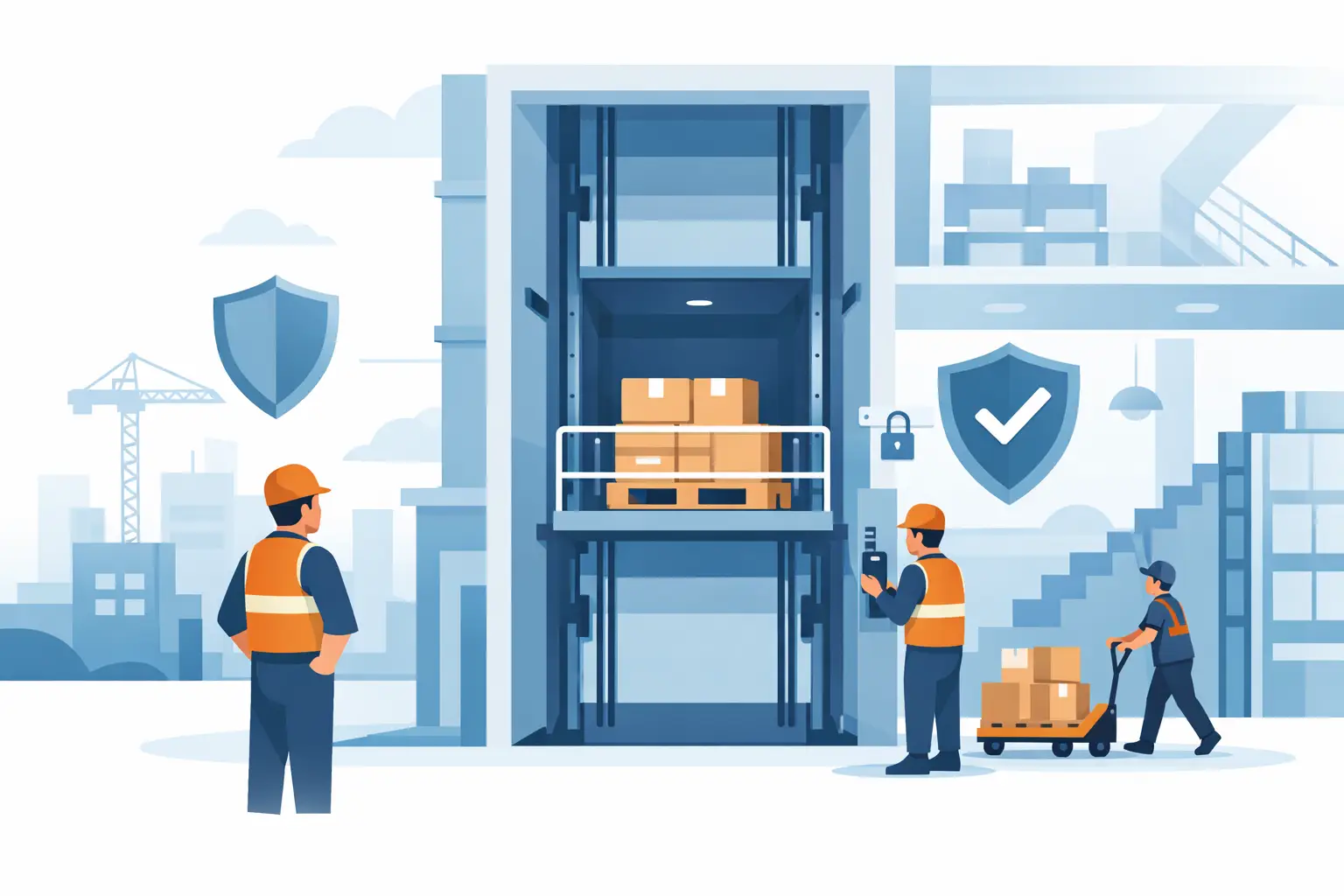
Goods Lift Installation for Safer Buildings
When stock is moving by hand between levels, delays and safety risks build up quickly. A well-planned goods lift installation changes that. It gives staff a safer way to move heavy or bulky items, reduces manual handling pressure, and helps buildings run with less disruption.
For builders, owners and facility managers, the decision is rarely just about getting a lift into a shaft. It is about choosing a system that suits the building, the load profile, the traffic pattern and the long-term maintenance plan. Get those details right early, and the lift becomes a practical asset rather than an operational compromise.
What goods lift installation needs to solve
A goods lift is there to move materials efficiently, but every site has different demands. In a warehouse, the priority may be moving pallets or trolleys between floors with minimal downtime. In a retail or hospitality setting, it may be about keeping back-of-house operations separate from customer areas. In healthcare, education or aged care environments, a service lift may need to support daily logistics without interrupting staff or visitors.
That is why goods lift installation starts with use, not just dimensions. Load capacity matters, but so do platform size, door configuration, travel height, frequency of use and the type of goods being carried. A lift moving archive boxes a few times a day will not need the same specification as one handling loaded cages throughout business hours.
This is also where future planning matters. If your building use is likely to expand, installing a lift that only meets today’s minimum requirement can become expensive later. In many cases, allowing for a higher duty cycle or a more practical car size at the start saves disruption and upgrade costs down the track.
Goods lift installation and building design
The best installations are coordinated early with the building design and construction program. Retrofitting is possible, but new builds generally allow more flexibility with shaft layout, pit depth, headroom, landing access and power supply. Early coordination also helps avoid clashes with services, structural elements and traffic flow within the building.
For developers and builders, this stage is where practical advice makes a real difference. A lift may look straightforward on a plan, but details like door handing, loading clearances and trolley turning space affect how useful it will be once the building is occupied. A technically compliant lift is not always an operationally efficient one.
Retrofitting an existing building comes with a different set of questions. Structural limitations, available floor space and access constraints often shape the solution. In some projects, a bespoke system is the right fit. In others, a pre-engineered option delivers the required performance with less site disruption and a faster programme.
Choosing the right type of goods lift
There is no single answer that suits every site. The right system depends on what is being moved, how often it needs to move, and what the building can accommodate.
A small service lift may suit hospitality venues, medical facilities or offices where documents, meals, linen or supplies need to travel between levels. A larger goods lift is better suited to retail stockrooms, commercial storage areas and industrial sites handling heavier loads. Some buildings also need attendant use, trolley access or more durable finishes to cope with frequent impacts and harder daily use.
Control features should match the way the lift will be used. In a lower-traffic environment, simple call and send controls may be enough. In a busy operation, more advanced controls, access restriction and integration with broader building systems may be worth considering. It depends on who uses the lift, when they use it, and how much downtime the site can tolerate.
Safety, compliance and operational confidence
Safety sits at the centre of any lift project, particularly when the lift is being used to move heavy or awkward loads. Goods lift installation must align with Australian standards, site conditions and the specific risks of the building. That includes the lift itself, as well as surrounding access points, landing protection, signage and user procedures.
A safe installation reduces more than technical risk. It also lowers the chance of staff injury from lifting, carrying and using stairs for loads that should be mechanically moved. For many owners and managers, that operational benefit is just as important as compliance. A lift that supports better manual handling practices can have a direct effect on workplace safety and productivity.
Commissioning is another step that should never be rushed. Testing, adjustment and handover need to be completed properly so the system performs as intended from day one. Users should also understand the lift’s limits, controls and loading requirements. Even a high-quality lift can underperform if it is not used correctly.
Why installation quality matters long after handover
A goods lift is not a short-term fit-out item. It is part of the building’s daily infrastructure, and the quality of the installation affects performance for years. Poor alignment, unsuitable finishes, under-specified components or weak coordination during construction often show up later as faults, damage or unnecessary service calls.
That is why experienced installation matters. The project needs to account for real site conditions, realistic usage and maintenance access, not just catalogue specifications. A dependable result comes from getting the details right across design, supply, installation, testing and servicing.
For owners and facility teams, this has a direct financial impact. A lift that is correctly installed and properly matched to the building will usually deliver better uptime, fewer interruptions and a longer service life. The cheaper option at tender stage is not always the better value over ten or fifteen years.
Maintenance should be part of the decision early
One of the most common mistakes in goods lift projects is treating maintenance as something to think about after installation. In practice, servicing needs to be considered from the start. Component access, expected duty cycle, spare parts support and technician availability all affect the long-term reliability of the lift.
A maintenance plan helps protect the investment and reduce avoidable downtime. That is particularly important in buildings where the lift supports daily operations. If a goods lift in a retail back-of-house area, warehouse or healthcare setting is out of action, the knock-on effect can be immediate.
Working with a provider that can install, maintain, repair and modernise the lift over its life gives owners more continuity. It means the people supporting the equipment understand how it was configured, what the site needs and where wear points are likely to develop. For many customers, that ongoing support is just as valuable as the installation itself.
What to expect during the project
Most goods lift installation projects move through a clear sequence, but the level of complexity varies. Early site review and consultation shape the specification. From there, detailed planning covers dimensions, load requirements, finishes, controls, structural interfaces and service connections. Installation then needs to be coordinated with builders, trades and access conditions on site.
Lead times depend on the type of lift, the level of customisation and the construction stage. Pre-engineered systems can often move faster, while bespoke solutions may take longer but solve more specific building or operational requirements. Neither option is automatically better. The right choice depends on timeline, budget, building constraints and how closely the lift needs to fit the application.
Good communication during the project helps avoid costly surprises. Owners and project teams should have a clear view of responsibilities, programme timing, access requirements and handover expectations. Where possible, it is worth resolving operational details before installation starts rather than adjusting them after the lift is in place.
A practical investment in building performance
Goods lifts are often treated as purely functional, but their effect on a building is broader than that. They support safer workplaces, cleaner traffic flow, better stock movement and more efficient daily operations. In the right setting, they also help preserve passenger lift performance by keeping service and freight traffic separate.
For commercial and industrial properties, that can improve uptime and reduce friction across multiple teams. For mixed-use or specialised buildings, it can support a more controlled and professional environment. The value is not just in moving goods between floors. It is in making that movement predictable, safe and less labour-intensive.
At Skyrise Elevators, that is how we approach goods lift installation – as a practical service solution that needs to work from day one and keep working over the long term. If you are planning a new build, upgrade or retrofit, the best next step is to assess the building properly, define how the lift will be used, and choose a system that supports both current operations and future demand.