


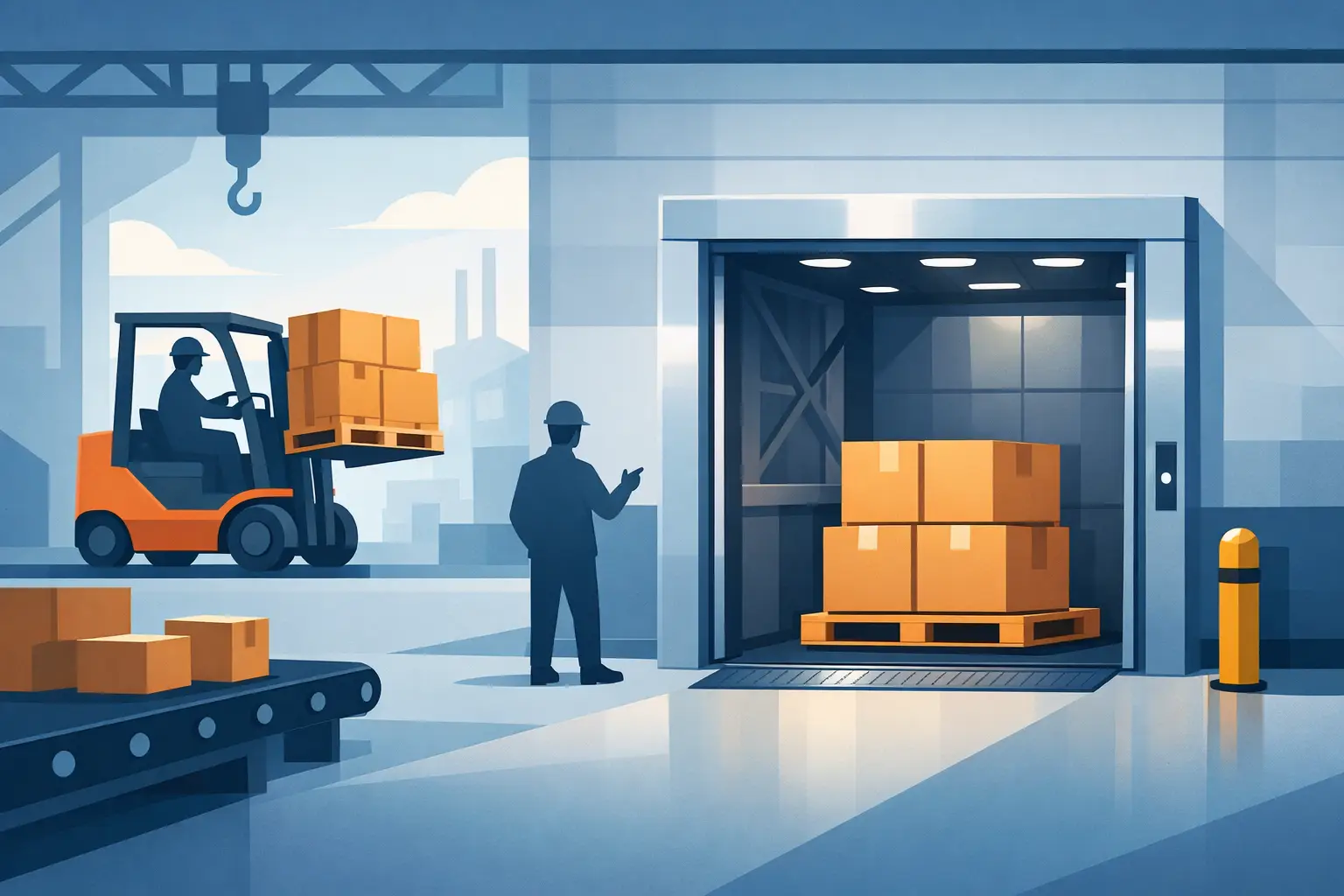
Industrial Freight Elevator Solutions That Last
When a freight lift stops in an industrial setting, the problem rarely stays confined to one floor. Pallets back up, staff lose time, loading schedules slip and safety risks increase. That is why industrial freight lift solutions need to be planned around the way a site actually works – not just around travel height and rated load.
For warehouses, manufacturing plants, distribution centres and service facilities, the right lift is part of the operating system. It needs to handle demanding traffic, suit the building layout, support compliance requirements and remain dependable under daily strain. A good result is not simply getting a lift installed. It is getting a lift solution that keeps goods moving with minimal downtime and realistic long-term servicing support.
What industrial freight lift solutions need to deliver
Industrial environments place very different demands on vertical transport than office buildings or residential sites. Loads are heavier, usage is tougher and the consequences of failure are more immediate. In most cases, a freight lift is moving stock, equipment, trolleys, cages or materials that directly affect productivity.
That changes the buying decision. Capacity matters, but so do door dimensions, internal car size, loading method, floor finishes, impact resistance and control reliability. A lift that looks adequate on paper can still create bottlenecks if it does not accommodate pallet jacks, awkward goods or repetitive loading cycles.
Safety is just as critical. Industrial traffic often involves operators under time pressure, mixed pedestrian zones and movement of goods that can shift, roll or catch. The lift design has to account for these realities through appropriate door protection, landing access, car stability and dependable controls. There is rarely a one-size-fits-all answer because every site has its own flow of people, stock and equipment.
Choosing the right freight lift for the site
The best industrial freight lift solutions begin with the operating environment. Before selecting a lift type, it helps to look at what is being moved, how often it travels, who uses it and what interruptions would cost the business.
A warehouse with frequent pallet movement may need a larger car, faster door operation and durable finishes that stand up to constant impact. A manufacturing facility may require more precise sizing to fit equipment trolleys or production materials. A back-of-house service area in a retail or healthcare setting may place greater importance on quiet operation, controlled access and reliable separation between goods traffic and public areas.
Building constraints also shape the answer. Some projects are straightforward new installations with room to design the shaft, pit and overhead space properly from the outset. Others involve retrofitting a freight lift into an existing structure where dimensions, access points and structural limitations affect what is practical. In those cases, a bespoke approach can be the difference between an efficient outcome and a compromised one.
There is also a trade-off between pre-engineered and customised systems. Pre-engineered freight lifts can be a strong option where the application is clear and dimensions are standard, particularly when programme and budget are tight. Custom solutions are often better suited to unusual loads, limited building space or specialised operations. The right choice depends on how much flexibility the site needs and whether the lower initial spend of a standard system would create operating limitations later.
Key design factors that affect performance
Load rating tends to get most of the attention, but it is only one part of the decision. An industrial freight lift also needs the right car dimensions and door arrangement. A lift with enough rated capacity can still underperform if staff have to turn loads awkwardly, double-handle stock or wait for slow loading and unloading.
Travel frequency is another factor that deserves close attention. A lift used occasionally for heavy goods has different requirements from one that runs continuously across a full shift. Higher cycle usage increases wear on doors, controls and mechanical components, so the specification should match expected demand rather than minimum compliance.
Durability of finishes matters more than many buyers expect. Checker plate flooring, reinforced wall protection and hard-wearing doors can reduce damage and lower ongoing repair issues. These details may look secondary during procurement, but they often have a direct effect on service life and appearance in tough environments.
Control features can also improve day-to-day efficiency. Simple, reliable operation is usually best in industrial settings, though access control, attendant operation or priority service may be worthwhile depending on the building. Where multiple user groups share the lift, the controls should support safe and practical traffic management rather than add unnecessary complexity.
Installation is only half the job
A freight lift is not a set-and-forget asset. Even a well-specified system will underperform if installation quality is poor or if after-sales support is limited. For owners and facility managers, that is where provider capability starts to matter as much as product selection.
Industrial freight lift solutions should come with realistic planning around commissioning, servicing, repairs and future upgrades. That includes coordination with builders and consultants during the project stage, but it also means having a maintenance structure in place once the lift is operational. If a site depends on vertical goods movement every day, response times and technician availability are commercial issues, not just maintenance details.
This is where working with a full-service provider has practical value. Installation, maintenance, repairs, modernisation and replacement are all part of the same lifecycle. A provider that understands the equipment from day one is generally better placed to support performance over time, identify wear before it becomes disruptive and recommend sensible upgrades when the lift starts falling behind operational needs.
When modernisation makes more sense than replacement
Not every ageing freight lift needs to be replaced immediately. In many facilities, the better option is targeted modernisation. If the core structure is sound, upgrades to controls, door operators, safety systems or drive components can improve reliability and reduce downtime without the cost and disruption of a full replacement.
That said, modernisation is not always the answer. If a lift is undersized for current operations, parts are difficult to source or breakdowns are becoming frequent, replacement may offer better value over the medium term. The decision usually comes down to three things: how often the lift fails, whether it still suits the site and what ongoing interruptions are costing the business.
An honest assessment is important here. Spending on repeated short-term repairs can feel cheaper in the moment, but it often becomes the more expensive path when callouts, delays and operational workarounds are added up. A clear condition review helps owners decide whether to maintain, modernise or replace with confidence.
Maintenance that supports uptime
In industrial settings, maintenance should be practical and preventive. The aim is to reduce unplanned stoppages, protect safety and keep the lift available for the work it is meant to do. That requires more than a basic attendance schedule.
A useful maintenance programme reflects the lift’s actual usage, environment and criticality. A freight lift operating in a clean, low-use storeroom has different needs from one in a dusty factory or a busy distribution facility. Service intervals, inspection focus and wear monitoring should match those conditions.
Approved technicians, proper fault diagnosis and consistent servicing records make a real difference. They help identify recurring issues early, reduce unnecessary repeat visits and support compliance obligations. For property owners and managers, that translates into fewer surprises and better control over asset performance.
Why site-specific advice matters
Two buildings can look similar on paper and still need different freight lift solutions. Loading patterns, operating hours, available space, user behaviour and business continuity pressures all change the brief. That is why site inspection and application-led advice matter.
A dependable provider will ask practical questions before recommending equipment. What goods are moving? How are they loaded? Is there enough landing space? What downtime can the site tolerate? Is this a new build, an upgrade or a replacement in a live environment? The answers shape the solution far more than a catalogue alone ever will.
For many clients, the real value lies in having one experienced partner manage that process from specification through to ongoing support. That is especially true where the lift is business-critical and there is little room for avoidable delays.
At Skyrise Elevators, that approach is central to how industrial projects are delivered – with attention to safety, reliability, fit-for-purpose design and the support needed to keep equipment working over the long term.
If you are assessing industrial freight lift solutions, the strongest starting point is not the brochure. It is a clear look at how your site operates today, where the pressure points sit and what kind of lift support you will need once the installation is complete.