


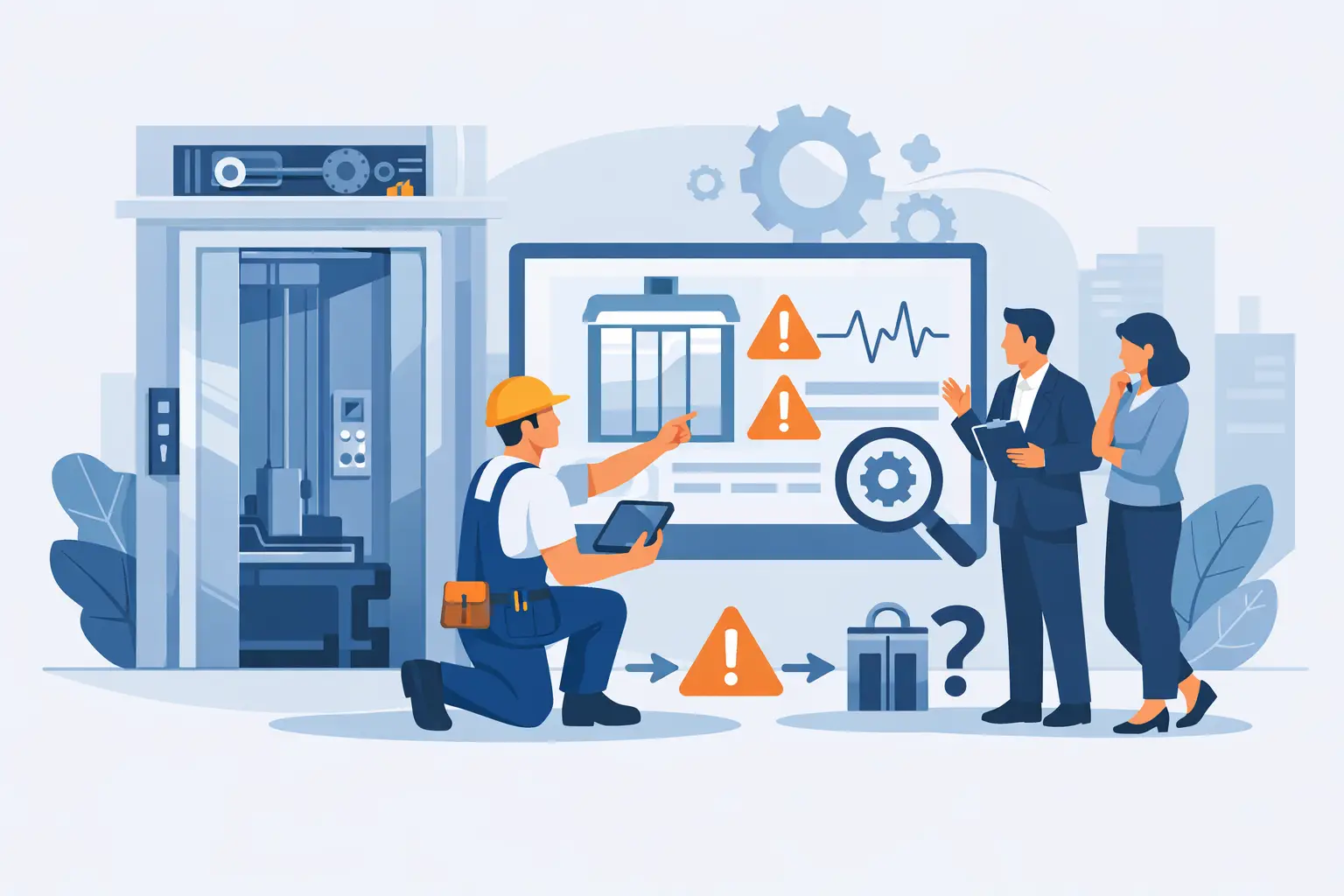
Lift Fault Diagnosis Process: What Happens Next
A lift that stops unexpectedly affects more than travel between floors. It can disrupt tenants, delay deliveries, restrict accessibility and create an immediate safety concern. A professional lift fault diagnosis process identifies the cause of the interruption without making assumptions, then confirms the lift can return to service safely and reliably.
For building owners and facility managers, knowing what happens after a fault is reported makes it easier to communicate with occupants, manage downtime and make informed repair decisions. The objective is not simply to get the car moving again. It is to address the underlying issue and reduce the chance of the same fault returning.
Make the lift safe before investigating the fault
The first priority is always passenger safety. If people are inside the lift car, they should use the emergency alarm or lift phone and wait for assistance. They should not attempt to force doors open or climb from the car. Building staff should keep the area clear and follow their emergency response procedures while an approved lift technician attends.
Where no passengers are trapped, the lift may be taken out of service to prevent further use until it has been assessed. This is particularly necessary where the fault involves levelling, door operation, unusual noises, repeated shutdowns or a car that is not responding as expected. A lift that appears to be working intermittently is not necessarily safe to use.
The technician begins by confirming the reported condition, checking the car position and establishing whether the lift controller has placed the system into a protective shutdown. This early assessment helps determine whether the issue is isolated, intermittent or likely to affect other lifts in the building.
Lift fault diagnosis process: start with the evidence
Accurate fault diagnosis relies on information, not guesswork. Before testing begins, a technician will review the symptoms reported by users and building staff. Useful details include the time the fault occurred, the floor where the car stopped, whether the doors opened or closed normally, any displayed error messages and whether there was a power interruption or storm activity.
The lift controller is a central source of information. Modern controllers can record fault codes, operating events and safety circuit conditions. These records may show a recurring pattern, such as a door lock circuit opening at a particular level or a motor protection device activating during high traffic periods. However, a fault code is a starting point, not always the final answer. The technician still needs to inspect and test the relevant components.
A structured maintenance history is also valuable. If the same component has required repeated adjustment, or if the lift has experienced a pattern of door-related callbacks, that context can point to wear, alignment issues or a component nearing the end of its serviceable life.
Checking power, control and safety circuits
The investigation commonly starts at the controller and machine equipment. The technician checks incoming power supply, protective devices, control voltage and the condition of wiring and terminals. Loose connections, voltage fluctuations, water ingress and heat can all cause intermittent faults that are difficult to identify without methodical testing.
Safety circuits are then assessed. These circuits are designed to stop lift operation if a safety device is not in the correct condition. Depending on the lift configuration, this can involve door locks, car and landing door contacts, pit switches, top-of-car equipment, overspeed protection and other monitored safety devices.
If a safety circuit is open, the task is to identify why. Bypassing or defeating a safety device to keep a lift operating is not an acceptable repair. The fault must be corrected and the protective function verified before the lift is returned to service.
Inspecting doors and landing equipment
Lift doors are responsible for a significant share of service callouts because they operate constantly and are exposed to daily wear. A door fault can result from debris in the sill, damaged rollers, worn guides, poor alignment, a failing door operator, faulty door locks or an obstruction detection issue.
The technician will inspect the car door and each landing door involved, looking for mechanical damage, rubbing, unusual resistance and poor closing performance. Door timing and alignment may be tested, along with the electrical contacts that confirm the doors are securely locked before the lift can travel.
In a retail, industrial or high-use commercial building, the cause may be linked to the environment rather than a single failed part. Dust, moisture, trolley impacts and heavy goods traffic can all affect door equipment. The right solution may include repairs alongside practical measures to protect the entrance area and support reliable operation.
Assessing the drive system and lift movement
Where a lift is slow, noisy, stopping unevenly or shutting down during travel, the diagnosis may extend to the drive system and mechanical equipment. This can include the motor, brake, encoder or positioning system, suspension equipment and travel-related sensors.
Levelling faults deserve particular attention. A lift car that does not stop accurately at floor level can create a trip hazard, especially in aged care, healthcare and accessible residential settings. The technician will test the lift under controlled conditions and examine the components responsible for accurate position feedback and stopping performance.
Not every movement issue requires major equipment replacement. In some cases, adjustment, cleaning or replacement of a worn component resolves the problem. In others, repeated faults may indicate that older control or drive equipment is no longer delivering dependable performance.
Repair decisions should address the cause, not only the symptom
Once the fault has been identified, the repair approach should match the lift’s age, condition, usage and the building’s operational needs. A failed contact, damaged cable or worn door component can often be repaired or replaced promptly. If the part is available and no further issues are found, this may be the most practical path to restoring service.
There are times when a repair resolves the immediate fault but exposes a wider reliability issue. For example, an older controller with discontinued components, recurring door faults across several floors or frequent drive shutdowns may warrant a planned modernisation assessment. Continuing to repair ageing equipment can be appropriate in the short term, but it may result in higher callout frequency, longer outages and more difficult parts sourcing over time.
A clear technician report should explain what failed, what work was completed and whether further action is recommended. For property managers, this information supports budgeting and gives owners a defensible basis for deciding between ongoing repairs and a planned upgrade.
Testing before return to service
A lift should not be placed back into normal operation just because the original fault has disappeared. After repairs, the technician carries out functional and safety checks relevant to the work completed. This may include repeated runs between floors, door cycling, levelling checks, controller monitoring and verification that safety circuits are operating correctly.
The lift is also observed for symptoms that may only appear during normal movement, such as vibration, delayed door operation or inconsistent stopping. Where the fault was intermittent, repeat testing is especially important. A one-off successful trip is not enough evidence that the issue has been resolved.
Once the system has passed the required checks, the lift can be returned to service and the building representative advised of the outcome. If further parts or specialist works are required, the lift may need to remain isolated until a safe and complete repair can be made.
Reduce future faults through planned maintenance
The best diagnosis process is supported by regular maintenance. Scheduled visits allow technicians to identify wear, adjust equipment and investigate minor irregularities before they develop into a shutdown. This is particularly valuable for lifts with high passenger use, goods lifts handling heavy loads and systems operating in demanding industrial environments.
Maintenance does not prevent every fault. Power events, component failures and accidental damage can still occur. It does, however, provide a clearer record of lift condition and makes emerging issues easier to identify before they affect building access or tenant confidence.
For facility managers, keeping a simple record of reported symptoms between visits is also helpful. Note the date, time, lift number, floor, message displayed and whether the issue repeated. Those details can shorten diagnosis time when a technician attends.
When a lift fault occurs, a calm and methodical response protects passengers, supports compliance and limits unnecessary downtime. Skyrise Elevators can assess faults, complete targeted repairs and provide the maintenance or modernisation advice needed to keep your building moving with confidence.