


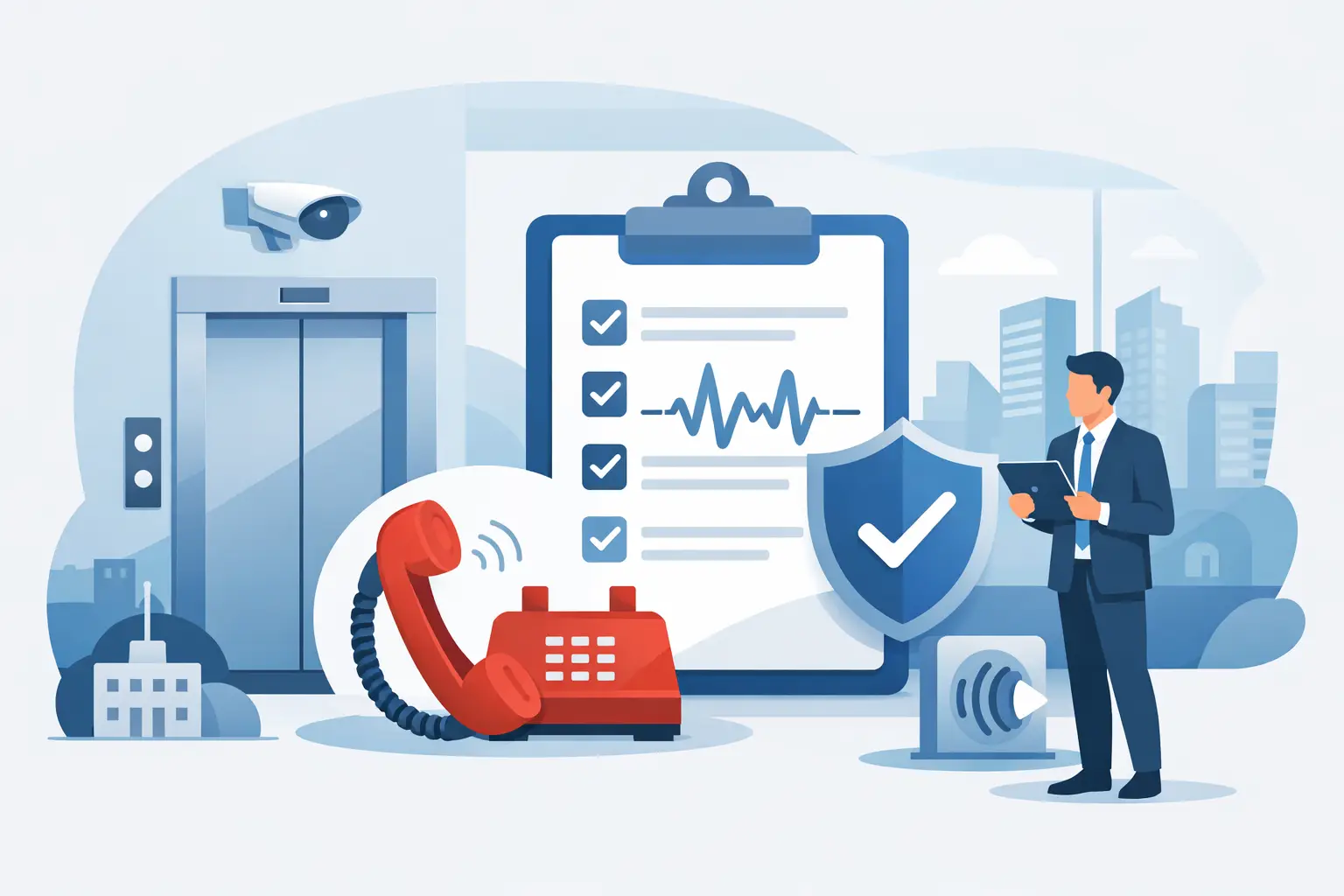
Lift Phone Compliance Guide for Buildings
A lift trapped between levels is already a high-pressure situation. If the passenger cannot contact help quickly, a manageable incident can turn into a serious safety failure. That is why a lift phone compliance guide matters for building owners, facility managers and project teams responsible for safe, reliable vertical transport.
Lift phones are not just an optional extra for convenience. In many buildings, they form part of the essential safety system that supports emergency communication when a passenger becomes trapped or the lift is out of service. Compliance is not only about fitting a phone and moving on. It depends on how the system is specified, installed, monitored, tested and maintained over time.
What a lift phone is expected to do
A lift phone provides a direct communication path between the lift car and a nominated response point when normal operation is interrupted. In practical terms, that usually means a passenger presses the alarm or emergency call button and is connected to someone who can identify the location, reassure the passenger and arrange assistance.
For owners and managers, the key issue is reliability under real conditions, not just on paper. A compliant setup should work during the types of incidents that actually occur in service – power interruptions, network issues, equipment faults and periods when the building is unattended. If the communication system only works some of the time, it creates risk for passengers and exposure for the building operator.
This is where many compliance problems begin. Some properties assume that because a lift has an emergency button, the communication system is compliant. Others rely on ageing analogue setups without checking whether line changes, service disconnections or network upgrades have affected performance. In both cases, the lift may appear covered until a fault or entrapment proves otherwise.
Lift phone compliance guide: the core areas to check
The exact compliance pathway can vary depending on the lift type, building use, age of the installation and the applicable Australian standards, codes and state requirements. Even so, most sites should review the same core areas.
First, the phone must connect reliably to an attended response point or emergency monitoring arrangement. It is not enough for the call to ring somewhere in theory. There needs to be a clear process for who answers, when they answer and what they do next.
Second, the system needs correct identification. When a call is received, the responder should be able to identify the site and the specific lift quickly. In a multi-building or multi-lift property, vague labelling can delay rescue and create confusion during an incident.
Third, backup and continuity matter. If the building loses mains power or the primary phone service is interrupted, what happens to the emergency communication path? Depending on the system, battery backup, GSM or other communication methods may be needed to maintain operation.
Fourth, testing and maintenance must be documented. A lift phone that was compliant at handover can drift out of compliance if batteries fail, lines are disconnected, signal strength changes or the monitoring arrangement lapses. Regular testing is part of the job, not an administrative extra.
Why older lift phones often create compliance risk
A large number of compliance issues are tied to older infrastructure. Many existing lifts were installed with communication systems designed around older telephone networks. As telecommunications services change, those systems may become unreliable, incompatible or unsupported.
This is a common issue in older commercial buildings, apartment blocks, schools and industrial sites. The lift itself may still be structurally sound, but the emergency phone arrangement may no longer meet current expectations for reliability and response. A line that drops out intermittently, a handset with poor audio, or a monitoring number that is no longer staffed can all undermine compliance.
Modernisation is often the practical answer, but the right upgrade depends on the building. In some cases, a simple replacement of the lift phone unit is enough. In others, the site may need a broader review of the communication pathway, controller integration, battery support and monitoring setup. It depends on the age of the lift, the existing wiring, the coverage available on site and the operational risk profile of the property.
Who is responsible for lift phone compliance
Responsibility usually sits with the building owner or the party managing the asset, even when maintenance is outsourced. For strata properties, that may mean the owners corporation or body corporate. In commercial property, it is often the owner, facility manager or managing agent. For new projects, the builder and developer also need to ensure compliant specification and handover.
That shared responsibility can create gaps. The telecom provider may assume the lift contractor is handling the emergency communication function. The lift contractor may only be responsible for the lift equipment, while the building manager assumes the line is still active. If no one checks the full chain from button press to answered call, problems can sit unnoticed.
A dependable compliance approach brings these parties together. The lift contractor should verify the lift-side equipment and operation. The building representative should confirm the response process, service continuity and recordkeeping. If there is third-party monitoring, the service agreement should be clear, current and tested.
Lift phone compliance guide for new installations
For new developments, the best time to address compliance is before the lift is installed, not at practical completion. Emergency communication should be considered part of the lift design brief from the start.
That means confirming the communication method, site coverage, power backup requirements, call routing, identification protocol and ongoing monitoring arrangement early in the project. This is especially important in mixed-use developments, healthcare facilities, aged care environments and high-traffic commercial buildings where response expectations are higher and downtime can affect more people.
It also pays to think beyond handover. A compliant new lift phone system should be easy to test, simple to identify and straightforward to maintain. If the setup is overly complex or dependent on multiple third parties with unclear responsibilities, the risk of future failure increases.
Testing, maintenance and records
Routine servicing is where compliance becomes real. A lift phone should be checked as part of a structured maintenance program, with test results and defects recorded properly. If a fault is found, it should be treated with the seriousness of a safety-related issue, not left for the next convenient visit.
Good records matter for practical reasons as much as regulatory ones. If there is an incident, the building operator may need to show that the communication system was tested, functional and managed appropriately. Clear records also help identify recurring faults, weak signal areas, battery degradation and response process issues.
In many buildings, communication faults are intermittent rather than permanent. That makes casual checks unreliable. A quick press of the button once every few months may not reveal poor call quality, delayed answer times or dropout under low-power conditions. Proper testing is more thorough and should be carried out by approved technicians who understand both lift systems and the communication pathway.
Common compliance gaps in existing buildings
The most common problems are not always technical failures. Often, they are service gaps. The phone works, but the call goes to an unstaffed office after hours. The system is installed, but the lift identification is incorrect. The unit has backup power, but the battery has not been replaced for years.
Signal quality is another frequent issue where GSM-based systems are used. Basement lifts, plant-heavy environments and dense concrete structures can all affect performance. A site survey and live testing are often needed before settling on the final setup.
Another common gap is assuming maintenance and compliance are the same thing. Maintenance supports compliance, but it does not guarantee it unless the scope specifically covers the emergency phone, testing procedure, response verification and documentation. If your current agreement is vague, it is worth reviewing.
Choosing the right support partner
Lift phone compliance is easier to manage when one provider can assess the system, recommend upgrades, complete the work and support it through ongoing servicing. That reduces handover points and helps keep accountability clear.
For many property owners and managers, the real priority is simple: when someone presses the emergency button, the call must go through and help must follow. Achieving that consistently requires technical knowledge, practical testing and responsive support, especially across portfolios with different lift ages and building types.
Skyrise Elevators works with residential, commercial and industrial properties where compliance, uptime and passenger safety all need to be managed together. Whether the issue is an ageing phone unit, a modernisation requirement or a full review of lift communication systems across a site, the safest approach is to assess the risk before a fault exposes it.
If you are unsure whether your current setup still meets expectations, that is usually the sign to check it now, not after an entrapment call fails.