


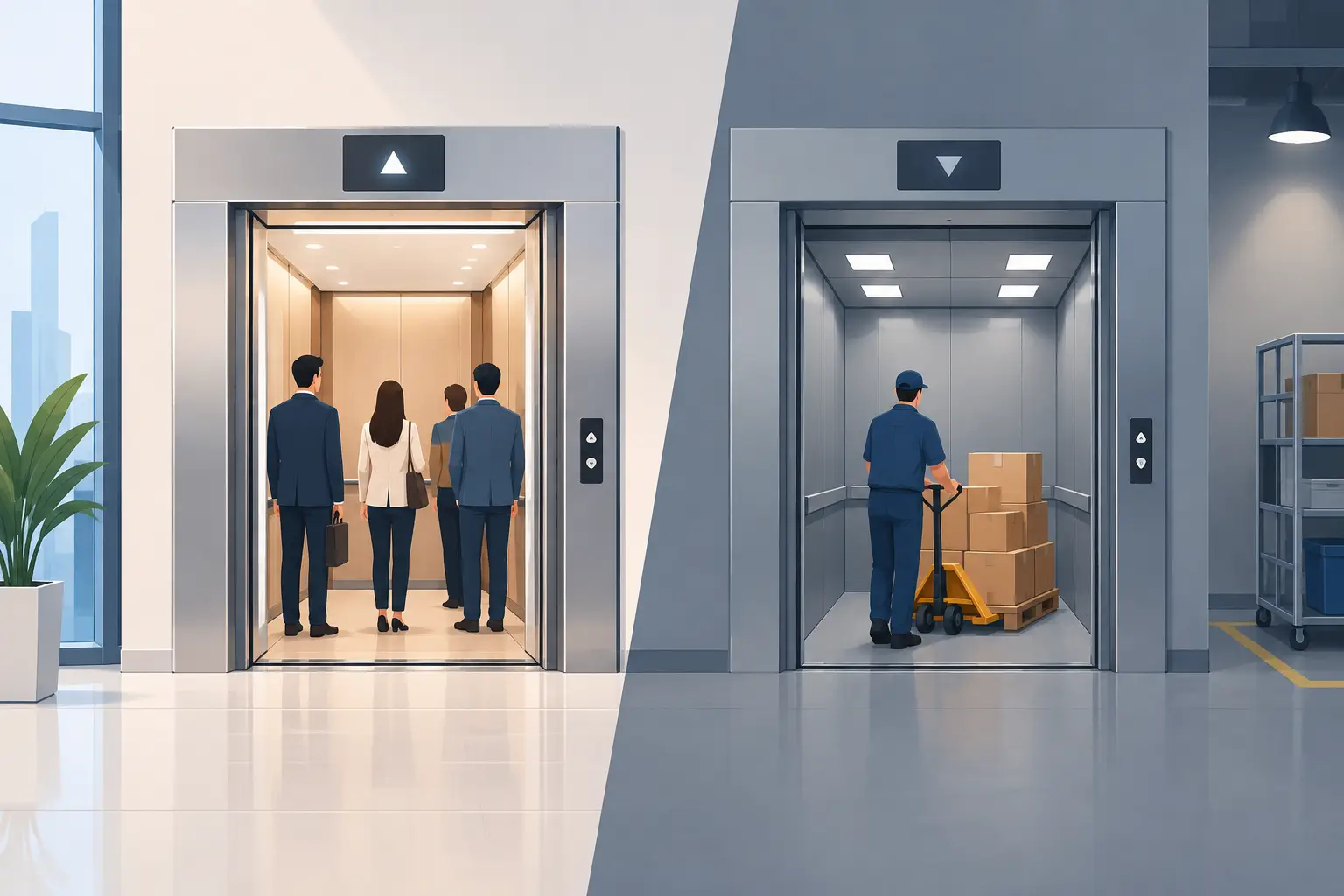
Passenger Lift vs Service Lift Explained
A lift that is right for office workers, residents and visitors may be completely wrong for moving linen trolleys, stock cages or cleaning equipment. The passenger lift vs service lift decision affects far more than the look of a lift car. It shapes daily building operations, accessibility, loading arrangements, maintenance planning and the experience of everyone using the property.
For a new development, selecting the wrong lift type can create ongoing bottlenecks that are difficult and expensive to resolve later. For an existing building, a clear understanding of each lift’s purpose helps owners and facility managers plan an upgrade, replacement or modernisation that supports the way the site actually operates.
What is a passenger lift?
A passenger lift is designed primarily to transport people comfortably, safely and efficiently between floors. It is the lift most residents, tenants, customers and visitors will use in apartment buildings, offices, retail centres, hotels, medical facilities and public buildings.
Passenger lifts are generally designed around user comfort and presentation as well as traffic flow. Car finishes can be tailored to suit the building, from practical stainless-steel panels for high-traffic commercial sites to refined interiors for residential developments and hotels. Features may include mirrors, handrails, floor indicators, automatic doors, voice announcements and access-control integration.
Capacity still matters, but it is assessed in the context of expected passenger demand. A small residential building may require one appropriately sized lift, while a busy office tower may require multiple lifts, planned around peak arrival, lunch and departure periods. Car size, rated load, door width and travel speed all need to match the building’s use.
Accessibility is also central to passenger lift design. The lift car, controls, landing arrangements and door openings must support safe access for people with mobility limitations, prams, wheelchairs and walking aids where required. Early planning is essential, particularly where access obligations and constrained existing spaces need to be considered together.
What is a service lift?
A service lift is built for the functional movement of goods, equipment and staff performing operational tasks. Depending on the building, it may carry stock, rubbish bins, linen trolleys, catering supplies, cleaning machines, maintenance tools or bulky deliveries. In some settings, a service lift can also carry authorised personnel who are accompanying the load.
The key difference is that a service lift is specified around working demands rather than public passenger experience. It may have a larger or deeper car, harder-wearing wall and floor finishes, protective bump rails, wider doors and a higher rated capacity. These details help the lift withstand frequent contact with carts, trolleys and equipment.
A service lift is common in hospitals, aged care facilities, hotels, shopping centres, warehouses, education sites and mixed-use buildings. It can be located away from public areas, with access from loading docks, service corridors or back-of-house spaces. This keeps deliveries and operational movements separate from customer and tenant traffic.
Not every goods-moving requirement needs a full service lift. Smaller goods-only lifts may be suited to items such as documents, meals or supplies, but they are not designed to carry people. The intended use must be confirmed before equipment is selected. A lift used beyond its design limits can create safety risks, increase wear and cause avoidable service interruptions.
Passenger lift vs service lift: the practical differences
The most useful way to compare a passenger lift and a service lift is to look at what happens at the building every day. A passenger lift manages people flow. A service lift protects operations from becoming a disruption to that flow.
Capacity and car dimensions
Passenger lifts are available in a broad range of capacities, but their car dimensions are usually selected to accommodate people, accessibility needs and anticipated traffic. A service lift often requires more room for wheeled loads, long equipment or multiple trolleys. Its rated load may also be higher, although a larger capacity is not automatically the right answer if the car layout and entrance width do not suit the goods being moved.
Measure the actual items that need to travel between floors. Consider a loaded linen trolley, pallet jack, hospital bed, catering cart or rubbish bin at its widest point, including the space needed for an operator to manoeuvre it safely. This practical check prevents a lift from becoming a daily obstruction.
Doors, finishes and durability
Passenger lift interiors are often specified to complement the building’s architecture. They still need to be durable, especially in apartment complexes and commercial buildings, but visual presentation is usually a priority.
Service lifts place greater emphasis on protection and resilience. Stainless-steel finishes, reinforced flooring, wall protection and more durable door treatments are common choices. These features are not simply cosmetic. They help reduce damage caused by deliveries and equipment, which can limit repair costs and keep the lift available for work.
Location and traffic management
Where the lift is positioned can be as important as the lift itself. A passenger lift should be easy for occupants and visitors to find, with suitable lobby space and safe access at each landing. A service lift should connect efficiently to the places where goods arrive, are stored or are needed.
In a hotel, for example, a separate service lift allows housekeeping and food service teams to work without occupying guest lifts. In a retail or office building, it allows stock and maintenance equipment to move from the loading area without competing with tenants and customers. In a residential building, a designated service lift can reduce damage and disruption during move-ins, contractor work and planned maintenance.
Speed, controls and access permissions
Passenger lift performance is often assessed through waiting times and handling capacity at busy periods. Service lift performance is more closely tied to availability when operational teams need it. Both may require access control, but the purpose differs.
Passenger lifts may use security cards or destination controls to manage tenant access. Service lifts can be restricted to authorised staff, loading dock personnel or contractors. Controls can also be configured to support different operating modes, such as protected use during deliveries or priority access for building staff when appropriate.
Do you need both lift types?
Many buildings benefit from both a passenger lift and a service lift, particularly when public traffic and back-of-house operations are substantial. However, separate lifts are not always necessary. The right solution depends on building size, occupancy, operating hours, delivery volumes, layout and budget.
A smaller commercial or residential property may use one passenger lift with durable finishes and carefully managed delivery procedures. This can be a sensible approach where goods movements are limited and the building does not have the space or demand for a dedicated service lift.
The trade-off is availability. When the only lift is occupied by movers, cleaners or contractors, residents and visitors may experience delays. The car may also sustain more wear than a passenger-focused specification is intended to handle. For a high-traffic site, the apparent saving of one lift can be outweighed by operational disruption and lifecycle costs.
Buildings with regular deliveries, food service, clinical supplies, rubbish handling or large maintenance requirements usually gain more from a dedicated service lift. It separates competing tasks, improves the passenger experience and gives operational teams equipment suited to their work.
Key considerations before specifying a lift
Lift selection should begin with a review of the building’s real use, not a generic capacity figure. Consider who will use the lift, what they will carry, when peak demand occurs and whether public users need to be separated from deliveries or staff activity.
For existing buildings, available shaft dimensions, machine space arrangements, electrical supply and landing conditions will influence the options. A modernisation may improve controls, doors, interiors and reliability, while a full replacement may be the better long-term option where the existing equipment cannot meet current operational needs.
Safety and compliance must remain central throughout the process. Lift design, installation and ongoing servicing should be completed by approved technicians who understand the equipment, site conditions and applicable Australian requirements. Regular maintenance is equally important. A well-specified lift cannot deliver reliable service if wear, door faults or control issues are left unresolved.
Plan for the lift’s full working life
The best lift choice is one that continues to suit the property after handover. That means allowing for maintenance access, realistic load use, replacement parts, future tenant needs and the possibility of changing building operations. A warehouse may add new stock-handling equipment. An aged care facility may need to accommodate different mobility devices. An apartment building may require a clearer approach to moves and contractor access as it matures.
Skyrise Elevators helps property owners, builders and facility managers assess these practical demands before recommending a lift solution. Whether the project requires a public-facing passenger lift, a hard-working service lift or a combination of both, the focus should be on safe movement, dependable performance and minimal downtime over the life of the building.
A lift should support the way your property works on its busiest day, not just meet the minimum requirement on paper.