


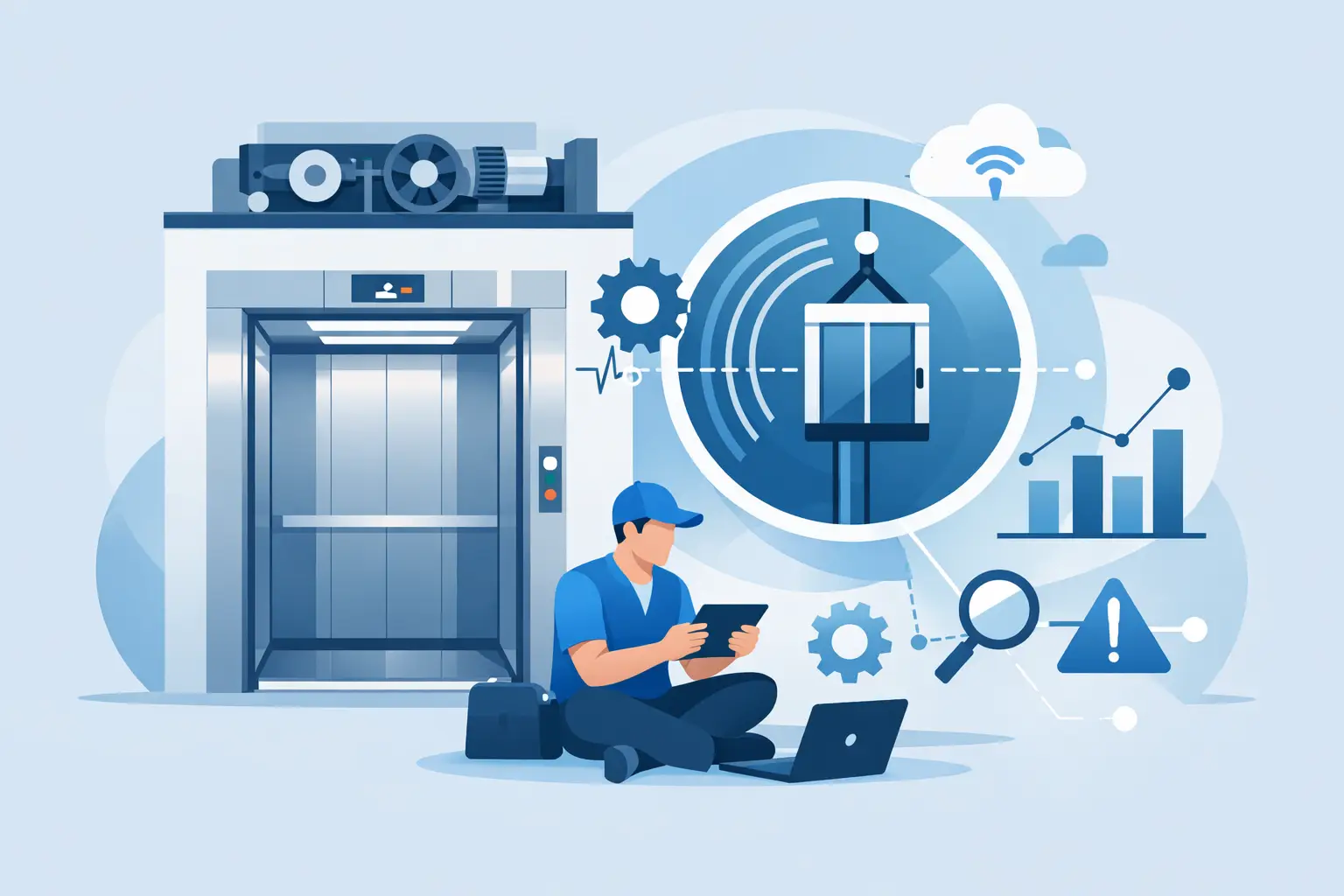
Predictive Maintenance for Lifts Explained
A lift that stops without warning does more than disrupt traffic in a building. It creates safety concerns, frustrates residents and tenants, and can quickly turn a manageable service issue into an urgent repair call. That is why predictive maintenance for lifts is getting more attention from building owners, facility managers and developers who want fewer surprises and better control over lifecycle costs.
Traditional lift servicing still has an important place. Routine inspections, scheduled servicing and compliance checks remain essential. But a fixed maintenance schedule does not always reflect how a lift is actually being used. A passenger lift in a busy medical centre has very different operating demands to one in a low-rise apartment block. Predictive maintenance adds another layer by using real operating data to spot early signs of wear, fault patterns and performance drift before a shutdown occurs.
What predictive maintenance for lifts actually means
Predictive maintenance for lifts is a service approach built around condition monitoring rather than waiting for failure or relying only on calendar-based servicing. Sensors, controller data and system diagnostics are used to track how key components are performing over time. That data is then reviewed to identify when parts are operating outside normal patterns.
In practical terms, this can include monitoring door cycles, motor performance, ride quality, levelling accuracy, starts and stops, fault logs, temperature changes and other indicators that point to developing issues. Instead of changing parts too early or replacing them only after they fail, maintenance can be planned when there is evidence that performance is deteriorating.
For property owners and managers, the real value is straightforward. You get a clearer picture of lift health, more targeted service work and a better chance of preventing major breakdowns.
Why the old maintenance model has limits
Scheduled maintenance is still necessary because lifts are safety-critical assets and must be serviced correctly. The challenge is that time-based maintenance alone can miss what is happening between visits. A component can wear faster than expected due to high traffic, environmental conditions or irregular loading. Another component may still be performing well long after its expected service interval.
This is where predictive maintenance improves decision-making. It gives technicians and asset owners more than a checklist. It provides evidence.
That matters most in buildings where downtime has a direct operational cost. In aged care facilities, hospitals, schools, shopping centres, industrial sites and multi-storey residential buildings, a lift outage can affect accessibility, deliveries, staff movement and customer experience. In these settings, reacting after a fault appears is often the most expensive option.
How predictive lift maintenance works on site
The process usually starts with data capture. Modern lifts often include controllers and diagnostics that already record operating events and fault codes. In other cases, additional monitoring devices may be installed to track usage and equipment condition more closely.
Technicians then assess patterns in the data. If door cycles are increasing but closing times are slowing, that may suggest wear in the door operator or guide system. If a motor is drawing more power than normal under similar loads, that can indicate mechanical resistance or early component fatigue. If repeated minor faults occur at the same time of day, usage patterns or environmental factors may be contributing.
The point is not just to collect information. It is to turn that information into practical maintenance action. A good predictive program helps service teams prioritise the right repairs, carry the right parts and attend site before the issue affects users.
The main benefits for building owners and managers
The most obvious benefit is reduced downtime. When faults are identified early, repairs can often be scheduled before a lift is taken out of service unexpectedly. That is better for tenants, visitors and staff, and it also reduces the pressure and cost that often comes with emergency callouts.
There is also a safety benefit. Predictive maintenance does not replace inspections or compliance obligations, but it can support safer operation by identifying abnormal behaviour sooner. Changes in braking performance, door operation or levelling accuracy are easier to address when they are caught early.
Cost control is another major advantage. Reactive repairs tend to be more expensive because failures often affect multiple parts or create after-hours urgency. Predictive maintenance can reduce unnecessary replacements while avoiding the bigger repair bills that come from letting a minor issue develop into a major fault.
For asset planning, the value is even broader. Data-driven maintenance can show whether a lift needs a straightforward repair, a component upgrade or a wider modernisation strategy. That makes budgeting easier, especially across larger portfolios where different buildings have different traffic profiles and equipment ages.
Where predictive maintenance for lifts delivers the most value
Not every building has the same maintenance profile. The return on predictive maintenance tends to be strongest where lift usage is high, uptime is critical or equipment replacement costs are significant.
Commercial offices, retail centres and mixed-use developments often benefit because lifts are in constant daily use and service interruptions are highly visible. Healthcare and aged care buildings gain value because lift reliability directly affects patient movement, accessibility and operations. Industrial sites can benefit where goods lifts and service lifts are essential to workflow and delays affect productivity.
Residential buildings are also a strong fit, especially where there are ageing systems, high resident expectations or limited lift availability. In a building with only one or two lifts, an unexpected breakdown has a bigger impact than in a large tower with multiple cars sharing the load.
It depends on the age and type of lift
Predictive maintenance is not a one-size-fits-all service. Some newer lift systems are easier to monitor because they already include advanced diagnostics and digital controls. Older systems may need retrofitted monitoring or a more selective approach based on the condition of key components.
That does not mean older lifts should be excluded. In fact, ageing equipment can be one of the best candidates for closer monitoring, especially when owners are trying to extend service life without compromising reliability. The right strategy depends on the lift’s age, controller type, parts availability, traffic demands and current fault history.
There are trade-offs. Installing monitoring equipment and setting up data review processes comes with a cost. For a low-use lift in a small building, the benefit may be modest. For a high-use system where downtime affects dozens or hundreds of people, the value can be substantial.
Predictive maintenance is not the same as deferred maintenance
A common misunderstanding is that predictive maintenance allows fewer service visits or less hands-on servicing. It does not. Lifts still require routine maintenance, testing and compliance checks by qualified technicians. Predictive maintenance simply makes those visits more informed.
When done properly, it strengthens a maintenance program rather than replacing it. The service schedule remains important, but technicians are also guided by actual equipment condition. That combination tends to produce better outcomes than either approach on its own.
For owners and managers, this is an important distinction. Choosing predictive maintenance should mean more visibility and smarter planning, not less care.
What to look for in a lift maintenance partner
Technology matters, but service capability matters just as much. Data only helps if it leads to timely action. A maintenance provider should be able to interpret lift performance data, carry out structured servicing, respond quickly when faults occur and advise honestly on whether repair or modernisation is the better option.
That is particularly important for sites with mixed equipment, older systems or specialised building requirements. Residential towers, schools, hospitals, warehouses and retail sites all have different traffic patterns and expectations. A practical maintenance plan should reflect those realities, not force every building into the same model.
Working with a provider that understands installation, repairs, modernisation and replacement as well as day-to-day servicing can also make long-term planning easier. It means advice is based on the full lifecycle of the asset, not just the next callout.
A smarter way to manage lift reliability
Lift performance is too important to leave to guesswork. If your building depends on reliable vertical transport, waiting for faults to become obvious is rarely the best strategy. Predictive maintenance gives owners and managers a better way to plan repairs, reduce avoidable downtime and make informed decisions about the future of their lift systems.
For buildings where reliability, safety and tenant experience matter, a data-led maintenance approach is not just a technical upgrade. It is a practical step towards fewer disruptions and more confident asset management.