


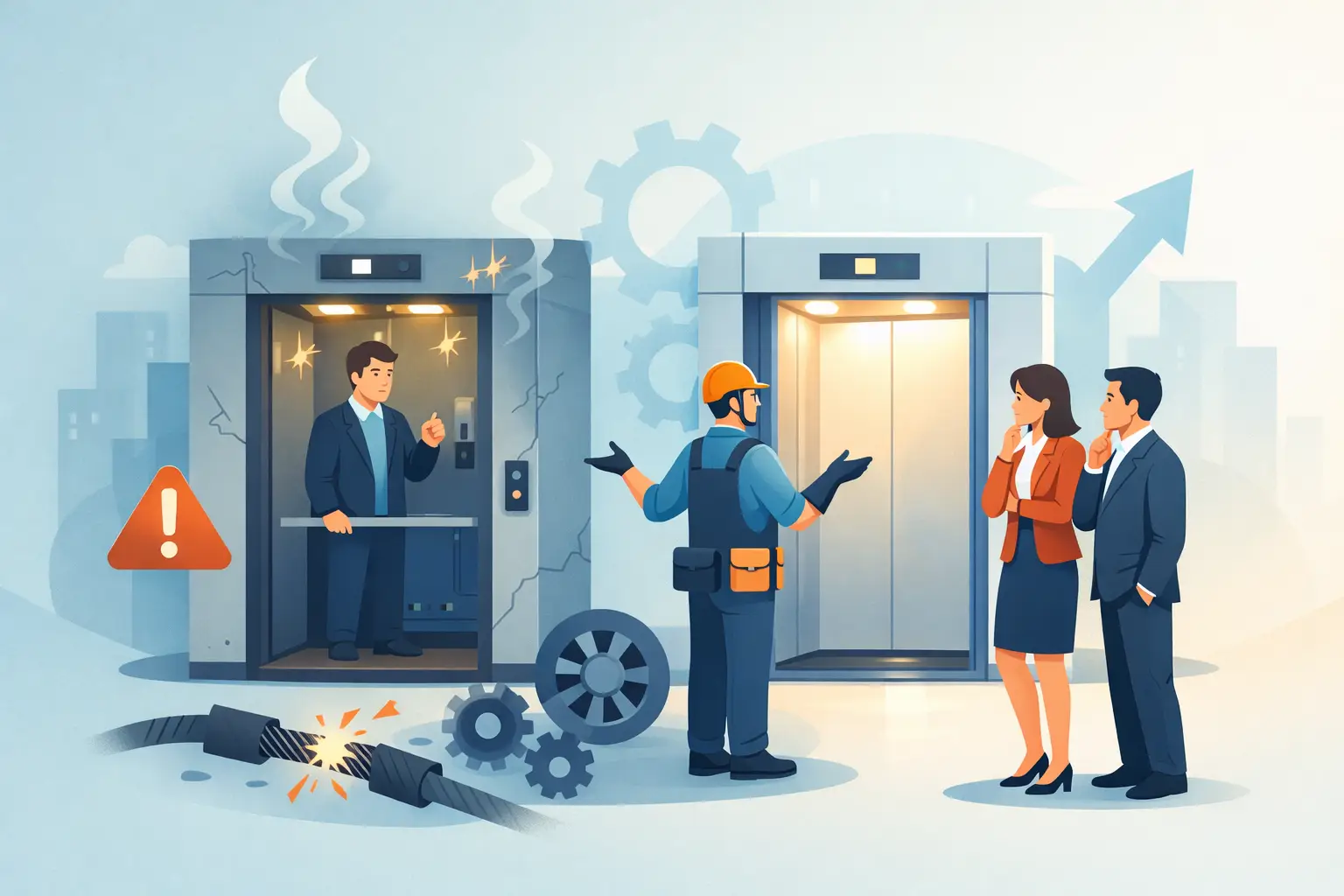
Top Signs a Lift Needs Replacement
When a lift starts drawing regular complaints from tenants, staff or residents, the problem is rarely just inconvenience. In many buildings, the top signs a lift needs replacement show up long before a complete failure – through repeated call-outs, inconsistent performance, safety concerns and rising repair costs that begin to outweigh the value of keeping the unit going.
For property owners and facility managers, the real question is not whether an older lift can be repaired again. It is whether continued repairs still make operational and financial sense. A replacement decision affects uptime, compliance, tenant experience and long-term maintenance planning, so it needs to be based on clear warning signs rather than guesswork.
Top signs a lift needs replacement in your building
A lift does not need to stop working entirely before replacement becomes the right option. In fact, many ageing systems remain technically operational while becoming less dependable, less efficient and more expensive to support.
One of the clearest signs is frequent breakdowns. If your lift is repeatedly out of service, even after parts have been repaired or adjusted, that points to a system reaching the end of its practical service life. A single fault can be manageable. Ongoing faults across different components usually tell a different story. Controllers, door operators, motors and levelling systems can all begin failing in stages, creating a pattern of disruption that no longer suits a busy building.
Another strong indicator is parts obsolescence. Older lifts often rely on components that are no longer manufactured or are difficult to source quickly. That means each repair can take longer, cost more and leave the lift offline while technicians chase compatible parts. In residential and commercial settings alike, that delay affects access, convenience and confidence in the building.
Performance decline is also worth taking seriously. A lift that feels slow, jerky, noisy or inconsistent may still run, but the user experience has already deteriorated. Passengers notice poor floor levelling, rough starts and stops, delayed door operation and erratic travel. In healthcare, aged care, retail and multi-storey residential buildings, those issues can become more than a nuisance. They can affect safety, accessibility and day-to-day operations.
When repairs stop being the cost-effective option
There is a point where another repair is simply another short-term expense. Building owners often continue repairing a lift because replacement feels like the larger decision, but the lower invoice today does not always mean the lower cost overall.
If repair frequency is increasing, your annual spend can begin to climb quickly. Emergency call-outs, after-hours attendance, temporary shutdowns and tenant complaints all add hidden cost. Even when each individual repair seems reasonable, the cumulative effect can be substantial over 12 to 24 months.
This is where lifecycle planning matters. A lift may still be serviceable, but if major components are wearing out one after another, replacement often provides better value than ongoing reactive work. It also gives building owners more control over timing. Planned replacement is usually far less disruptive than being forced into urgent action after a major failure.
There is also the issue of maintenance efficiency. Newer systems are generally easier to diagnose, support and maintain. Older equipment can require more labour just to keep it operational, particularly if technicians need to work around outdated controls or inconsistent component performance. That does not automatically mean every old lift must be replaced, but it does mean the economics shift over time.
Safety, compliance and passenger confidence
Safety concerns are among the most serious top signs a lift needs replacement. If a lift shows unreliable door behaviour, poor levelling, repeated entrapments or unusual operating faults, it should be assessed promptly. Even where faults can be repaired, repeated safety-related issues suggest the system may no longer be meeting the practical demands of the site.
Compliance expectations also change. Older lifts can fall behind current standards, especially where building usage has evolved or accessibility expectations have increased. A residential block with ageing equipment may have different needs today than when the lift was first installed. The same applies to schools, medical facilities, industrial sites and mixed-use developments where foot traffic and user profiles shift over time.
Passenger confidence matters more than many owners realise. If people hesitate before stepping into the lift, comment on strange noises or begin using stairs to avoid it, that is a sign the asset is affecting the building experience. In commercial environments, unreliable vertical transport can reflect poorly on the property as a whole. In residential settings, it can create daily frustration and genuine access concerns for older residents or anyone with mobility needs.
Age alone is not the only factor
Lift age is relevant, but it should not be treated as the sole trigger for replacement. Some older lifts remain dependable with the right maintenance and selective modernisation. Others become problematic much earlier due to usage intensity, environmental conditions, outdated design or patchwork repairs over time.
What matters most is the combination of age, condition and performance. A lightly used lift in a low-rise building may remain viable for longer than a heavily used system in a commercial or healthcare environment. Likewise, a well-maintained lift with strong service history may justify modernisation rather than full replacement.
That is why a proper site assessment is essential. The decision should take into account travel quality, breakdown history, component availability, compliance exposure, traffic demands and the building’s future needs. A growing apartment complex, a refurbished retail site or an aged care facility may require a different approach than a private residence.
Signs your building has outgrown the existing lift
Sometimes the issue is not just wear and tear. The lift may no longer suit the building.
This often happens after a property upgrade, tenancy change or usage shift. A lift designed for lighter traffic may struggle in a busier environment. A small car may not adequately support accessibility expectations, goods movement or stretcher access where those needs now exist. In that case, replacing the lift can solve problems that routine maintenance never will.
Energy efficiency can also become part of the picture. Older systems are generally less efficient than newer technology, particularly in buildings where lifts operate throughout the day. While energy savings alone do not always justify replacement, they can strengthen the business case when combined with reliability and maintenance concerns.
Aesthetic mismatch is another practical issue. In premium residential and commercial developments, an outdated lift interior or visibly ageing landing equipment can undermine the presentation of the property. This does not always require full replacement, but if appearance issues sit alongside mechanical decline, a larger upgrade may be the better investment.
Replacement versus modernisation
Not every underperforming lift needs a full replacement. In some cases, modernisation can extend service life by upgrading key components such as the controller, doors, drive system or cabin finishes. This can improve reliability and user experience without replacing the entire installation.
The right option depends on the lift’s core structure, current condition and how far the system has fallen behind. If the shaft, car frame and major mechanical elements are still in good condition, modernisation may be practical. If the system has widespread wear, ongoing faults and obsolete infrastructure, replacement is often the more durable solution.
For owners, the difference comes down to risk and return. Modernisation can be cost-effective where the asset still has solid foundations. Full replacement is usually the better path where long-term reliability, compliance and performance are the priority.
An experienced lift provider should be able to explain both options clearly, including the likely service life, downtime implications and future maintenance profile of each. That level of advice matters because the cheapest path upfront is not always the strongest operational choice.
What to do if you are seeing these warning signs
If your building is showing multiple warning signs, do not wait for a major outage to force the issue. Start with a professional assessment that looks beyond the next repair and considers the lift’s overall condition, suitability and lifecycle cost.
For property managers, this helps with budgeting and tenant communication. For owners and developers, it supports more confident planning around capital works. For residential buildings, it gives clarity on whether the current lift can remain safe and dependable or whether replacement will provide a better outcome for residents.
A well-timed replacement can reduce downtime, improve passenger safety, support compliance and restore confidence in the building’s vertical transport. More importantly, it shifts the conversation from repeated breakdowns to dependable day-to-day performance.
If your lift is becoming harder to maintain, harder to trust or no longer fit for the building it serves, that is usually the right time to have the replacement conversation properly.