


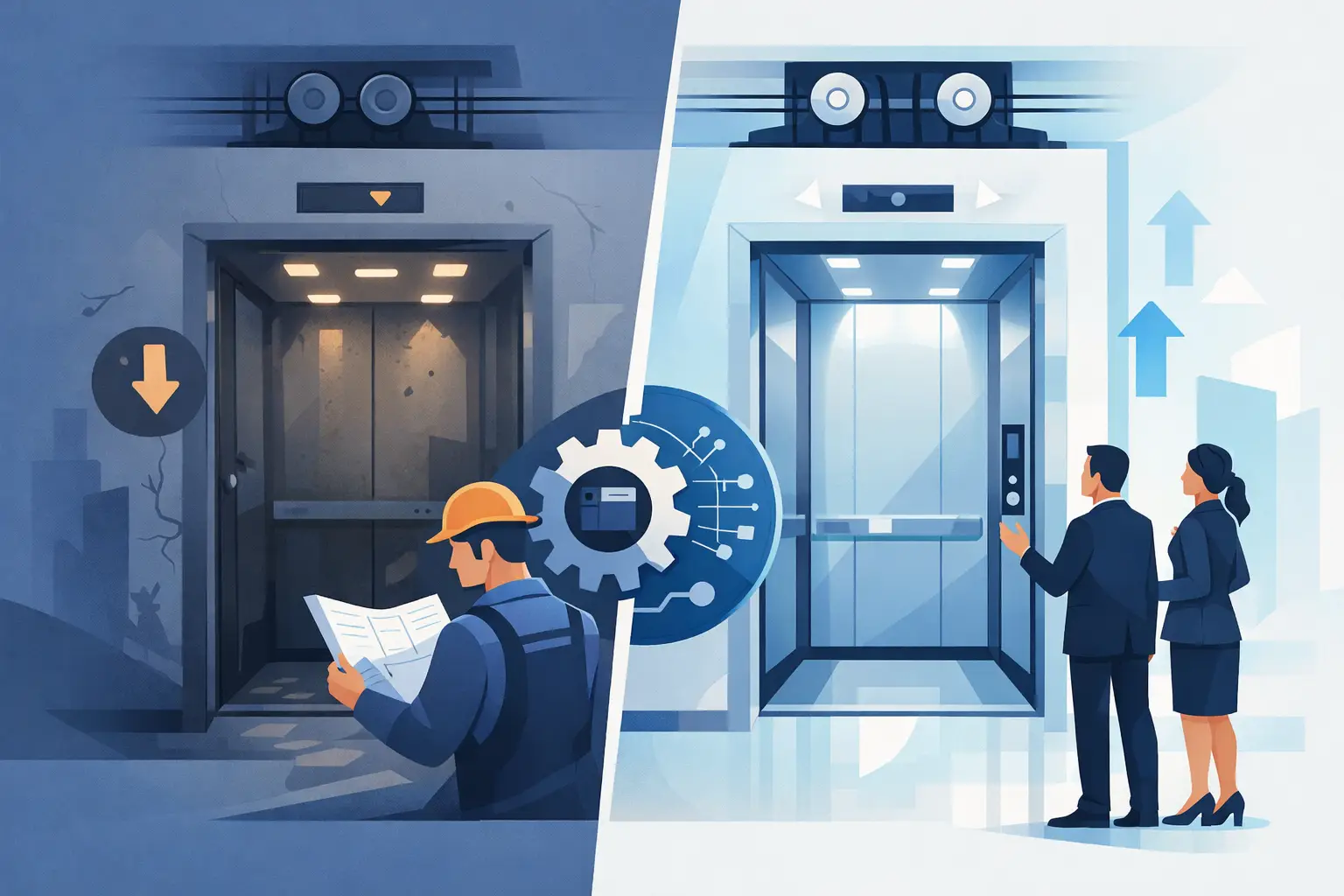
Top Signs Your Lift Needs Modernisation
When a lift starts causing regular complaints, delays at busy times, or repeated callouts, the issue is rarely just inconvenience. In many buildings, the top signs your lift needs modernisation show up well before a complete failure – and acting early can prevent larger repair costs, safety concerns, and downtime that affects tenants, staff, residents, and visitors.
Lift modernisation is not always about replacing the entire system. In many cases, targeted upgrades to controls, door operators, safety systems, interiors, or drive equipment can extend the life of the lift and improve performance without the cost and disruption of a full replacement. The right approach depends on the age of the lift, the condition of key components, and how the building uses it day to day.
Why ageing lifts become a building risk
A lift is one of the hardest-working systems in any building. Over time, mechanical wear, outdated electronics, and changing compliance expectations all begin to affect how it performs. What starts as a minor nuisance – slower doors, rough stops, or occasional faults – can gradually become a pattern of unreliability.
For facility managers and property owners, this creates a practical problem. Frequent repairs are disruptive, but they also make budgeting harder. If tenants are losing confidence in the lift, or if a residential building has elderly residents who rely on it daily, poor reliability quickly becomes more than a maintenance issue.
Modernisation is often the point where reactive spending gives way to a more controlled long-term solution. Instead of paying for repeated fixes on ageing parts, you invest in system upgrades that improve safety, ride quality, and service life.
Top signs your lift needs modernisation
Breakdowns are becoming more frequent
One of the clearest warning signs is an increase in service interruptions. If the lift is regularly out of action, trapping passengers, showing fault codes, or requiring technician attendance more often than it used to, the underlying issue may be system age rather than one isolated part.
A lift that breaks down once due to a specific fault may simply need repair. A lift that breaks down repeatedly over months often points to ageing components working beyond their reliable service life. Controls, relays, door equipment, and drive systems can all become less dependable as they wear or become obsolete.
Replacement parts are hard to source
If your service provider is struggling to obtain parts, that is a serious indicator. Older lifts often rely on discontinued components, and even when parts are available, lead times can be long and costs can be high.
This is where the economics start to shift. A repair may still be possible, but if every fault turns into a search for rare components, the lift becomes harder and more expensive to keep operational. Modernisation can replace obsolete systems with current technology that is easier to support and maintain.
The ride feels rough, noisy, or inconsistent
Passengers notice ride quality long before they understand the technical cause. Jerky starts, abrupt stops, vibration, levelling issues, and unusual noise are all signs that key systems may be wearing out or no longer operating efficiently.
In a commercial or residential setting, poor ride quality affects confidence in the building itself. It can make a property feel older, less well maintained, and less comfortable to use. In healthcare, aged care, and accessibility-focused environments, that problem is even more significant because smooth and predictable operation matters every day.
Doors are slow or unreliable
Lift doors are a common source of faults because they cycle constantly. If doors are taking too long to open or close, failing to respond properly, or reopening without reason, it may indicate worn door operators, sensor issues, or outdated controls.
This matters more than many building owners expect. Door faults are not only frustrating – they can affect traffic flow, create safety concerns, and contribute to lift downtime. In high-use buildings, slow doors can also reduce handling capacity during peak periods.
The lift struggles to level accurately
If the lift stops above or below floor level, even slightly, it should not be ignored. Poor levelling can create a trip hazard and is particularly concerning in buildings used by older residents, patients, children, or people with mobility aids.
Sometimes levelling issues can be corrected through maintenance or adjustment. But when they become recurring, they may point to ageing drive systems, worn components, or control issues that are better addressed through modernisation.
When performance no longer matches the building
Not every modernisation decision is driven by faults. Sometimes the lift still runs, but it no longer suits the building it serves.
Traffic demand has changed
A building that has been refurbished, expanded, or repurposed may place very different demands on its lift system than it did originally. A lift installed for light office use may now be serving mixed-use traffic. A residential building may have more occupants than before. An industrial site may be moving heavier goods or requiring more reliable service lift performance.
In these cases, the question is not only whether the lift still works. It is whether it works well enough for current demand. Slow response times, long waits, and congestion at peak times can signal that upgrades are needed to improve efficiency and usability.
Presentation is affecting tenant or visitor experience
An outdated lift interior does not automatically mean the lift is unsafe, but appearance still matters. Worn finishes, poor lighting, dated fixtures, and tired car interiors can undermine the impression of an otherwise well-managed property.
For strata buildings, offices, hotels, medical centres, and retail sites, presentation has a direct impact on user experience. Modernisation can include aesthetic improvements alongside technical upgrades, which is often the most practical way to improve both performance and perception at the same time.
Safety and compliance concerns should not wait
Safety features are behind current expectations
Older lifts may still operate, but they may not include features now considered standard or strongly preferred in modern buildings. That can include improved door protection, emergency communication systems, more reliable control technology, and better accessibility performance.
The right response depends on the lift type, its age, and the building environment. A lift in a low-use private setting may not need the same scope of upgrade as one in a busy public building. Even so, if your system is missing key safety-related improvements that are available through modernisation, it is worth reviewing sooner rather than later.
Your maintenance costs keep climbing
There is a point where maintaining an old lift becomes a poor investment. If callouts, repairs, temporary fixes, and parts costs are steadily increasing, modernisation can offer better value over time.
This does not mean every older lift should be replaced immediately. Some systems respond well to staged upgrades, where the most failure-prone components are modernised first. That approach can help manage capital costs while still improving reliability. The important part is understanding whether you are spending to preserve performance or simply spending to keep deterioration at bay.
What modernisation can involve
A lift modernisation project can range from selective upgrades to a more extensive overhaul. Depending on the system, this may include new controllers, door equipment, drive upgrades, car operating panels, indicators, lift phone systems, safety devices, and interior refurbishments.
The best solution is rarely one-size-fits-all. A residential building may prioritise quieter operation and dependable service. A commercial property may focus on uptime and traffic handling. An industrial facility may need stronger performance from goods or service lifts. A proper assessment looks at usage, existing equipment, risk areas, and budget rather than pushing a standard package.
That is why it helps to work with a provider that can handle the full lift lifecycle, from service and repair through to modernisation and replacement. For many building owners, that continuity leads to better decisions and fewer surprises during planning.
A good time to act is before failure forces the decision
Waiting until a lift is completely unreliable usually means less control over timing, cost, and disruption. If you are seeing several of the signs above, a condition assessment can clarify whether repair, staged upgrades, or full modernisation is the smarter path.
A dependable lift supports more than movement between floors. It supports safety, access, building reputation, and daily operations. When the warning signs are already there, dealing with them early is often the most practical decision you can make.