


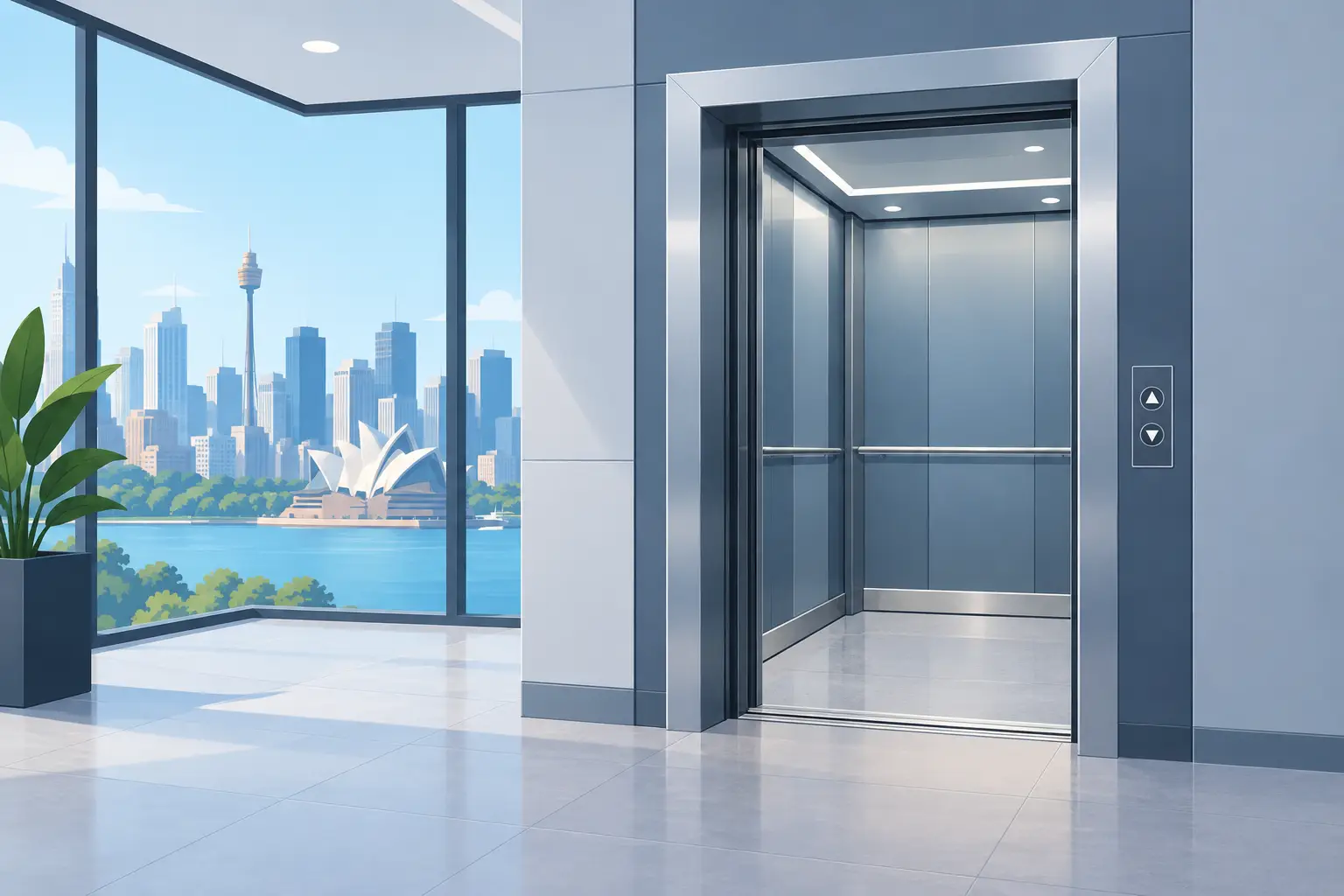
Traction Elevator Review for Australian Buildings
A traction lift review should look beyond the lift car and its finishes. For building owners and facility managers, the real test is whether the system delivers safe, predictable service at peak times, can be maintained without excessive disruption, and suits the building’s long-term operating requirements. Traction lifts remain a strong choice for many Australian residential, commercial and mixed-use properties, but the right specification depends on the site.
What a traction lift is designed to do
A traction lift moves the car using steel ropes or belts that pass over a drive sheave. The motor turns the sheave, creating the grip needed to raise and lower the lift car and counterweight. Unlike hydraulic lifts, traction systems do not rely on a hydraulic piston to travel between levels.
This arrangement is particularly well suited to buildings with regular passenger demand, greater travel heights or a need for efficient day-to-day operation. Traction lifts can be supplied with geared or gearless drive systems. Geared equipment remains suitable for some applications, while gearless permanent-magnet systems are commonly selected where ride quality, energy efficiency and reduced plant space are priorities.
The technology itself is proven. The quality of the outcome comes down to correct traffic planning, equipment selection, installation quality and ongoing maintenance.
Traction lift review: performance where it counts
For buildings that rely on lift access throughout the day, traction lifts generally offer a strong balance of speed, capacity and efficiency. They are commonly used in apartment buildings, offices, retail sites, healthcare facilities, hotels and education environments because they can be configured for a wide range of travel distances and passenger loads.
Ride quality and passenger experience
A well-specified traction lift should provide controlled acceleration, accurate floor levelling and a comfortable ride. Gearless systems can be particularly smooth and quiet, which matters in premium residential developments, medical buildings and workplaces where the lift is close to occupied spaces.
That said, ride quality is not determined by the drive alone. Guide rails, car construction, door operation, shaft conditions and commissioning all affect how the lift feels in use. A modern controller cannot fully compensate for poor installation tolerances or worn mechanical components.
Handling peak traffic
Traction lifts are effective where demand rises sharply at certain times, such as morning arrivals in an office building or school, resident movement in apartment towers, or patient and visitor traffic in healthcare settings. Correctly sizing the car, speed and number of lifts is essential.
A lift that is technically capable but undersized for the building will still create queues and frustration. During planning, assess the number of users, intended use, goods movement, accessibility requirements and likely future tenancy changes. For service-heavy sites, a separate goods or service lift may protect passenger lift availability and reduce wear.
Safety, compliance and reliability
Lift safety depends on a complete system, not a single component. A traction lift includes safety gear, overspeed protection, door interlocks, limit devices, braking systems and a controller that monitors operation. These components must be inspected, tested and maintained by suitably qualified technicians.
For Australian building owners, compliance obligations, applicable standards and state-based requirements should be considered from the design stage through to ongoing operation. A reliable provider will help clarify the requirements relevant to the building and ensure maintenance records, safety checks and fault reporting are properly managed.
Reliability also depends on how the lift is used. Repeated door abuse, rubbish in door tracks, water ingress, overloaded cars and uncontrolled goods transport can all lead to avoidable faults. Clear building procedures and responsive repair support make a practical difference to uptime.
Energy use and operating costs
A traction lift can offer favourable operating efficiency, particularly with a modern gearless motor and controller. The counterweight offsets much of the car load, so the motor does not need to lift the full weight of the car on every trip. Features such as LED lighting, standby modes and regenerative drive options may further reduce energy consumption, depending on the duty cycle and selected equipment.
Initial cost, however, is only one part of the decision. A lower-priced lift package can become costly if replacement parts are difficult to source, local technical support is limited or the system is not suited to the building’s actual traffic patterns. Consider the whole-of-life cost: installation, power use, maintenance, repairs, modernisation and the impact of downtime on occupants and operations.
For a low-rise home with limited travel and modest use, a different lift type may be more practical. For a multi-level commercial building, the performance advantages of traction equipment often justify the investment.
Maintenance requirements that should not be overlooked
Traction lifts require planned maintenance to keep mechanical and electrical components operating as intended. The service program should cover the drive system, brakes, ropes or belts, sheave, controller, door equipment, safety circuits, car fixtures and emergency communication equipment.
Maintenance frequency should reflect the lift’s age, usage, environment and criticality. A passenger lift in a busy medical centre needs a different service approach from a lightly used lift in a small residential building. Sites exposed to dust, humidity, coastal air or heavy goods traffic may require additional attention.
The most useful maintenance relationship is proactive rather than reactive. Technicians should identify worn door rollers, deteriorating ropes, brake issues, intermittent faults and controller concerns before they become a shutdown. When repairs are required, access to approved parts and technicians who understand the specific equipment can reduce disruption.
Skyrise Elevators supports this lifecycle approach by combining lift installation, maintenance, repairs and modernisation planning for properties that need dependable vertical transport over the long term.
When modernisation is better than replacement
Older traction lifts are often good candidates for staged modernisation. If the shaft, car frame and major mechanical elements remain serviceable, upgrading the controller, door operators, car finishes, fixtures or drive components may improve reliability, accessibility, appearance and energy performance without the cost and disruption of a full replacement.
Modernisation is not always the right answer. Equipment with extensive mechanical wear, obsolete components, persistent failures or a poor match for the building’s current needs may warrant replacement. A site inspection should assess the condition of the entire installation, not only the component that has recently failed.
Is a traction lift right for your property?
A traction lift is usually a sound option when a building needs reliable service across multiple floors, consistent passenger handling and a system that can be maintained for the long term. It is especially well suited to apartment developments, commercial premises, public-access buildings and sites where ride comfort and efficient operation matter.
The decision should be based on more than the lift type. Building height, shaft dimensions, traffic demand, loading requirements, accessibility, budget, electrical capacity and maintenance support all need to align. A properly assessed traction lift can provide years of safe, efficient operation. The best next step is a site-specific review that tests the equipment choice against how your building actually works, not just how it looks on a plan.