


What Happens During Lift Servicing?
A lift that seems to be working fine can still be developing wear, misalignment or safety faults behind the scenes. That is why property owners and facility managers often ask what happens during lift servicing, and whether a routine visit is really doing enough to protect uptime, compliance and passenger safety.
The short answer is that a proper service visit is far more than a quick look inside the car. A qualified technician checks how the lift is operating, inspects critical components, tests safety systems, identifies early signs of failure and records any issues that need attention. The exact scope depends on the lift type, its age, how heavily it is used and the environment it operates in.
What happens during lift servicing on site
When a technician arrives, the first step is usually to review the lift’s service history, known faults and any site-specific concerns. In a commercial building, that might include reports of levelling issues, unusual noise or intermittent door faults. In a residential setting, the priority may be smooth travel, quiet performance and reliability for daily access.
Before any technical work begins, the lift is generally taken out of normal service and made safe for inspection. This protects building occupants and gives the technician controlled access to the system. Good servicing is methodical. It follows a structured process rather than a guess-and-check approach.
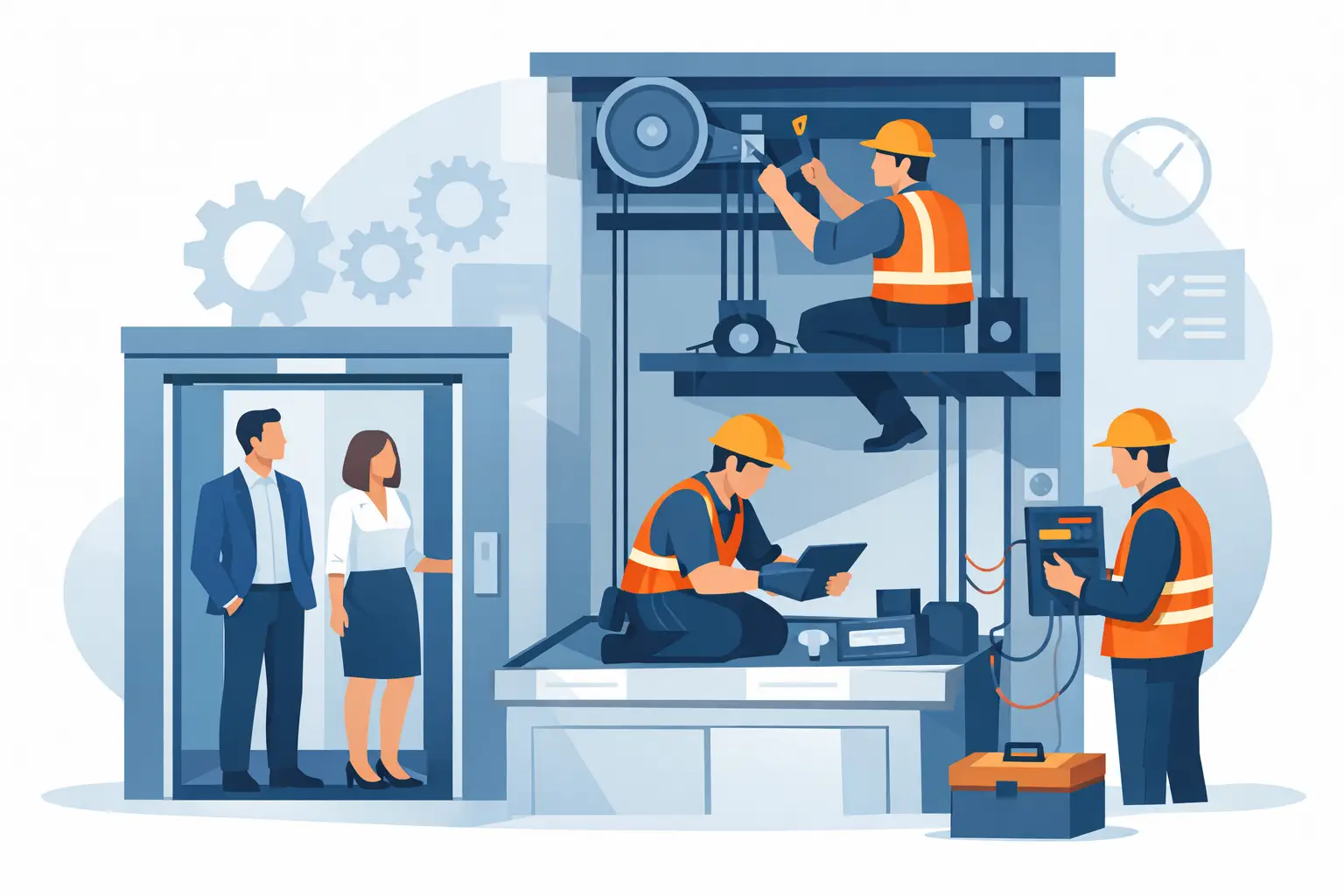
From there, the technician inspects the lift car, landing doors, door operators, control systems, machine components and safety devices. They will also look at how the lift starts, travels, stops and levels at each floor. Even small inconsistencies can point to larger issues developing over time.
The key areas checked during a service visit
One of the biggest parts of servicing is checking components that are under regular stress. Door systems are a common example. Lift doors open and close constantly, and they are one of the most frequent sources of breakdowns. A technician will inspect tracks, rollers, locks, sensors and operator performance to make sure the doors are moving correctly and responding safely.
Ride quality is another focus area. If a lift is stopping too high or too low at a floor, accelerating harshly or making unusual sounds, passengers notice it straight away. Those symptoms can be caused by wear, poor adjustment, sensor drift or control issues. Servicing helps detect those problems early, before they become a service interruption.
Mechanical parts are also checked for wear and correct operation. Depending on the system, this may include motors, drive assemblies, guide components, brakes and associated hardware. Lubrication is applied where required, but not every component simply needs more grease. Over-lubrication can create its own problems, especially where dust and residue build up.
Electrical and control elements are inspected as well. Technicians look for loose connections, signs of overheating, error codes, battery issues and control faults. Modern lifts rely heavily on electronic systems, so servicing is not just mechanical. It also involves diagnostic work and performance testing.
Safety systems are a major part of lift servicing
Safety is the core reason scheduled servicing matters. During a routine visit, the technician checks the lift’s safety mechanisms to confirm they are in proper working order. This can include emergency communication systems, alarms, door safety edges or sensors, emergency lighting, and other protective functions relevant to the installation.
Not every service includes the same depth of testing on every component. Some items are checked each visit, while others are tested at defined intervals under a maintenance schedule. That is one reason planned maintenance matters. A structured program makes sure critical checks are not missed or left to memory.
For buildings with higher usage, such as hospitals, retail sites, schools or aged care facilities, the standard of servicing often needs to be more rigorous and more frequent. Heavy traffic places more strain on lift systems, and downtime has a larger operational impact.
Cleaning, adjustment and minor corrective work
A service visit often includes practical housekeeping that helps the lift perform properly. Dust, debris and residue can affect sensors, door tracks and moving parts. Cleaning these areas may sound basic, but it can prevent nuisance faults and reduce unnecessary wear.
Technicians also carry out minor adjustments where appropriate. That might involve fine-tuning door operation, correcting levelling, tightening components or resetting certain system parameters. Small corrections made early can improve performance and reduce the chance of a breakdown between scheduled visits.
There is a limit, though. Servicing is not the same as major repair work. If the technician finds a worn part, a failing board or a safety-related defect that needs replacement, they may recommend additional work rather than trying to patch it during a routine visit. That is the right outcome. A good maintenance provider does not hide bigger issues inside a standard service call.
What happens during lift servicing if faults are found
If faults are identified, the next step depends on the severity. Some issues can be rectified on the spot if the technician has the right parts and the work falls within the service scope. Others require a separate repair visit, further testing or a quotation for replacement components.
Urgency matters here. A minor comfort issue, such as a slight vibration, may be monitored and scheduled. A door lock issue, brake concern or repeated shutdown fault may need immediate action. In some cases, the lift may need to remain out of service until repairs are completed. That can be inconvenient, but it is sometimes the safest decision.
This is where clear reporting becomes valuable. Property managers and owners need to know what was checked, what was found and what should happen next. Good service records help with budgeting, compliance, fault tracking and long-term asset planning.
Reporting and recommendations after the visit
A professional service visit should not end with vague advice. The technician or service provider should document the condition of the lift, note completed checks, record any faults and outline recommended actions. For a facility manager, this creates a useful maintenance trail. For a homeowner, it provides reassurance that the system is being looked after properly.
Recommendations may range from simple ongoing monitoring through to repairs, modernisation planning or part replacement. Older lifts, in particular, often show a pattern of repeat issues that servicing alone cannot solve. In that case, the most cost-effective decision may be to upgrade ageing components rather than continue paying for reactive call-outs.
That is an important distinction. Regular servicing reduces risk, but it does not stop every failure. Parts still wear out. Usage patterns change. Technology becomes obsolete. A dependable maintenance program should help you see those trends early, not just respond once the lift is already down.
Why lift type and building use change the service scope
Not all lifts are serviced the same way. A home lift, for example, is usually used less often than a commercial passenger lift, but that does not mean servicing is less important. Residential users often rely on the lift for accessibility, so reliability and safe operation remain essential.
In a commercial or industrial setting, servicing may involve a broader maintenance scope because the lift handles higher traffic, longer operating hours or heavier loads. Goods lifts and service lifts can experience a different kind of wear from passenger lifts. The maintenance approach needs to reflect that reality.
Environmental conditions matter too. Dust, moisture, heat and coastal air can all affect lift components over time. A lift in a clean, climate-controlled office tower will age differently from one in a warehouse or an exposed multi-storey car park. That is why fixed assumptions do not work well. Servicing should be matched to the site, the equipment and the level of use.
The value of routine servicing for owners and managers
For most building stakeholders, the biggest benefit of servicing is fewer surprises. Routine inspections help catch faults before tenants start complaining, before accessibility is disrupted and before emergency repairs become the only option.
There is also a financial benefit. Planned maintenance is usually more manageable than repeated breakdowns, urgent attendance fees and avoidable component damage. It supports safer operation, steadier performance and better asset life. For buildings where lift availability affects reputation or day-to-day operations, that consistency matters.
At Skyrise Elevators, the focus is on keeping lifts safe, compliant and dependable across the full lifecycle, whether the system is in a home, a commercial building or a demanding industrial environment.
If you are wondering whether your current maintenance program is doing enough, the right question is not just how often the lift is serviced. It is whether each visit is thorough, properly documented and tailored to how the lift is actually used.