


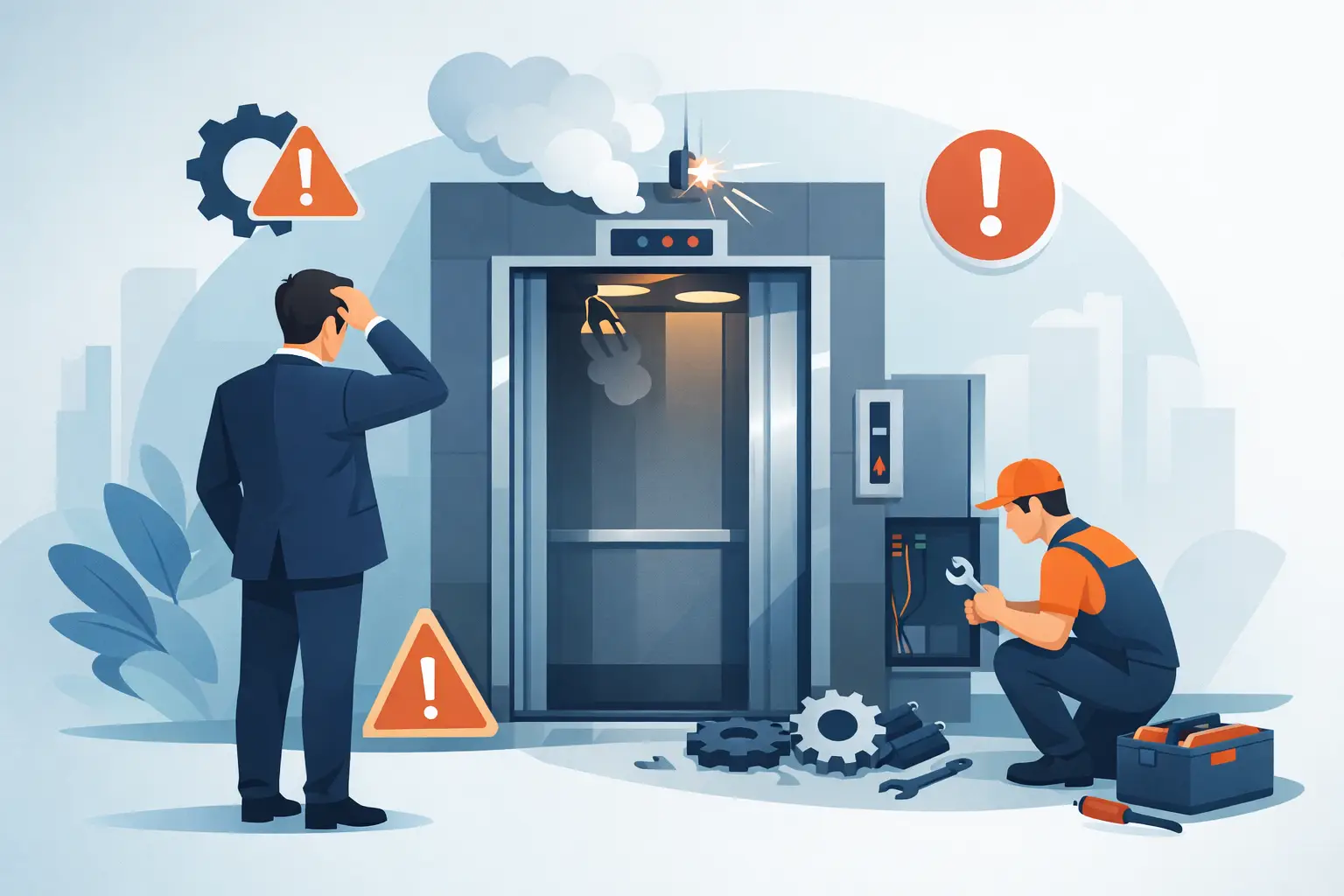
Why Does My Lift Keep Breaking Down?
A lift that fails once is a disruption. A lift that keeps failing becomes a building problem very quickly. If you are asking, why does my lift keep breaking down, the answer is usually not one single fault. Repeated breakdowns often point to a pattern – missed maintenance, ageing components, incorrect usage, environmental stress, or a system that no longer suits the building it serves.
For property owners, facility managers and developers, the real issue is not just the breakdown itself. It is the effect on residents, tenants, staff, visitors and daily operations. In some buildings, unreliable lift performance also creates compliance concerns, access issues and reputational risk.
Why does my lift keep breaking down in the first place?
Most ongoing lift faults fall into one of two categories. The first is a lift with a specific defective component that has not been fully diagnosed or properly resolved. The second is a lift that is simply reaching the point where repeated repairs are treating symptoms rather than the underlying condition.
That distinction matters. A single failed door sensor can usually be repaired efficiently. A lift with worn door gear, ageing controls, inconsistent levelling and frequent call-backs is a different story. In that case, the breakdowns are often connected, even if each incident appears separate.
The age of the equipment is a major factor, but it is not the only one. Usage levels, service quality, installation standards, building conditions and load demands all affect reliability.
The most common causes of repeat lift breakdowns
Poor or inconsistent maintenance
A structured maintenance program is one of the biggest factors in lift reliability. When servicing is irregular, rushed or reactive, minor wear can go unnoticed until it turns into a shutdown.
Lifts rely on many moving and electrical parts working together within tight tolerances. Door operators, rollers, control boards, locks, levelling systems and safety devices all need regular inspection and adjustment. If servicing only happens after a fault, the lift is already operating at a disadvantage.
Not all maintenance is equal either. Preventive servicing should do more than tick a box. It should identify patterns, replace parts before failure where appropriate, and keep records that help technicians spot recurring issues.
Door faults and obstruction issues
Lift doors are one of the most frequent sources of trouble. In busy buildings, doors open and close hundreds of times each day. That repeated cycling causes wear on tracks, rollers, operators, sensors and locking mechanisms.
Sometimes the issue is mechanical. Sometimes it is behavioural. Trolleys, prams, deliveries, impatient users holding doors open, and debris in the sill can all contribute to repeated faults. In commercial and mixed-use sites, door systems often cop the heaviest punishment.
If a lift repeatedly stops with door-related alarms, the problem may not be the same every time. Several worn or misaligned components can combine to create intermittent failures.
Ageing control systems
Older lifts often develop electrical and control faults that are harder to diagnose and more expensive to keep repairing. Relay-based or outdated controller systems may still operate, but as parts age, reliability drops.
This is where frequent breakdowns can become frustrating. One week it is a levelling issue. Next time it is a call registration fault. Then the lift trips out again for an unrelated electrical reason. The common thread is often an ageing control system that is no longer stable or well supported.
In some cases, replacement parts are also difficult to source. That leads to longer downtime and repeated temporary fixes.
Wear from high traffic or incorrect use
A lift designed for moderate residential use will struggle if it is effectively being used like a commercial goods lift. Overloading, frequent starts and stops, rough handling and unsuitable load types all accelerate wear.
This is common in buildings where usage has changed over time. A property may have more occupants, different tenancy patterns or more frequent deliveries than originally expected. The lift still operates, but the equipment is under greater strain than its design intended.
Incorrect use can also include water exposure, impact damage, forcing doors, or carrying loads that should be moved by a dedicated service lift.
Environmental conditions
Heat, dust, moisture and unstable power supply can all affect lift performance. Machine rooms and lift shafts need suitable conditions for reliable operation. If a site has poor ventilation, water ingress, excessive dust or fluctuating power, faults may become more frequent.
This is especially relevant in industrial settings, coastal environments and older buildings. Corrosion, contamination and electrical instability can shorten the life of key components and cause faults that seem unpredictable unless the wider site conditions are considered.
Poor-quality repairs or incomplete fault finding
A repeat breakdown is sometimes the result of a repair that addressed the immediate symptom but not the root cause. That does not always mean the technician was careless. Intermittent faults can be difficult to trace, particularly on older systems or lifts with multiple issues happening at once.
Still, if the same lift is breaking down repeatedly, it is worth asking whether the fault history is being reviewed properly. Good diagnosis should look beyond the latest shutdown and consider the broader service record, operating conditions and component condition.
When repeated lift repairs stop making commercial sense
There is a point where ongoing repair costs, call-out frequency and disruption outweigh the value of patching an ageing lift. That point is different for every building.
For some owners, the decision is financial. For others, it is operational. In an apartment building, resident inconvenience may be the tipping point. In a healthcare, education or aged care setting, reliability and accessibility can be non-negotiable.
If breakdowns are becoming more frequent, parts are obsolete, and tenants or occupants are losing confidence, it may be time to consider modernisation instead of another short-term fix. Modernisation can target the control system, doors, drive equipment, interiors or safety components depending on what is causing the reliability problem.
Full replacement is not always necessary. Sometimes a staged upgrade is the most practical option, especially where budget, building access or operational continuity need to be managed carefully.
How to tell whether your lift needs repair, modernisation or replacement
A repair is usually the right choice when the fault is isolated, parts are readily available and the rest of the system is in sound condition. If the lift has a good service record and the problem is specific, a targeted repair can restore dependable operation quickly.
Modernisation is usually worth considering when the lift is structurally sound but key systems are outdated or unreliable. This often applies to older buildings where the shaft and core equipment remain serviceable, but controls, door systems and electrical components are nearing the end of their useful life.
Replacement is more likely when the lift is obsolete, heavily worn, poorly suited to current building demands or no longer economical to maintain. It can also be the preferred option where performance, energy efficiency, aesthetics and compliance need a complete reset.
The right path depends on fault frequency, age, building type, passenger expectations and the availability of parts and technical support.
What to do if your lift keeps breaking down
Start with the service history. Repeated faults often leave a pattern, even when the events seem unrelated on the surface. Look at call-outs, response times, replaced parts, downtime periods and whether the same issues are returning.
Then assess the lift in context. Is the equipment suitable for the building’s current traffic? Has the building use changed? Are there environmental conditions affecting performance? Has maintenance been preventive and consistent, or mostly reactive?
From there, arrange a proper technical assessment rather than authorising one more repair by default. A reliable provider should be able to explain whether the issue is a specific defect, a maintenance gap, a usage mismatch or a sign that the lift needs modernisation. For many building owners, that clarity is what stops the cycle of repeated disruption.
At Skyrise Elevators, this is exactly the point where a practical service review can save time, cost and frustration. The goal is not simply to get the lift moving again for today. It is to restore safe, dependable operation with the right repair, upgrade or replacement strategy for the building.
Why ongoing lift reliability comes down to planning
The lifts that perform best over time are rarely the ones that never develop wear. They are the ones supported by the right maintenance schedule, timely repairs, suitable upgrades and realistic planning around lifecycle costs.
If your lift keeps breaking down, treat it as a signal rather than a one-off nuisance. The earlier the root cause is identified, the easier it is to reduce downtime, protect occupants and make a sound decision about the next step.
A reliable lift does more than move people or goods between floors. It supports the way the whole building functions, and that is worth getting right.