


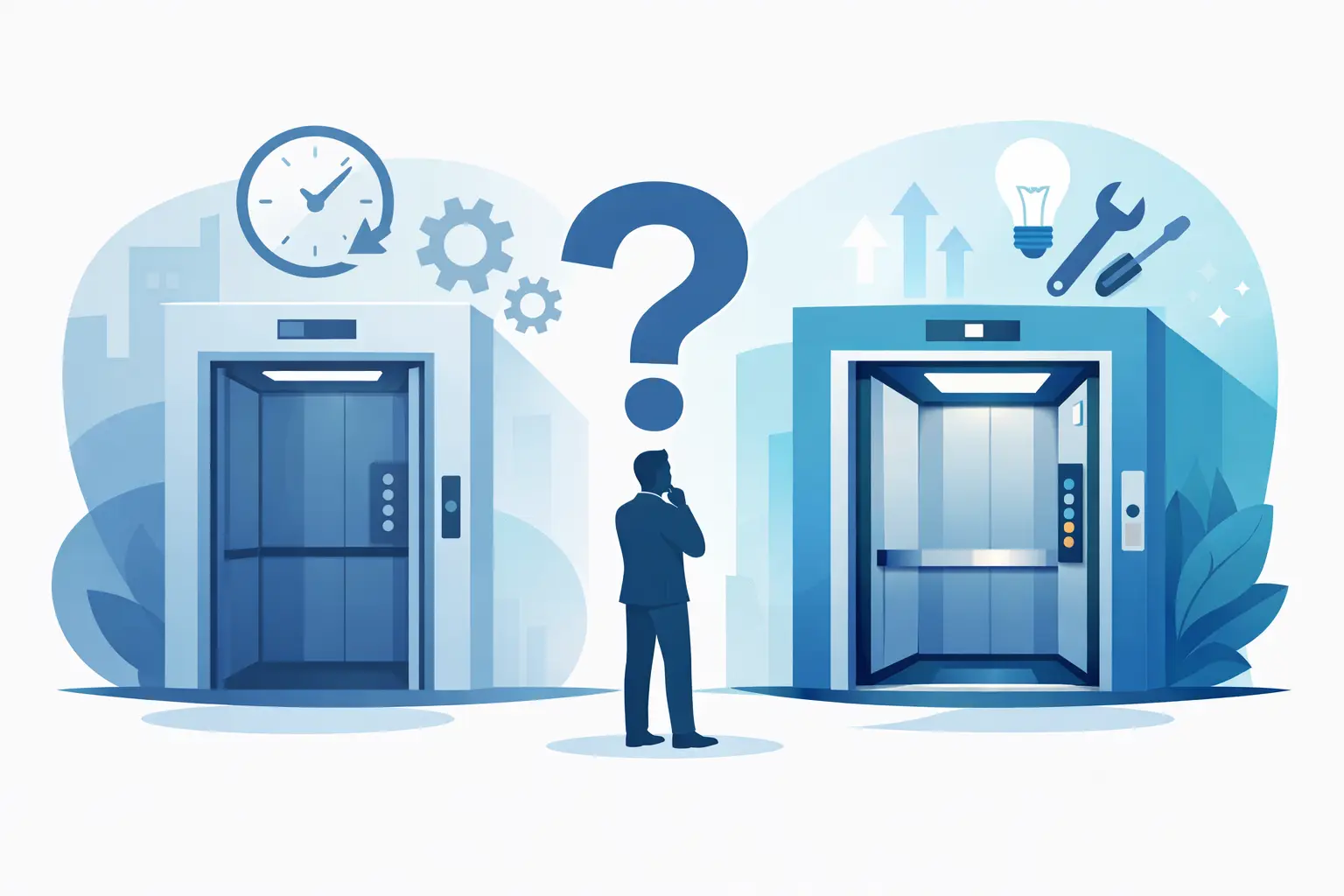
When Should You Modernise a Lift?
A lift that keeps breaking down rarely fails all at once. More often, the warning signs show up in smaller ways first – longer wait times, unreliable doors, dated controls, recurring faults, rising repair costs, and growing frustration from tenants, staff or residents. If you are asking when should you modernise a lift, the right time is usually before performance issues become a safety risk or a major disruption.
Lift modernisation is not always about replacing the entire unit. In many buildings, the car, guide rails or landing entrances may still be serviceable, while the control system, door operators, drive equipment, safety components or interiors are well past their best. A targeted upgrade can extend the life of the lift, improve reliability and reduce downtime without the cost and disruption of a full replacement.
When should you modernise a lift in practical terms?
The clearest answer is this: modernise when the lift no longer meets the building’s operational needs, safety expectations or maintenance reality. That point arrives at different times depending on the age of the equipment, the quality of past servicing, passenger volume and the type of building.
In a low-use residential building, a lift may remain structurally sound for many years but still need control upgrades because parts are obsolete. In a hospital, aged care facility or busy commercial property, higher traffic means wear shows earlier and reliability matters even more. A lift that is technically still running is not necessarily a lift performing at an acceptable standard.
If breakdowns are becoming frequent, if replacement parts are hard to source, or if tenants are starting to complain regularly, modernisation moves from a future project to a current operational decision.
The signs your lift is due for modernisation
Age matters, but age alone is not the whole story. Many lifts begin to require serious review once they are around 15 to 20 years old, particularly if key systems have never been upgraded. Beyond that point, the risk of obsolescence and unplanned outages usually increases.
A common trigger is repeated call-outs for the same or similar faults. If your maintenance provider is resetting faults, replacing minor components and keeping the unit going, but the same issues keep returning, that usually points to ageing core systems rather than isolated wear and tear. Spending more on reactive repairs each year can look cheaper in the short term, but over time it often costs more than a planned upgrade.
Door problems are another strong indicator. Slow opening and closing, misalignment, failure to respond smoothly, or doors that are regularly taken out of service create both inconvenience and risk. Doors are one of the hardest-working parts of any lift, and problems there tend to affect user confidence quickly.
You should also pay attention to ride quality. Jerky starts, poor levelling, unusual noise, vibration or inconsistent travel are not just cosmetic issues. They can indicate problems with the drive system, controller or mechanical components. In residential buildings these faults frustrate occupants. In healthcare, aged care or accessibility-focused environments, they can be unacceptable.
Safety, compliance and user expectations
One of the most important reasons to modernise a lift is to improve safety performance. Older systems may still operate, but they may lack features that are now expected in modern buildings, from more reliable door protection and emergency communication systems to updated control logic and better fault monitoring.
Compliance is not a box-ticking exercise. Building owners and facility managers have a responsibility to keep vertical transport systems safe and serviceable. If inspections are identifying recurring concerns, or if your current lift setup struggles to meet present-day standards and expectations, modernisation should be assessed seriously.
User expectations have changed as well. People expect lifts to be dependable, responsive and accessible. A dated cabin interior may not be a technical fault, but in premium residential, retail or commercial buildings it still affects the perceived quality of the property. For developers and building managers, that matters. Lift performance shapes daily building experience more than many other building systems because people interact with it constantly.
Rising maintenance costs are often the tipping point
There is a stage in a lift’s life where maintenance changes from preventative to defensive. Instead of routine servicing keeping the unit reliable, the service team is increasingly managing failures, workarounds and difficult parts sourcing. That is usually the point where owners begin asking whether they are spending money to preserve performance or simply delay a larger issue.
If service invoices are climbing, breakdown frequency is increasing and outages are affecting residents, tenants or operations, the financial case for modernisation becomes stronger. This is especially true in commercial and industrial settings where lift downtime can directly affect productivity, deliveries, customer movement or compliance obligations.
That said, not every older lift needs a full overhaul immediately. Sometimes a staged modernisation program is the more sensible option. Upgrading controls and door operators first, then planning interior improvements or drive upgrades later, can reduce immediate capital pressure while addressing the biggest risks first. The right path depends on usage, budget and the condition of the asset.
Building type changes the timeline
The answer to when should you modernise a lift also depends on what the building demands from it.
In strata and apartment buildings, reliability and resident convenience are usually the main concerns. Repeated outages create complaints quickly, especially in buildings with elderly occupants, families or limited alternative access. In these settings, modernisation is often driven by uptime, ride comfort and ongoing maintenance costs.
In office buildings and retail spaces, lift performance influences tenant satisfaction and traffic flow. A slow or unreliable lift can affect the perception of the whole property. Modernisation may also be necessary when cosmetic presentation no longer matches the standard of the building.
In hospitals, aged care facilities and education settings, the case is even stronger. Safety, accessibility and consistent performance are critical. If a lift is carrying vulnerable passengers, beds, trolleys or service loads, there is little tolerance for unreliable operation.
Industrial and service environments bring a different issue: duty cycle. Goods lifts and service lifts often work hard and wear differently from passenger lifts. Even if the car itself remains suitable, outdated controls or drive systems can become a weak point much sooner than owners expect.
Modernisation versus replacement
One of the most common questions is whether to modernise the lift or replace it entirely. The answer depends on the condition of the core structure, the availability of compatible components, the building layout and the long-term plans for the property.
Modernisation is often the better option when the shaft, car frame, entrances and major mechanical elements are still sound, but the operating systems are ageing or obsolete. It can deliver better performance, lower fault rates and improved safety with less disruption than a full replacement.
Replacement becomes more likely when the lift has major structural limitations, severe wear across multiple systems, or no realistic path to dependable long-term operation. It may also make more sense during major building redevelopment, where access, capacity or design requirements have changed significantly.
A proper assessment should look beyond the next 12 months. The real question is not just whether the lift can be kept running, but whether it can support the building reliably and cost-effectively over the years ahead.
Planning the right time to upgrade
The best time to modernise is during a controlled planning window, not after a serious outage. Once a lift becomes unreliable enough to disrupt normal building use, the project is already under pressure. Decisions made in that situation are often more expensive and more disruptive.
A planned modernisation allows time to assess traffic patterns, identify the most urgent components, schedule works to reduce inconvenience and align the project with maintenance budgets or capital works planning. For body corporates, developers and facility managers, this approach also helps with clearer stakeholder communication.
Working with an experienced lift specialist matters here. A good modernisation plan should be based on actual equipment condition, not guesswork or a one-size-fits-all recommendation. Some lifts need a full controls package upgrade. Others need door system improvement, safety updates and selective component replacement. The scope should match the asset and the building.
If your lift is becoming less reliable, harder to maintain or no longer suited to the building it serves, waiting rarely improves the outcome. A well-timed modernisation protects safety, reduces disruption and gives the building a lift system that works the way it should. If you are unsure where your equipment stands, a professional assessment is the most practical place to start.