


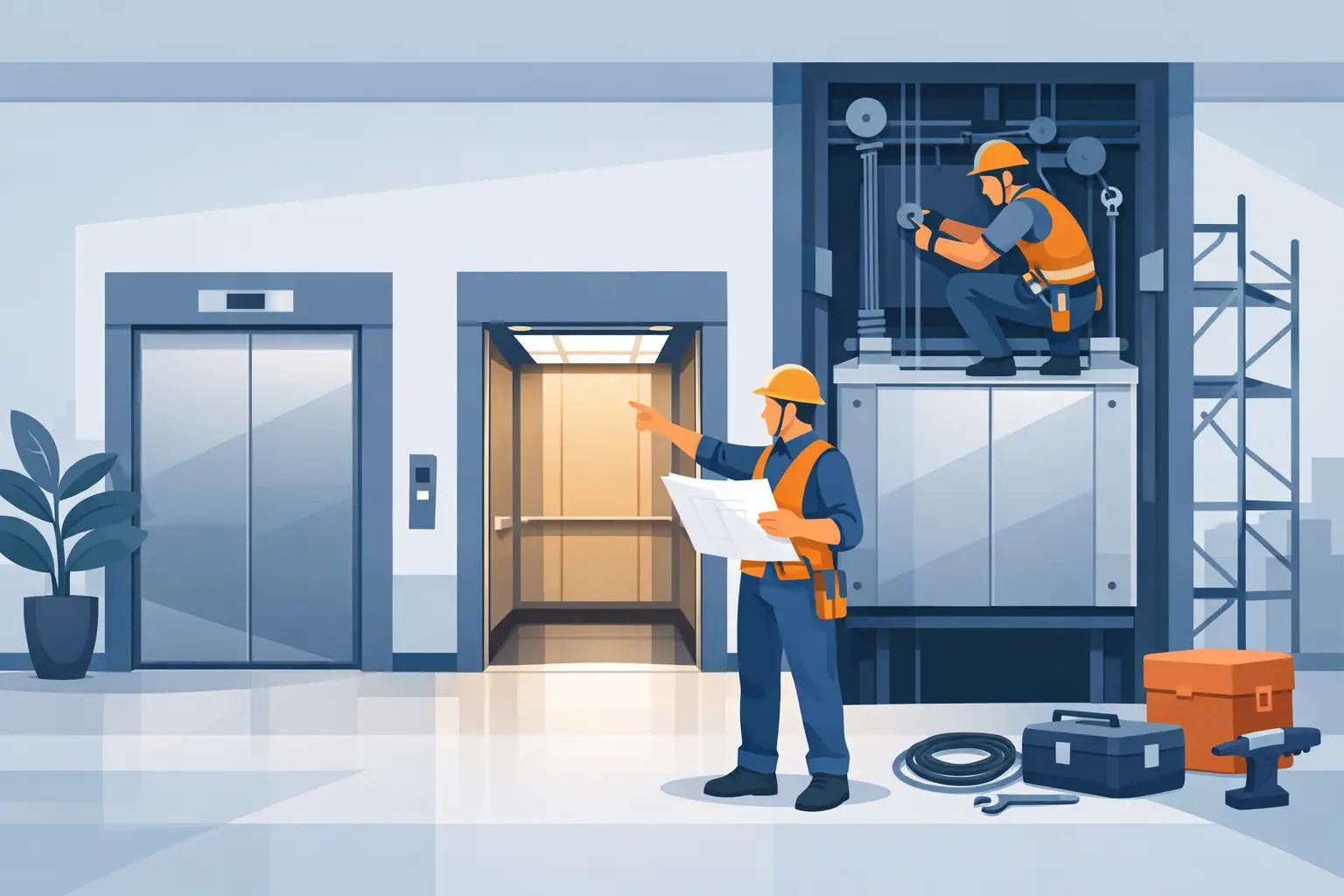
Commercial Elevator Installation Guide
A lift that is specified too late, sized incorrectly, or installed without clear coordination can slow down an entire project. A proper commercial lift installation guide helps avoid that. For builders, developers, facility managers and property owners, the goal is not just getting a lift into the building – it is getting the right system installed safely, on time, and with reliable support after handover.
Commercial lift installation sits at the intersection of building design, compliance, traffic planning, accessibility, and long-term maintenance. That means the best outcomes usually come from early planning, practical technical advice, and close coordination between the lift contractor and the broader project team.
What a commercial lift installation guide should cover
A useful commercial lift installation guide needs to go beyond product selection. The lift itself matters, but so do shaft dimensions, pit and headroom allowances, power supply, finishes, access requirements, and future serviceability. If any of these are treated as an afterthought, costs and delays tend to follow.
For some buildings, a standard passenger lift is the right fit. In others, you may need a goods lift, service lift, stretcher-capable lift, or a tailored solution for a healthcare, retail, industrial or mixed-use site. The right answer depends on traffic demand, available space, compliance needs and the way the building will actually operate day to day.
Start with the building, not the brochure
Before choosing capacity, speed, or finishes, look at how the building will function. An office building with steady morning and afternoon peaks has different demands from a medical centre, school, warehouse or aged care facility. The number of levels, expected passenger volume, trolley use, accessibility requirements and hours of operation all shape the specification.
This is also the stage to decide whether the lift is primarily about convenience, accessibility, freight movement, or a mix of all three. A small commercial tenancy may only need a compact passenger lift. A busy retail site may need higher cycle performance and more durable finishes. An industrial facility may prioritise car size, loading and hard-wearing components over passenger aesthetics.
Getting this brief right early helps prevent the common problem of under-specifying the lift and then trying to fix performance issues after the building is occupied.
Early design coordination saves time and cost
Lift installation is not a standalone trade. It affects structural design, electrical planning, fire engineering, hydraulic or machine arrangements where relevant, and architectural layouts. Early coordination reduces redesign and gives the builder clearer construction sequencing.
At concept and documentation stage, the project team should confirm shaft size, pit depth, overhead clearance, landing configurations, door widths, machine space requirements if applicable, and the path for getting equipment into position during installation. These details sound basic, but they are often where avoidable site variations begin.
There is also a practical question of who is coordinating the interfaces. If the builder, consultant and lift contractor are not aligned on dates and responsibilities, the programme can slip quickly. Lift works often rely on the shaft being ready, waterproof, powered, secure and dimensionally correct before installation can proceed efficiently.
Choosing the right commercial lift system
Passenger lifts
Passenger lifts suit offices, apartment common areas, retail buildings, hotels, education facilities and many mixed-use sites. Selection usually comes down to travel height, passenger numbers, speed, car size, finishes and traffic expectations. A low-rise building may not need a high-speed solution, but it still needs dependable door operation, smooth ride quality and accessible controls.
Goods and service lifts
Where stock, equipment, bins, linen, meals or maintenance items need to move through the building, a goods or service lift can be the better option. These lifts are designed around load type, frequency of use and durability. In some buildings, separating goods movement from passenger movement improves both efficiency and presentation.
Special-use applications
Healthcare, aged care, industrial and hospitality projects often need more tailored planning. Bed lifts, trolley-compatible cars, heavy-duty flooring, antimicrobial finishes, wash-down considerations or restricted access controls may all need to be factored in. This is where off-the-shelf thinking can fall short.
Compliance, safety and approvals
In Australia, lift installation must align with applicable codes, standards and site-specific requirements. That includes accessibility, fire and emergency interfaces, electrical compliance, and safety obligations throughout the installation process. The exact requirements vary by building class, use and location, so there is rarely a one-size-fits-all answer.
This is why compliance should be built into the project from the start rather than checked at the end. If the lift dimensions or landing arrangements do not support accessibility outcomes, or if emergency systems have not been coordinated properly, rectification can be expensive.
A dependable provider will guide clients through these obligations in practical terms – what the building needs, what the installation requires on site, and what must be in place before commissioning and handover.
Site preparation and installation sequence
A commercial lift installation usually follows a staged process. First comes design confirmation and shop drawing coordination. Then the site needs to be ready for equipment delivery and installation. That means the shaft must be built correctly, major wet works completed, dimensions checked, and access organised.
From there, guide rails, entrances, machinery, cab components, wiring and control systems are installed in sequence. The exact process depends on the lift type, building programme and whether it is a new build, refurbishment or full replacement.
Replacement projects often require more planning than new installations because existing structures, tenant access, noise restrictions and temporary shutdowns have to be managed carefully. A live building introduces constraints that do not exist on a clear construction site.
Testing, commissioning and handover
Installation is only part of the job. Before a lift enters service, it must be tested, adjusted and commissioned properly. This includes safety checks, ride performance, door operation, levelling accuracy, alarm and communication systems, and integration with building services where required.
Handover should be clear and documented. Building owners and managers need to understand how the lift operates, what routine service will involve, what to do in the event of a fault, and who to contact for support. A rushed handover can leave site teams and facility managers carrying avoidable risk.
The long-term view matters
A lift is not a fit-and-forget asset. Installation quality has a direct effect on maintenance outcomes, downtime risk and lifecycle cost. So does the quality of the product selection itself. A lower upfront price can look attractive, but if parts support, service access or reliability are poor, the building may pay for it later.
This is where choosing an installer with service and maintenance capability matters. The handover period is not the end of the relationship. Commercial lifts need ongoing servicing, fault response, safety checks and, over time, modernisation planning. For owners and facility managers, it is generally more efficient to work with a provider that understands the installation history and can support the asset through its full life cycle.
Skyrise Elevators approaches projects with that long-term mindset, combining installation expertise with maintenance, repair and modernisation support so buildings stay safe and operational well beyond practical completion.
Common issues to avoid in a commercial lift installation guide
One of the most common mistakes is locking in the lift too late. When the shaft has already been designed without proper lift input, compromises usually follow. Another issue is choosing a system based only on upfront capital cost. If the lift does not match traffic demand or site conditions, the building can end up with poor performance from day one.
It is also worth being realistic about finishes and usage. A premium interior may suit a front-of-house passenger lift, but in a service environment, durable and easy-to-maintain finishes are often the smarter investment. Likewise, if the building needs frequent heavy movement of goods, a standard passenger lift may not hold up well over time.
Finally, do not overlook communication and response support. For many commercial sites, minimal downtime is not a preference – it is an operational requirement.
A practical way to approach your project
The best commercial lift projects start with a straightforward question: what does this building need the lift to do, now and in five to ten years? Once that is clear, the technical decisions become easier. Capacity, configuration, compliance, finishes and maintenance planning can all be aligned to the real use of the building rather than assumptions.
If you are planning a new build, upgrade or replacement, bring your lift specialist in early, coordinate the details properly, and choose a system that supports both day-to-day use and long-term reliability. A well-installed commercial lift should not be a recurring problem on your asset register. It should be one less thing to worry about.