


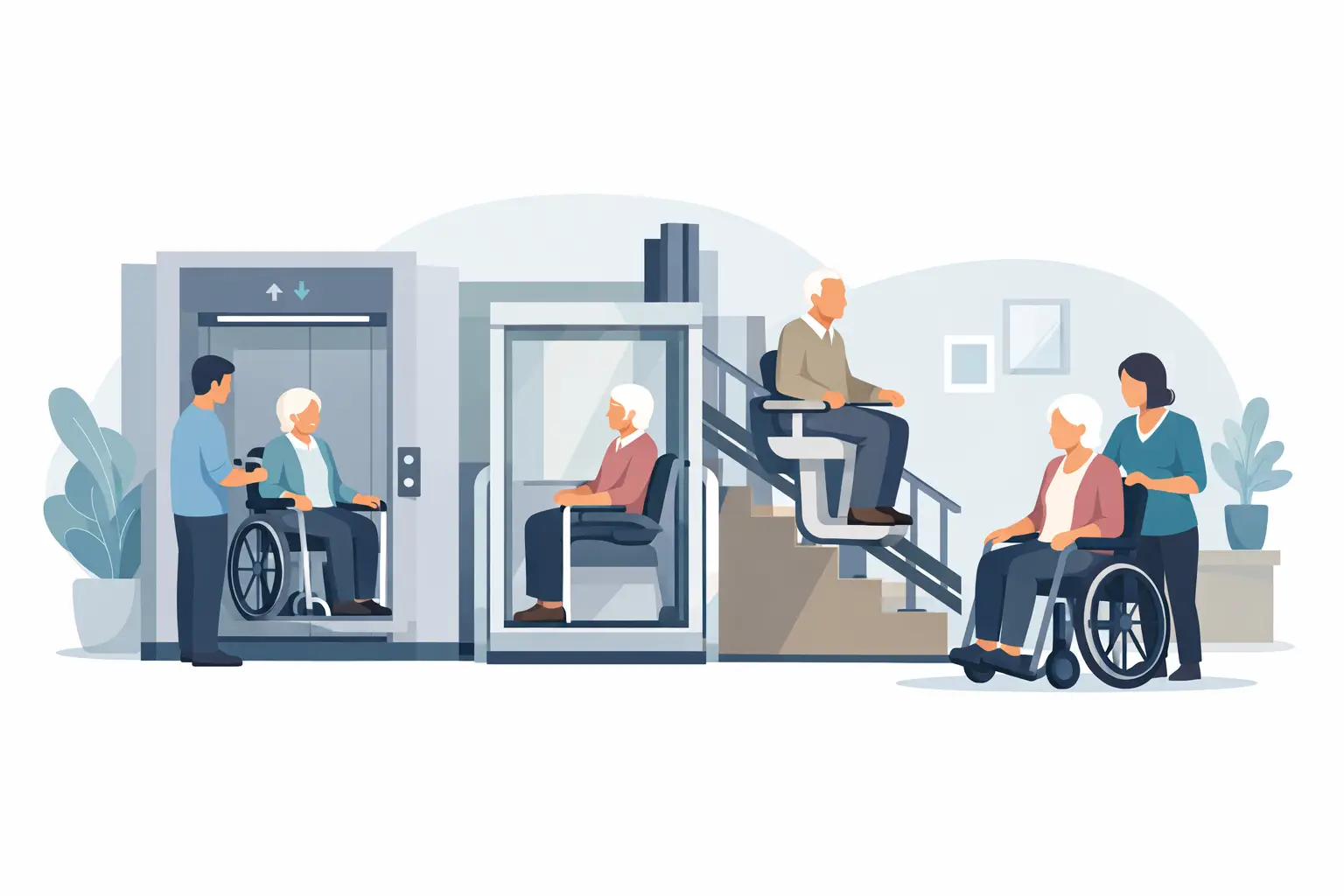
Aged Care Lift Requirements Explained
When a lift goes down in an aged care facility, it is not just an inconvenience. It can interrupt care routines, delay staff movement, affect resident dignity, and create real risks during transfers, meal service, cleaning and emergency response. That is why aged care lift requirements need to be treated as an operational priority, not a late-stage building inclusion.
In practical terms, the right lift for aged care has to do more than move people between floors. It must support resident mobility, staff efficiency, equipment transport and daily reliability, while also meeting the compliance expectations that come with healthcare-adjacent environments. For owners, developers and facility managers, that means thinking beyond basic lift capacity and looking closely at use case, traffic patterns, safety features and long-term serviceability.
What aged care lift requirements actually involve
Aged care environments place different demands on vertical transport than standard residential or office buildings. Residents may use wheelchairs, walkers or mobility scooters. Staff may need to move beds, trolleys, linen carts, food service equipment and medical items throughout the day. Visitors also add to traffic, particularly during peak periods.
Because of that, aged care lift requirements usually centre on accessibility, car size, door width, ride quality, controls, safety systems and dependable uptime. In many cases, more than one lift type may be needed across a site. A passenger lift suitable for residents and visitors may not be enough on its own if staff also need a dedicated service lift for back-of-house operations.
This is where early planning matters. A lift that appears adequate on paper can quickly become a bottleneck if it cannot comfortably handle a wheelchair and carer, or if it slows down routine movement between accommodation floors, dining areas and treatment rooms.
Accessibility is the starting point
In aged care, accessibility is not a premium feature. It is fundamental. Lift access needs to support residents with limited mobility, reduced vision, hearing impairment and varying levels of independence.
That affects everything from the dimensions of the lift car to the height and placement of buttons. Controls should be easy to reach and clearly marked. Door opening times need to allow safe entry and exit without rushing. Level accuracy matters as well, because even a small misalignment can create a trip hazard or make wheelchair access difficult.
Good accessibility also depends on the approach to the lift, not just the lift itself. Adequate circulation space outside the landing doors, logical wayfinding and smooth floor transitions all contribute to safer movement. In an aged care setting, the lift works as part of a broader access system.
Car size and load capacity depend on real use
One of the most common mistakes in aged care developments is selecting a lift based on minimum fit rather than realistic daily use. If residents regularly travel with carers, or if equipment needs to be moved between floors, the lift has to be sized accordingly.
For example, a compact passenger lift may suit a low-traffic residential setting, but it may not perform well in a facility where multiple wheelchair users need to travel during meal times or activity sessions. Likewise, if a stretcher, specialised chair or bulky trolley may need to use the lift, that requirement should be addressed early in the design stage.
It depends on the building model. A small boutique facility may operate effectively with fewer lifts and lower traffic volumes. A larger multi-storey site with high resident dependency usually needs greater carrying capacity, stronger traffic handling and more redundancy if one unit is out of service.
Safety features need to reflect the setting
Lift safety is critical in any building, but aged care raises the standard because users may be more vulnerable during delays, sudden stops or poor levelling. The right specification should support safe, calm and predictable operation.
That includes reliable door protection systems, emergency communication, battery-backed functions where appropriate, clear indication signals and smooth acceleration and deceleration. Ride comfort is often underestimated, yet it matters in aged care. Abrupt starts or stops can be unsettling for frail residents and difficult for staff managing wheelchairs or trolleys.
Emergency procedures also need careful consideration. In some facilities, lifts may form part of emergency planning for staff operations, though not all evacuation scenarios allow lift use. The point is not to assume a standard commercial setup will suit an aged care environment. The building’s risk profile, resident needs and staff procedures should shape the final specification.
Aged care lift requirements and compliance
Aged care lift requirements are closely tied to Australian standards, building regulations and accessibility obligations. The exact compliance pathway depends on the building classification, project scope, state requirements and whether the work is a new installation, upgrade or full replacement.
That is why lift planning should involve experienced technical input from the outset. Compliance is not only about having a certified lift installed. It also involves making sure the selected system aligns with the building design, access requirements, fire and electrical considerations, and the intended operational use.
For facility operators, this is where expert advice saves time and cost. Retrofitting a lift solution after construction, or correcting a poor specification, is usually more expensive than getting the design right from the start. It can also delay project completion and create avoidable operational compromises.
Reliability is not optional in aged care
In a typical commercial building, a lift breakdown is disruptive. In aged care, it can affect resident wellbeing and staff response times within minutes. If residents cannot access dining rooms, communal areas or treatment spaces easily, the issue becomes much bigger than equipment downtime.
That is why reliability should be considered part of the lift requirement, not an afterthought. Proven equipment, the right duty cycle, quality installation and a structured maintenance program all play a role. So does response support when faults occur.
There is also a practical trade-off here. A lower-cost lift option may reduce upfront spend, but if it leads to more outages, harder-to-source parts or limited service support, the long-term cost can be much higher. In aged care, continuity matters. Choosing a lift with dependable after-sales support is often the smarter operational decision.
Maintenance planning should be built into the project
Aged care operators should not wait until handover to think about servicing. Maintenance access, spare parts availability, remote monitoring options and technician support should all be considered before installation is finalised.
The reason is simple. A lift that is difficult to maintain is more likely to experience longer disruptions and higher lifecycle costs. In facilities where resident mobility depends on vertical transport, that creates unnecessary pressure on staff and management.
A practical service plan typically includes scheduled preventative maintenance, safety checks, breakdown response and recommendations for wear-related component replacement before failures occur. For older facilities, modernisation may also be a better option than repeated repairs, especially where parts are obsolete or performance no longer meets current needs.
New builds and upgrades require different thinking
For new developments, lift planning should be integrated with the building layout, traffic flow and care model. This gives more flexibility to select the right number of lifts, suitable car sizes and efficient placement of lift cores.
Existing facilities are different. Upgrade projects often have to work within shaft limitations, structural constraints and staged construction requirements. In those cases, the best solution may involve modernising an existing lift, replacing key components, or installing an additional lift to relieve traffic pressure.
Neither approach is automatically better. It depends on the age of the equipment, the building footprint, resident needs and budget. What matters is choosing a solution that supports safe daily operation with minimal disruption.
Choosing a lift partner for aged care projects
Aged care lift projects need more than supply and install capability. They require practical understanding of access, compliance, traffic demands and service continuity. The provider should be able to assess how the building functions day to day, recommend the right lift type, and support the asset long after commissioning.
That matters just as much for a facility manager planning a replacement as it does for a developer designing a new site. A provider with installation, repair, maintenance and modernisation capability can help reduce gaps between design intent and ongoing performance. For facilities that need dependable support and minimal downtime, that joined-up approach makes a real difference.
Skyrise Elevators works with property and facility stakeholders who need that level of reliability, particularly where lift performance directly affects resident access and daily operations.
The best aged care lift outcomes come from asking the right questions early. How will residents actually use the lift? What equipment needs to travel between floors? What happens if a lift is offline? When those answers shape the specification from the start, the result is safer access, smoother operations and a building that works better for everyone in it.