


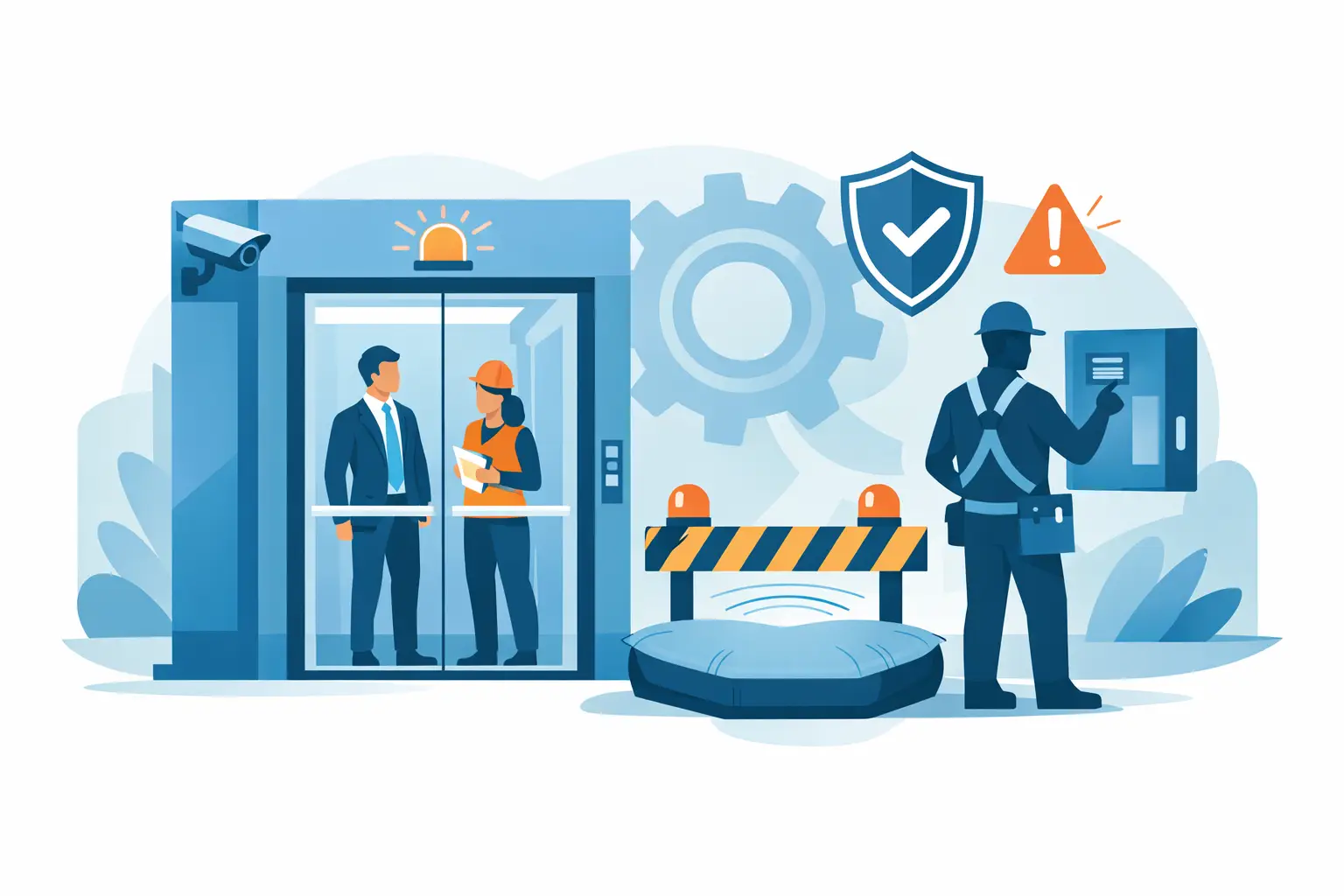
Top Lift Safety Upgrades That Matter
A lift rarely gets attention when it is working well. The moment it levels poorly, traps a passenger, or stops without warning, it becomes a building risk, a tenant complaint, and a maintenance priority all at once. That is why top lift safety upgrades deserve careful attention from property owners, facility managers, and developers. The right upgrade does more than tick a compliance box. It improves reliability, protects passengers, and helps reduce avoidable downtime.
For most buildings, lift safety is not about one dramatic fix. It is about identifying weak points in ageing equipment and improving the parts of the system that affect day-to-day operation. Some upgrades are driven by code changes or end-of-life components. Others are worthwhile because they lower service interruptions and improve how the lift performs under regular use.
Why top lift safety upgrades are often tied to lift age
Many lifts continue operating for years beyond their original design expectations, especially if they have been serviced consistently. That does not mean every older lift is unsafe. It does mean older systems are more likely to rely on obsolete parts, dated control logic, and safety components that no longer match current operational standards.
In practical terms, ageing lifts often show the same warning signs. Doors hesitate or reopen unexpectedly. The car may not level accurately at each floor. Communication systems may be outdated. Faults may reset temporarily, then reappear a week later. These issues are not always catastrophic, but they can point to larger safety and reliability concerns.
A proper assessment looks at the whole picture, not just the fault log. Usage patterns, building type, passenger profile, and maintenance history all matter. A lift in an aged care facility, for example, has a different risk profile from a low-use service lift in a warehouse. The best upgrade path depends on how the lift is used and what level of reliability the building needs.
Door protection and detection upgrades
Lift doors are one of the most frequent sources of service issues and passenger complaints. They also represent a genuine safety concern when sensors are slow, inaccurate, or worn. Upgrading the door protection system is often one of the most effective safety improvements available.
Older lifts may use limited door edge protection or basic sensors that do not detect movement as well as modern light curtain systems. A light curtain creates a broader detection field across the door opening, helping the lift respond more effectively when passengers, trolleys, walkers, or goods are moving through the entrance.
This matters in busy buildings where foot traffic is unpredictable. In schools, retail sites, medical settings, and mixed-use developments, a more responsive door system can reduce contact incidents and improve passenger confidence. It can also reduce nuisance faults caused by repeated door strikes or failed closing cycles.
That said, a door safety upgrade works best when paired with mechanical inspection. If operators, tracks, rollers, or door panels are badly worn, replacing sensors alone may not solve the problem.
Accurate levelling and re-levelling systems
Poor floor levelling is easy to dismiss until it creates a trip hazard. Even a small misalignment between the lift car and landing floor can pose a risk, especially for older passengers, prams, trolleys, wheelchairs, and hospital equipment.
Upgrading levelling controls and related drive components can improve stopping accuracy and help the lift maintain floor level as load shifts during entry and exit. This is particularly valuable in residential buildings with ageing passenger lifts, as well as healthcare and aged care environments where accessibility is critical.
In some cases, inaccurate levelling is linked to broader control or drive wear. In others, it is a symptom of inconsistent maintenance or ageing sensors. The point is not to treat levelling as a cosmetic issue. It is a core safety and accessibility function.
Emergency communication and lift phone systems
If a passenger becomes trapped, the emergency communication system needs to work immediately. This area is often overlooked until an incident exposes the weakness. Older autodiallers, analogue-based systems, or unreliable communication units can create unnecessary risk during entrapments or power-related events.
Modern lift phone systems are designed to provide more dependable communication between passengers and response personnel. For building owners and managers, this is not just about meeting expectations. It is about ensuring that when someone presses the alarm or help button, the call goes through clearly and consistently.
This upgrade becomes even more important in residential towers, healthcare facilities, and buildings with vulnerable occupants. If the lift serves people who may be alone, unwell, or unfamiliar with emergency procedures, communication reliability is not optional.
There is also an operational benefit. Updated communication systems can simplify testing, reduce faults tied to ageing phone hardware, and make it easier to support the lift over the long term.
Controller and drive modernisation
When discussing top lift safety upgrades, controller and drive modernisation belongs near the top of the list. The controller is the lift’s decision-making system. As it ages, faults can become harder to diagnose, spare parts can be difficult to source, and inconsistent behaviour can affect both safety and uptime.
A modern controller can improve fault monitoring, ride performance, door operation, and response accuracy. Depending on the existing setup, it may also support better braking logic, smoother starts and stops, and more reliable floor levelling. For high-traffic buildings, these gains can have a direct operational impact.
There is a trade-off, though. Controller upgrades are more substantial than replacing a sensor or phone unit, and they require proper planning. In some cases, a partial modernisation is enough. In others, a full package makes more financial sense because it avoids repeated repair costs on interconnected ageing parts. The right answer depends on the condition of the current equipment and the building’s tolerance for downtime.
Braking and overspeed safety components
Some safety systems stay out of sight and out of mind until they are tested or fail inspection. Braking systems, governors, and related overspeed protection components are a good example. These are not upgrades chosen for appearance or tenant appeal. They are chosen because the lift must stop safely and respond correctly under fault conditions.
Where components are approaching end of life, showing wear, or no longer align with current system requirements, replacement or modernisation may be necessary. This is especially relevant in older commercial and industrial lifts where usage is heavy and loading conditions may be inconsistent.
A proper technical review is essential here. These are not one-size-fits-all components, and decisions should be based on inspection findings, manufacturer compatibility, and the operational demands of the building.
Backup power, rescue features, and monitoring
Power interruptions and unexpected shutdowns are part of operating any building. What matters is how the lift responds. Backup power support, automatic rescue devices, and improved fault monitoring can reduce passenger entrapment risk and speed up response when issues occur.
An automatic rescue feature can move the lift to the nearest floor and open the doors safely in the event of certain power failures. In the right environment, that is a meaningful safety improvement. It can be particularly useful in residential buildings, offices, and sites where a delayed response would cause major disruption.
Remote monitoring also has value, although it is not a replacement for routine maintenance. It can provide earlier visibility of faults, repeated shutdowns, or abnormal performance trends. For facilities teams managing multiple assets, that visibility can help with planning and reduce reactive call-outs.
Which upgrades should come first?
Not every lift needs every upgrade. Priority should be based on risk, current condition, building use, and how critical the lift is to daily operations. A lift that serves an apartment block with elderly residents may need communication, levelling, and door protection upgrades before anything else. A goods lift in an industrial setting may need attention on braking systems, controls, and heavy-duty door operation.
Budget matters too, but cost should be weighed against repeated repairs, user complaints, and downtime. Deferred upgrades often look cheaper in the short term, then become more expensive when failures stack up or parts become unavailable.
This is where an experienced service provider adds value. A good assessment should separate urgent safety risks from improvements that can be staged over time. It should also explain what is essential, what is advisable, and what can wait.
At Skyrise Elevators, that practical approach matters because building owners do not need vague recommendations. They need clear advice, reliable workmanship, and upgrades that match the real demands of the site.
Top lift safety upgrades work best with ongoing maintenance
Even the best upgrade will not deliver long-term value if the lift is not maintained properly afterwards. New components still need testing, adjustment, and regular inspection. In many cases, safety performance depends just as much on ongoing servicing as it does on the initial upgrade itself.
That is why lift safety should be approached as a lifecycle issue, not a one-off project. Modernising the right components can extend asset life, improve passenger confidence, and support compliance, but only when backed by a structured maintenance program and responsive technical support.
If your lift is showing signs of age, inconsistent performance, or rising repair frequency, it is worth taking a closer look now rather than waiting for a shutdown to force the decision. The right upgrade at the right time can prevent bigger problems and keep your building moving with less disruption.