


Lift Predictive Maintenance Trends to Watch
A lift rarely fails at a convenient time. A door fault at the morning rush, a levelling issue in an aged care facility, or an unexpected shutdown in a busy commercial building can quickly affect safety, access and tenant confidence. That is why lift predictive maintenance trends are receiving serious attention from property owners and facility managers across Australia.
Predictive maintenance does not replace routine lift servicing. It strengthens it by using service history, operating data and technician observations to identify faults before they become disruptive breakdowns. For buildings that rely on dependable vertical transport every day, the value is clear: fewer surprises, better repair planning and less avoidable downtime.
What predictive lift maintenance means in practice
Traditional maintenance follows a schedule. A qualified technician attends at agreed intervals, inspects key components, completes required adjustments and identifies visible wear. This remains essential for lift safety, compliance and reliable operation.
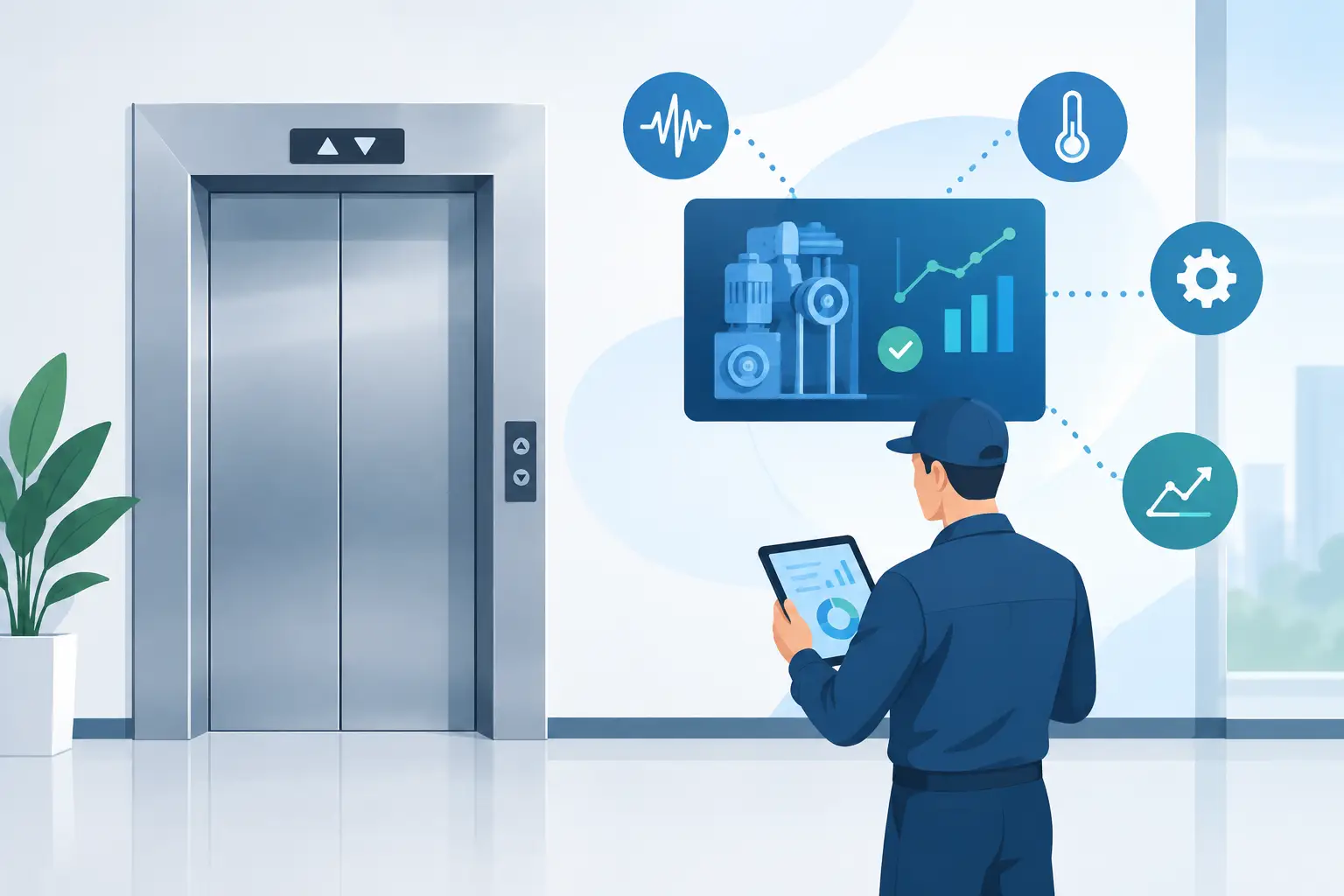
Predictive maintenance adds another layer of insight. It looks for changes in how the lift is operating, rather than waiting for a component to fail or for passengers to report a problem. This may include repeated door re-openings, longer travel times, irregular levelling, increased motor temperature, unusual vibration, recurring controller faults or a rise in call-outs for the same issue.
The goal is not to collect data for its own sake. The goal is to give a maintenance provider enough warning to investigate a developing issue during a planned visit, arrange parts in advance and complete repairs with minimal disruption to the building.
For a facilities team, this can mean replacing a worn door roller before the doors begin jamming during peak periods. For a residential building, it may mean addressing an intermittent fault before residents are affected. In an industrial setting, it can help avoid an out-of-service goods lift that interrupts stock movement or production schedules.
Lift predictive maintenance trends shaping building service
More useful condition monitoring
Modern lift systems can provide operational information from controllers, door equipment, drives and safety circuits. The useful trend is not simply installing more sensors. It is selecting monitoring that helps technicians make practical maintenance decisions.
For example, repeated door faults may indicate a component wearing prematurely, but they can also be caused by damaged door tracks, changes in traffic patterns or environmental conditions such as dust and moisture. A skilled technician still needs to inspect the equipment, confirm the cause and recommend the right repair. Data supports that judgement. It does not replace it.
Condition monitoring is particularly valuable where a lift has high usage, where downtime has a significant commercial impact, or where site access is difficult to arrange. Hospitals, aged care facilities, apartment buildings, retail sites and logistics operations can all benefit when maintenance is planned around actual equipment condition as well as the regular service schedule.
Door systems are a priority
Lift doors are one of the most heavily used parts of a vertical transport system. They are also a common source of service calls. Current predictive maintenance approaches increasingly focus on door opening and closing performance, lock operation, obstruction events and abnormal cycle times.
This focus makes sense. A lift car may be mechanically sound, but unreliable doors can still take the lift out of service. Identifying gradual changes in door performance allows a technician to clean, adjust, repair or replace worn components before the issue develops into a shutdown.
Building managers should not assume every recurring door issue requires a full replacement. Sometimes targeted adjustment and scheduled component replacement are enough. On older equipment, however, repeated door faults may be a sign that modernisation is more cost-effective than continuing reactive repairs.
Maintenance decisions based on usage, not just age
Two lifts installed in the same year can have very different maintenance needs. A lightly used residential lift and a lift serving a busy multi-storey office may share a similar age, yet their doors, drives and control systems experience very different operating conditions.
One of the more practical lift predictive maintenance trends is the move towards usage-led service decisions. Travel counts, door cycles, load patterns and fault frequency can help indicate where attention is needed first. This enables maintenance planning to reflect the way the building actually operates.
There is a trade-off. Usage data needs to be interpreted in context. A temporary spike in lift traffic during a tenancy move, construction works or school term may not indicate a permanent issue. Good maintenance planning combines operational data with site knowledge, inspection findings and the equipment’s repair history.
Better parts planning and reduced repeat visits
Reactive repairs often involve an initial attendance to diagnose the fault, followed by a second visit once parts are available. Predictive maintenance can reduce this delay by identifying likely component issues earlier and allowing parts to be ordered before a failure occurs.
This does not mean every part should be replaced early. Replacing components without evidence of wear adds unnecessary cost and may not improve reliability. The better approach is to use condition indicators and technician assessment to plan replacements at a sensible point in the component lifecycle.
For facility managers, this can make budgeting more predictable. Instead of absorbing an unexpected repair after a breakdown, they can approve planned work during an agreed maintenance window. For buildings with a single lift, this planning is especially important because every outage has a direct effect on residents, visitors and service access.
Remote fault visibility, with local expertise still essential
Remote monitoring can alert a service team to certain faults, status changes or irregular operating patterns. This can speed up diagnosis and help technicians arrive with a clearer understanding of the issue.
However, remote visibility has limits. It cannot physically inspect a door sill, assess ride quality, test a component under load or confirm whether a site condition is contributing to the problem. A lift is a safety-critical system, and on-site inspection by approved technicians remains central to sound maintenance.
The strongest service model uses remote information to support responsive field service. It helps prioritise the right attendance, but it should never become an excuse to delay a necessary site visit.
Where predictive maintenance delivers the most value
Predictive strategies are not identical for every property. The right level of monitoring and planning depends on the lift type, building use, passenger expectations and the consequences of downtime.
In apartment buildings, the priority is often reliable daily access, especially for residents with mobility needs. In commercial offices, peak traffic periods and tenant experience may shape maintenance windows. Healthcare and aged care facilities require particular care because lift availability can affect patient transfers, visitors and essential services. For industrial sites, goods and service lifts may need maintenance planned around operational shifts, loading activity and site safety requirements.
Older lifts can also benefit, although the approach may differ. A modern system may provide detailed controller information, while an older installation may rely more heavily on structured inspections, fault trend analysis and a clear record of component condition. If recurring faults, obsolete parts or declining reliability are becoming an issue, a modernisation assessment may be the more practical next step.
Questions to ask your lift maintenance provider
A predictive approach should lead to clearer action, not more technical jargon. Ask how recurring faults are recorded and reviewed, what signs trigger a proactive repair recommendation, and whether the proposed work is based on condition, usage or a manufacturer requirement.
It is also reasonable to ask how the provider will minimise disruption. That may involve scheduling work outside peak use, notifying building occupants, arranging access with onsite staff or completing preparatory work before the lift is taken out of service.
Most importantly, ask for recommendations that distinguish between urgent safety work, reliability improvements and longer-term modernisation planning. These decisions have different timeframes and budgets, and they should be explained clearly.
A more planned way to protect lift uptime
The most valuable outcome of predictive maintenance is not a dashboard or a sensor. It is a lift maintenance program that identifies developing issues early, sends the right technician to site and helps building managers make informed decisions before a minor fault becomes a major interruption.
For property owners and managers, the next practical step is to review call-out history, recurring faults and equipment age with a trusted service provider. Skyrise Elevators can help assess whether targeted repairs, improved maintenance planning or lift modernisation will provide the most dependable path to safer, more consistent lift performance.