


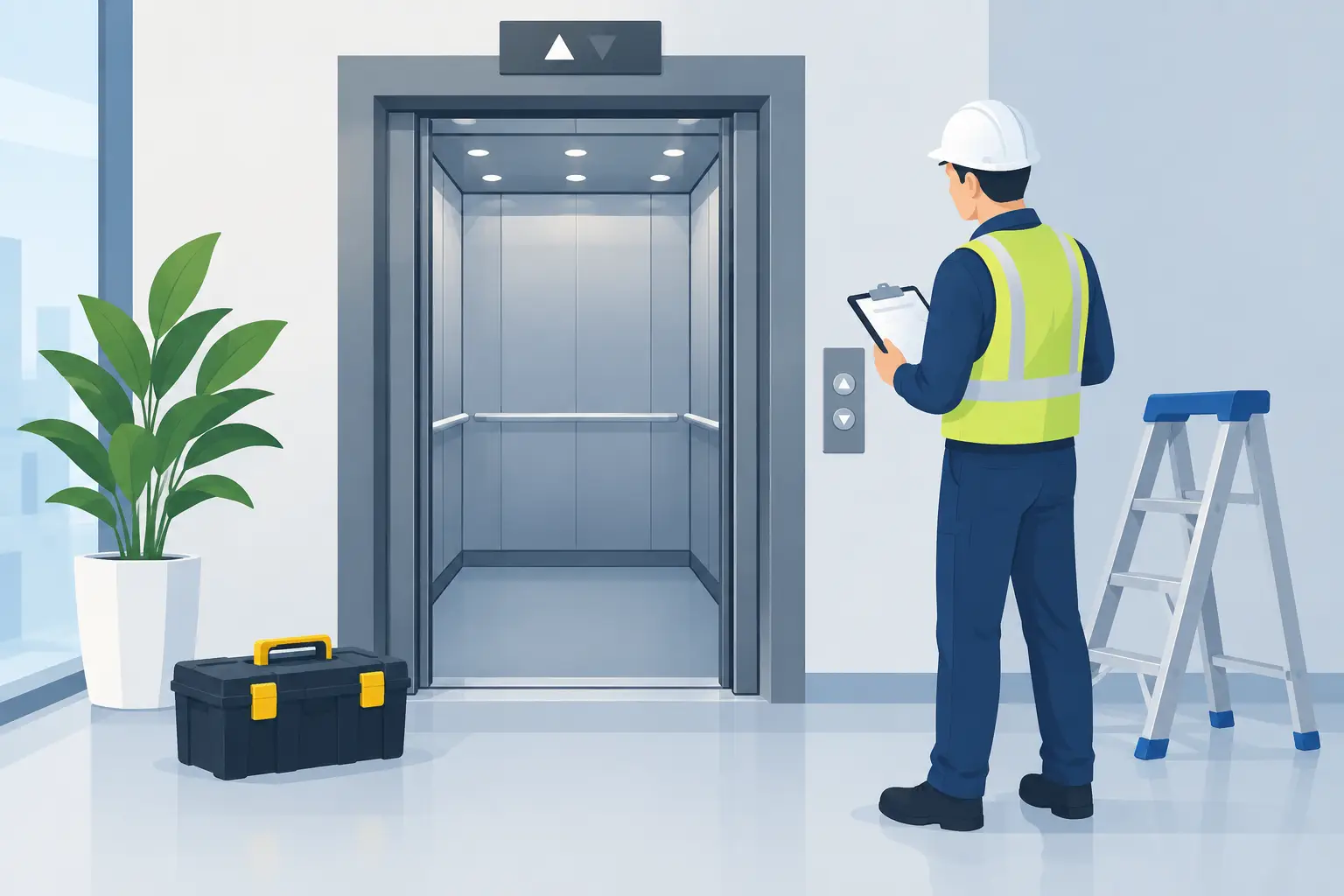
How to Prepare Lifts for Scheduled Inspections
A lift inspection can quickly become disruptive when the technician cannot access the motor room, required records are missing, or known faults have not been addressed. For property owners and facility managers, the best way to prepare lifts for inspections is to treat the visit as a planned maintenance event, not a last-minute compliance task. Good preparation helps the inspection proceed efficiently, protects building occupants and gives you a clear picture of the lift’s condition.
The exact inspection requirements depend on the lift type, its age, building use and the applicable requirements in your state or territory. A passenger lift in a busy office building, for example, will have different operational pressures from a goods lift in a warehouse or a residential home lift. The preparation principles remain the same: provide safe access, organise documentation, identify concerns early and arrange qualified support where repairs are needed.
Why lift inspection preparation matters
Inspections are designed to identify conditions that may affect passenger safety, equipment reliability and ongoing operation. They may include checks of the lift car, landing doors, safety devices, controller, machine room or machinery space, pit, communications and emergency functions. If access is restricted or the equipment is not available for testing, an inspection may be delayed or incomplete.
For a building manager, that can mean extra call-out costs, further tenant communication and longer uncertainty around defects. It can also place pressure on operations if the lift needs to be taken out of service at short notice. Preparing properly allows issues to be managed in an orderly way, with less impact on residents, staff, visitors and deliveries.
Preparation is not about concealing faults. It is about making sure the inspector can see the full condition of the installation and that your maintenance provider has the information required to act on findings promptly.
Start with the inspection date and building access
Confirm the date, expected duration and scope of the inspection well ahead of time. Ask whether the lift will need to be isolated for testing and whether access is required to the lift motor room, control cabinet, top of car or lift pit. This gives you time to coordinate keys, swipe access, security procedures and site inductions.
In occupied buildings, advise tenants and staff about any expected service interruption. A clear notice should state which lift is affected, the anticipated outage period and an alternative route where one is available. In a multi-storey building, consider people who rely on the lift for mobility. If shutdown timing can be planned, avoid peak arrival, lunch, school drop-off or delivery periods where practical.
Make sure the route to all relevant areas is clear. Storage in front of a controller, blocked machine-room doors, parked equipment near the lift entrance or a cluttered pit access point can delay work and create avoidable safety risks. Only authorised personnel should provide access to restricted lift areas.
Check safe access to plant and machinery spaces
Where your lift has a machine room or dedicated machinery space, inspect the area before the scheduled visit. It should be dry, adequately lit, secure and free of unrelated storage. Water ingress, overheating, dust build-up and vermin activity should be reported before the inspection, particularly where they may affect electrical equipment.
Do not ask building staff or contractors to enter lift pits, work on top of lift cars or interfere with safety devices. These areas require specialised training and controlled procedures. Your role is to ensure access is available, not to carry out technical tasks outside your authority.
Gather the records an inspector may need
Accurate records help an inspector understand the lift’s service history and assess whether recurring issues need further attention. Keep documents in a consistent location, whether that is a site folder, building management system or maintenance portal. The goal is not paperwork for its own sake. A complete history helps technicians make faster, better-informed decisions.
Before the visit, have the lift maintenance logbook or service records available, along with previous inspection reports and evidence that identified defects have been rectified. It is also useful to provide recent breakdown reports, fault notifications from occupants and details of any changes to the building that could affect the lift.
For example, refurbishment work can create dust or debris around landing doors, while a change in building use may increase lift traffic beyond previous patterns. In industrial settings, a change in freight loads, pallet sizes or operating hours may affect how a goods lift is being used. These details give the inspector important operating context.
If repairs are still pending, be upfront. Some items may be minor and can be planned around normal building operations. Others may require urgent attention or temporary restrictions. Clear records allow the risk to be assessed properly rather than guessed at on the day.
Complete practical pre-inspection checks
Building staff can carry out simple visual and operational observations before an inspection, provided they do not attempt repairs or access restricted equipment. Take note of any abnormal behaviour when the lift is used in its ordinary manner. Report observations clearly, including the time, location and frequency of the issue.
Common concerns worth recording include unusual noises, vibration, inaccurate levelling at landings, slow or erratic door operation, damaged buttons or indicators, poor car lighting, recurring fault messages and unreliable lift phone operation. Also note whether doors reopen repeatedly, a lift is stopping at the wrong floor, or occupants have reported being delayed inside the car.
A single event may not indicate a serious fault, but a pattern matters. A door problem that occurs only during busy periods, for instance, may point to traffic conditions, obstruction issues or a component beginning to wear. Specific information is far more useful than saying the lift is “not working properly”.
Do not remove warning labels, reset faults repeatedly or silence alarms to make the lift appear normal before an inspection. Those actions can obscure a genuine issue and may compromise safety.
Arrange repairs before inspection where appropriate
If there is a known defect that affects safe use or reliable operation, arrange an assessment by an approved lift technician before the inspection date. Leaving a recurring fault until the inspector arrives can turn a planned visit into an urgent repair situation, particularly if parts or specialist labour are required.
That said, not every issue needs to be repaired before an inspection. In some cases, the inspection itself is the right opportunity to obtain an independent assessment or confirm the extent of a problem. It depends on the nature of the defect, the lift’s operating condition and any advice already provided by your maintenance contractor.
The priority is to address faults that may affect safety, emergency communication, landing door security, levelling accuracy or the ability to take the lift out of service safely. Where parts are obsolete or a lift has frequent breakdowns, a modernisation assessment may be more cost-effective than repeated reactive repairs. This is especially relevant for older equipment where reliability and spare-parts availability are declining.
Prepare lifts for inspections without disrupting the building
A well-managed inspection balances access for technicians with the needs of the people using the property. In a hospital, aged care facility, school, retail centre or high-traffic commercial building, lift availability can be critical. Discuss the inspection schedule with your lift provider early so testing can be staged where possible.
For buildings with multiple lifts, one unit may be inspected while others remain available. This is not always possible, and some work may require broader isolation or testing, but planning reduces unnecessary disruption. For a single-lift building, consider the needs of residents and visitors who cannot use stairs, and communicate any service interruption with sufficient notice.
If the lift is used for goods, deliveries or waste movement, advise relevant contractors of the inspection window. This prevents a delivery arriving while the lift is unavailable and avoids pressure on staff to rush the technician’s work.
Confirm emergency communication is working
Lift phone systems and emergency communication equipment deserve particular attention. Confirm that the nominated emergency contact details are current and that calls are answered as intended. If the building has changed management companies, security providers or after-hours contacts, update the information before the inspection.
Test arrangements should be coordinated with your lift service provider. A lift phone that connects to an old number or does not provide clear location information can create serious delays during an emergency. Maintaining current contact details is a straightforward task that has a direct effect on occupant safety.
Use inspection findings to plan the next step
When the inspection is complete, review the report promptly with the person responsible for lift maintenance and building operations. Separate urgent safety-related actions from routine maintenance, recommended improvements and long-term capital planning. This helps you direct budget to the items that matter most rather than responding only when the lift fails.
Ask for clear advice on what each finding means in practice: whether the lift can remain in service, what work is required, how soon it should be completed and whether the repair will affect building access. A dependable service provider should explain the options in plain language and coordinate works to minimise downtime.
Skyrise Elevators can assist property owners and facility managers with planned maintenance, repairs, modernisation and inspection preparation across residential, commercial and industrial sites. Keeping service records current, access ready and known faults visible gives every inspection a stronger starting point – and helps your lift remain safe, reliable and ready for the people who depend on it.