


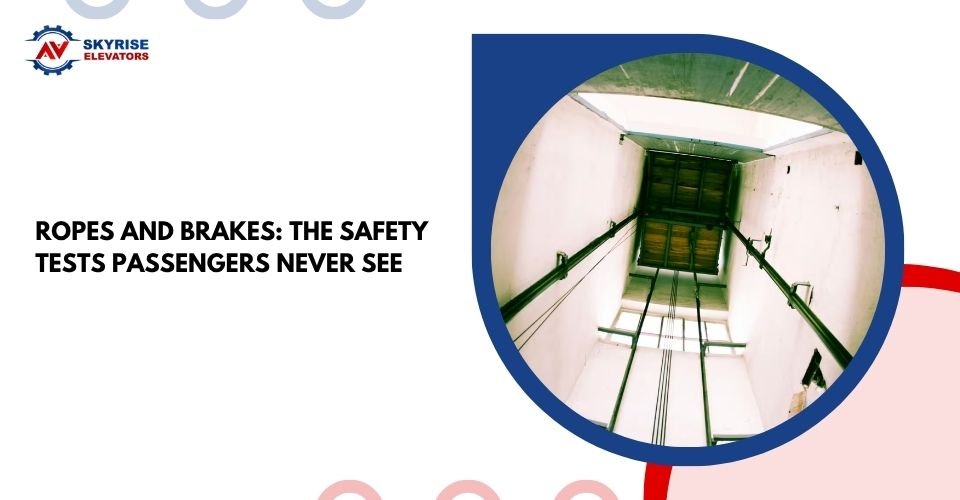
Ropes and Brakes: The Safety Tests Passengers Never See
Every time an elevator travels between floors, several mechanical and electrical systems work together to move the car safely. Passengers see the doors open, select a floor, and step inside. They rarely see the ropes, braking components, safety devices, or maintenance checks that help keep the lift operating as intended.
These hidden components deserve attention because elevator safety depends on more than whether the car moves smoothly. Regular inspections and servicing help identify wear, deterioration, and developing faults before they cause unexpected downtime or create safety concerns.
For building owners and facility managers, understanding the basics of elevator ropes and brakes can make maintenance discussions more informed. It also helps explain why scheduled servicing should not be delayed simply because a lift appears to be working normally.
How Elevator Ropes Support Safe Movement
In many traction elevators, steel wire ropes or other approved suspension systems connect the elevator car to a counterweight through a drive sheave. The motor and associated drive system move the car by controlling the movement of this system.
The counterweight helps balance the car and its load, reducing the force required from the drive system. The ropes must remain suitable for the elevator’s design, loading, and operating conditions.
Over time, ropes can experience wear, corrosion, damage, or other changes that require assessment. The exact inspection criteria depend on the rope type, elevator design, applicable standards, and manufacturer requirements.
During professional maintenance, technicians may assess:
- Visible rope condition: Looking for signs of damage, corrosion, or abnormal wear.
- Rope arrangement: Checking for conditions such as uneven tension or irregular movement where applicable.
- Sheave condition: Examining the components that guide and drive the ropes.
- Related equipment: Assessing associated suspension and drive components according to the lift’s maintenance requirements.
These checks are not simply visual formalities. Some defects may require specialised measurements or further investigation to determine whether a component remains suitable for service.
Why Elevator Ropes Need Regular Inspection
Elevator ropes operate under repeated mechanical loading. Their condition can change with use, environmental exposure, alignment, lubrication requirements where applicable, and the condition of related equipment.
A lift that serves a busy commercial building may experience a different operating pattern from one in a small residential property. However, traffic volume alone does not determine when ropes must be replaced or what inspection method is required.
Technicians follow the applicable maintenance instructions and assessment criteria for the specific elevator.
Wear and Corrosion
Ropes may show signs of deterioration over time. Depending on their construction and operating environment, concerns can include broken wires, corrosion, deformation, or other changes that require technical assessment.
Not every visible mark means a rope must be replaced immediately. Equally, the absence of obvious damage does not prove that a rope is safe. Qualified personnel must assess findings against the appropriate criteria.
Uneven Rope Tension
Where a lift uses multiple suspension ropes, differences in tension can affect how loads are distributed across the system. Incorrect tension may also contribute to abnormal wear in related components.
Maintenance personnel can use suitable procedures and equipment to assess rope tension and determine whether adjustment or further work is necessary.
Sheave Wear
The sheave guides and drives the ropes. Its condition matters because the contact between the rope and sheave is part of the elevator’s mechanical operation.
Excessive or uneven wear, incorrect alignment, or other defects may affect system performance. A technician should investigate these concerns rather than assuming that a smooth ride means every component is in good condition.
How Elevator Brakes Help Control Movement
Elevator braking systems perform a critical role in controlling and stopping the car. In many traction lifts, a machine brake helps hold the elevator stationary when the drive is not actively moving it.
The braking system must work as intended alongside the drive controls, position monitoring, and other safety devices. Its configuration and testing requirements vary by elevator design.
During maintenance, technicians may assess the brake mechanism, its actuation, wear-related components, and the operation of associated controls. They also follow the manufacturer’s procedures for any required tests or adjustments.
Important areas can include:
- Brake condition: Checking relevant components for wear, damage, or other defects.
- Brake operation: Confirming that the mechanism operates according to the specified procedure.
- Control response: Assessing the relevant electrical and control functions associated with braking.
- Holding performance: Verifying performance using the approved test method for the particular lift.
- Maintenance records: Documenting findings, adjustments, defects, and required follow-up work.
A brake test is not simply a matter of seeing whether the elevator stops. The appropriate procedure depends on the equipment and the safety function being assessed.
What Happens During Professional Brake Testing?
Brake testing may involve inspections, functional checks, measurements, and other procedures specified by the manufacturer or applicable requirements.
The exact sequence differs between elevator models. Some tests require specialised equipment, controlled operating conditions, or qualified personnel following specific safety precautions.
Testing may help establish whether the brake operates as intended, whether relevant components show excessive wear, and whether adjustments or repairs are needed.
Building managers should not attempt to test elevator brakes independently or ask unqualified staff to perform mechanical adjustments. These systems involve significant forces and must be assessed by appropriately qualified elevator technicians.
If a technician identifies a defect that affects safe operation, the building’s responsible personnel should follow the technician’s advice and applicable procedures for taking the lift out of service until the concern is resolved.
Why a Smooth Ride Does Not Prove Every Component Is Safe
Passengers often judge an elevator by how comfortably it travels, how quickly the doors operate, and whether it reaches the selected floor. These are useful observations, but they cannot replace a technical inspection.
Some defects develop without immediately causing noticeable changes in passenger experience. A lift may continue to operate while a component requires attention under the manufacturer’s maintenance criteria.
Building managers should take reports of unusual movement, new noises, unexpected stopping, or other changes seriously. Such symptoms do not identify a specific fault on their own, but they can help technicians determine what needs investigation.
Useful reporting practices include:
- Recording the date, time, and floor where the issue occurred.
- Describing unusual sounds, movement, or stopping behaviour.
- Noting whether the problem has occurred repeatedly.
- Reporting any visible damage or other concerns.
- Keeping records of the maintenance response and recommended follow-up.
Passengers should not inspect ropes, enter machinery spaces, or interfere with elevator equipment. Their role is to report unusual behaviour through the building’s designated process.
Maintenance Planning for Commercial Elevators
Commercial buildings depend on elevators to support the movement of employees, residents, visitors, customers, and deliveries. Unexpected downtime can disrupt access and daily operations, particularly in buildings where lifts are essential for accessibility.
A planned maintenance programme helps building managers schedule inspections, document findings, and address developing issues. The required servicing frequency depends on the elevator, its usage, the operating environment, the manufacturer’s instructions, and applicable regulations.
When arranging lift maintenance Sydney, building managers should ask what the maintenance agreement covers and how identified defects will be handled.
Useful questions include:
- Which inspections and routine service tasks are included?
- How are defects recorded and communicated?
- What happens when a component needs adjustment or replacement?
- Are additional repairs quoted separately?
- How are urgent faults and service interruptions managed?
- Which maintenance records are provided after each visit?
Clear answers help property managers understand the service arrangement and plan for repairs without assuming that every possible defect is covered by routine servicing.
Choosing a Maintenance Provider for Commercial Lifts
Commercial elevators may operate under demanding conditions, but not every building has the same maintenance requirements. Passenger volume, lift design, accessibility needs, operating hours, and the consequences of downtime should all inform the maintenance plan.
When comparing commercial lifts Sydney services, consider the provider’s experience with the relevant elevator type, its maintenance procedures, its approach to reporting defects, and its ability to explain recommended work clearly.
Building managers should also confirm that the people carrying out the work have the appropriate qualifications and that the maintenance arrangements address the building’s applicable safety and compliance obligations.
Skyrise Elevators provides a starting point for Sydney building owners and managers reviewing elevator installation, maintenance, and related services. The appropriate maintenance scope should always be based on the specific equipment and its requirements.
Warning Signs That Should Be Reported
Although routine maintenance is essential, building users can also help identify changes that deserve attention.
Report concerns such as:
- New grinding, scraping, or unusual mechanical noises.
- Unexpected jolts or changes in movement.
- Repeated levelling problems when the car stops at a floor.
- Doors that behave abnormally or fail to operate as expected.
- Unexplained service interruptions or recurring faults.
These symptoms can have several possible causes, and none proves that the ropes or brakes are defective. A qualified technician should investigate the issue.
If an elevator behaves in a way that suggests a safety concern, building management should follow its emergency and maintenance procedures rather than continuing to use the lift without assessment.
Final Thoughts
Elevator ropes and brakes are among the components passengers rarely notice, yet their condition is essential to the lift’s safe operation. Regular inspections, appropriate testing, accurate maintenance records, and timely repairs help building managers address concerns before they become more disruptive.
A smooth ride is reassuring, but it is not a substitute for professional maintenance. The best approach combines manufacturer-recommended servicing, qualified technical assessments, clear reporting procedures, and a maintenance plan suited to the building’s elevator equipment.
For Sydney property managers, understanding what happens behind the scenes makes it easier to ask informed questions, plan servicing, and respond appropriately when a technician identifies a problem.