


Apartment Elevator Retrofit Case Study Results
A lift that stops between floors, takes too long to level or regularly goes out of service quickly becomes more than an inconvenience in an apartment building. This apartment lift retrofit case study shows how a planned modernisation can improve safety, restore reliability and reduce disruption for residents without committing to a full lift replacement.
The project reflects a common situation in established strata buildings across Australia: an ageing passenger lift was still operating, but faults were becoming more frequent, replacement parts were difficult to source and residents were losing confidence in the service. The owners corporation needed a practical solution that protected the building’s budget while improving day-to-day accessibility.
The building and the retrofit challenge
The site was a six-storey apartment building with one passenger lift serving 42 residences, basement parking and a shared rooftop area. The lift had been installed more than two decades earlier. Its cab and landing entrances remained structurally sound, but the controller, door equipment and electrical components had reached the point where reactive repairs were no longer delivering dependable results.
For residents, the consequences were immediate. Older residents and people with mobility needs had limited alternatives when the lift was unavailable. Delivery access became difficult, and property managers were spending increasing time responding to fault reports. Each shutdown also created pressure on the owners corporation to act quickly, often before it had clear information on the best long-term option.
A complete replacement was considered. However, the existing shaft, guide rails and cab structure were suitable for continued use following inspection. Reusing these serviceable assets made a modernisation more cost-effective and reduced the amount of building work required. The chosen approach was a lift retrofit focused on the systems most responsible for reliability, safety and ride quality.
Apartment lift retrofit case study: the assessment
Before specifying equipment, the lift was assessed as a complete system rather than as a collection of isolated faults. This step matters. Replacing a controller will not resolve recurring door problems, and a new cab interior cannot compensate for worn levelling components or an unsuitable maintenance arrangement.
The initial assessment reviewed fault history, door operation, ride performance, landing accuracy, electrical condition, safety devices, shaft environment and the availability of compatible parts. Technicians also considered how residents used the building. Peak activity occurred in the morning, late afternoon and on weekends, while rubbish collection and trade access placed additional demand on the lift at set times.
Several issues stood out. The legacy controller had limited diagnostic capability, which meant technicians could take longer to trace intermittent faults. Door operation was slow and inconsistent at two high-use landings. The cab lighting was outdated, and the emergency communication equipment required upgrading to support a more reliable response process.
The assessment also confirmed the importance of staging. As the building had only one lift, there was no convenient way to take it out of service for an extended period without affecting every resident. The project plan therefore needed to balance thorough works with the shortest practical shutdown period.
The retrofit scope
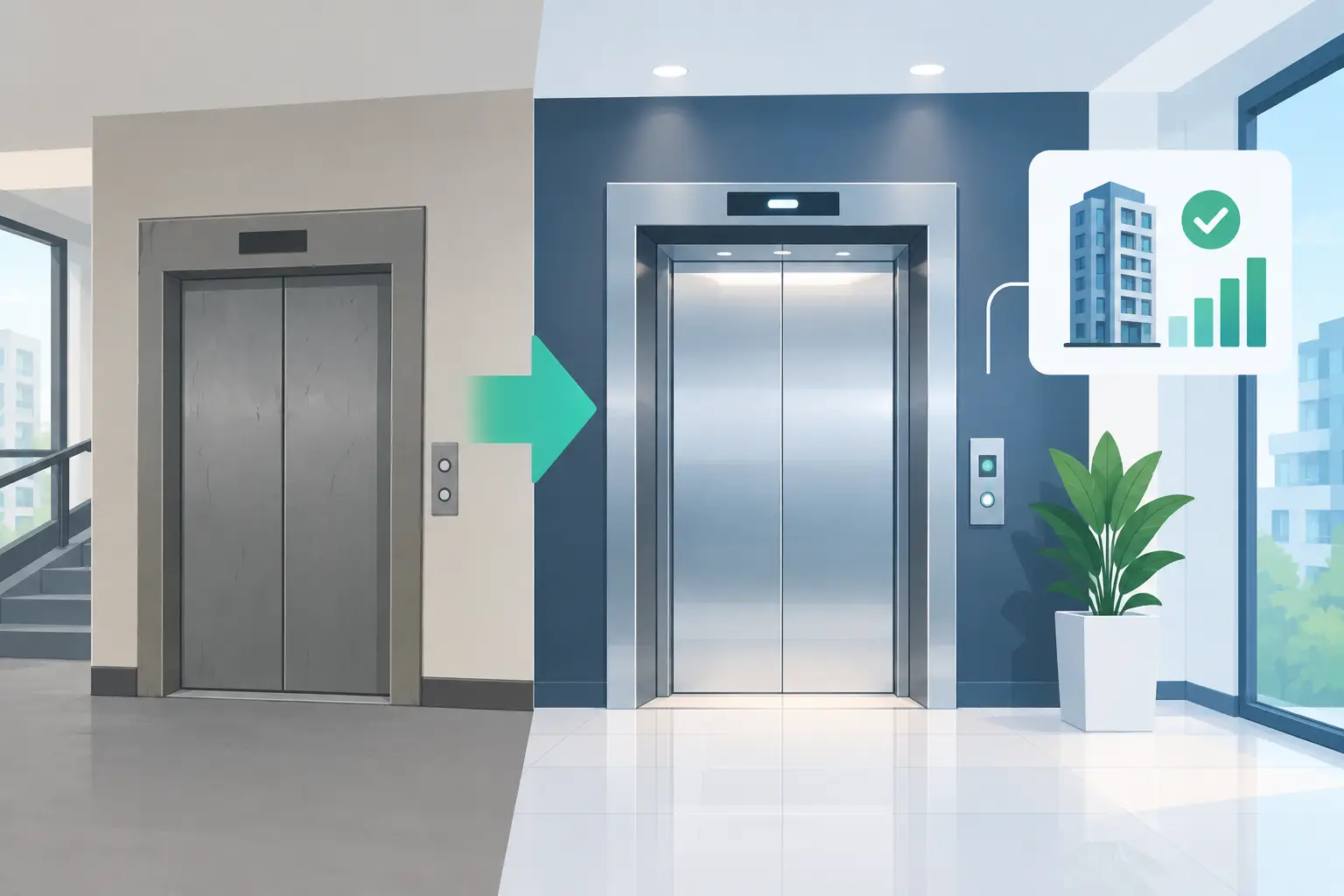
The approved works centred on modernising the lift’s operating and safety systems while retaining components that remained fit for purpose. The project included a new microprocessor-based controller, upgraded door operators and door protection equipment, improved car and landing fixtures, LED cab lighting, a refreshed cab interior and an updated lift phone system.
The new controller provided clearer fault diagnostics and allowed the maintenance team to identify operational issues more efficiently. This does not mean a modern controller prevents every fault, as doors, power supply conditions and mechanical components still require attention. It does give technicians better information, which can reduce diagnosis time and support more planned maintenance.
Door equipment was a priority because it was responsible for a high proportion of call-outs. New operators and adjusted door settings improved opening and closing consistency, while updated protection systems helped reduce the risk of doors closing on residents, prams or carried items. The lift’s floor levelling was also recalibrated to support safer entry and exit.
Within the cab, upgraded lighting and hard-wearing finishes improved visibility and presentation. These elements do not change the lift’s core performance, but they make a meaningful difference to the resident experience and can help a building maintain a well-cared-for appearance. The emergency communication upgrade ensured occupants could contact assistance if the lift stopped unexpectedly.
Planning for minimal resident disruption
Retrofit work in an occupied apartment building requires more than technical capability. It requires communication, access planning and a clear understanding of resident needs. The property manager issued advance notices explaining the planned shutdown, expected duration, work hours and alternative arrangements for residents who could not manage stairs.
The contractor coordinated delivery times, protected common-area finishes and kept the work zone contained. Noisy work was scheduled within agreed daytime periods, and technicians provided progress updates so the building manager could respond accurately to resident questions.
Where a single-lift building has residents with significant mobility requirements, the timing of works deserves particular care. A shorter scope may seem attractive, but rushing a retrofit can create avoidable defects and repeat downtime later. In this case, the owners corporation accepted a defined shutdown period in exchange for completing the works properly and testing the system before handover.
Results after modernisation
Following commissioning, the lift delivered more consistent door operation, improved levelling accuracy and a noticeably smoother passenger experience. The upgraded controls also made it easier for approved technicians to review fault conditions during maintenance visits, rather than relying solely on a history of resident reports.
The practical result was fewer unplanned interruptions linked to the former controller and door faults. Just as importantly, the building moved from a reactive repair cycle to a structured maintenance approach. Regular inspections could now focus on preserving the modernised equipment, identifying wear early and keeping critical safety items under review.
Residents noticed the change in simple ways: calls registered more reliably, doors behaved predictably and the cab felt cleaner and better lit. For the owners corporation, the value was greater certainty around operating costs and less exposure to the disruption of repeated emergency call-outs.
It is worth being realistic about what a retrofit can achieve. Modernisation extends the useful life of suitable lift equipment, but it is not always the right answer. If a shaft is too restricted, major mechanical components are badly worn or the building’s access needs have changed substantially, full replacement may offer better value over the longer term. The right decision depends on inspection findings, compliance requirements, budget, expected building use and the condition of the existing installation.
What apartment owners corporations should take from this project
The key lesson is to act before an older lift becomes an ongoing access problem. A rising number of call-outs, lengthy repair times, erratic doors and obsolete parts are all signs that a building should investigate its options. Waiting until a major failure often limits planning time and places residents under unnecessary pressure.
A proper proposal should explain what will be retained, what will be replaced, how long the lift will be unavailable and what maintenance support will follow handover. It should also distinguish between cosmetic upgrades and improvements that affect safety, reliability and serviceability. That clarity helps committees compare proposals on lifecycle value, not only the initial price.
For apartment buildings, the best retrofit is rarely the one with the longest list of features. It is the one matched to the lift’s condition, the residents who rely on it and the building’s plan for the years ahead. Skyrise Elevators can assess an ageing apartment lift, identify realistic modernisation options and help owners corporations plan works with reliability and minimal downtime in mind.