


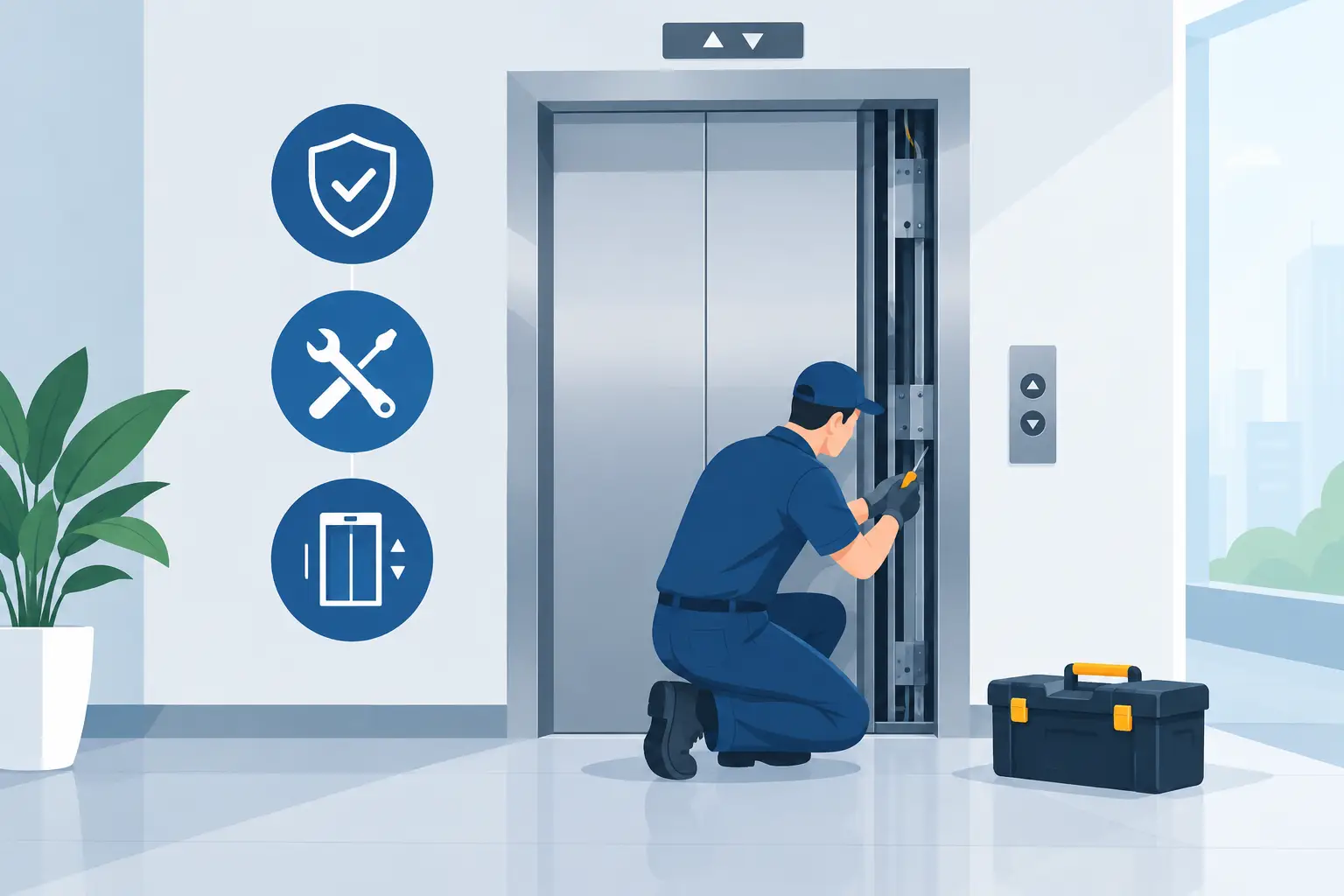
How to Fix Recurring Lift Door Faults Safely
A lift that repeatedly stops with its doors open, reopens before travel or drops out of service is more than an inconvenience. To fix recurring lift door faults properly, the underlying cause must be identified rather than simply resetting the controller and returning the lift to service. For building managers, that means fewer call-outs, less tenant disruption and a safer outcome for every passenger.
Lift doors are one of the hardest-working parts of a lift system. They open and close hundreds or thousands of times each day, depending on the building. A minor alignment issue, worn component or contaminated sensor can quickly become a repeating fault if it is not addressed with the right diagnosis and repair.
Why lift door faults keep returning
A recurring fault usually indicates that the original repair treated the symptom, not the cause. For example, a technician may clear a door-zone error and restore operation, but the same error can return if the car door hanger is worn, the landing sill is obstructed or the door operator needs adjustment.
Door faults can also be intermittent. A lift may operate normally during a service visit, then fail again during peak traffic. This is why an effective investigation looks at fault history, the time and location of failures, passenger reports and the physical condition of the entire door system.
In older buildings, repeated door faults may point to equipment approaching the end of its practical service life. Replacement parts may be difficult to source, tolerances can become harder to maintain and older controls may not provide enough diagnostic information. In these cases, targeted modernisation can offer better long-term reliability than a cycle of reactive repairs.
Common causes of recurring lift door faults
The doors on a lift car and each landing work as one system. A fault at one floor can stop the entire lift, so the issue is not always located where passengers first notice it.
Door operator wear and poor adjustment
The door operator controls the opening and closing movement of the car doors. Belts, rollers, clutches, links, bearings and drive components wear over time. If the operator is not correctly adjusted, doors can close too slowly, strike an obstruction, fail to fully lock or reopen unexpectedly.
A competent technician checks more than whether the doors are moving. They assess door speed, closing force, roller condition, belt tension, linkage wear and the operator’s response under normal load. Replacing one worn part without checking the system’s overall condition may only delay the next breakdown.
Dirty or damaged landing sills and tracks
Lift door sills collect dust, grit, rubbish and small objects. In commercial and industrial sites, debris can build up quickly, especially near loading areas or entrances exposed to weather. Even a small obstruction can affect door movement or prevent doors from reaching their fully closed position.
Cleaning is essential, but it is not always the complete answer. A damaged sill, worn door shoe or misaligned door panel can create an ongoing issue. The technician should inspect the running surfaces and moving components for wear that cannot be resolved through cleaning alone.
Faulty safety sensors and light curtains
Modern lifts commonly use light curtains or door protection sensors to detect people and objects in the doorway. When these devices are dirty, misaligned, damaged or affected by wiring faults, they can cause frequent reopening cycles or prevent the doors from closing.
Sensor faults are particularly frustrating in busy residential, healthcare and retail buildings because the lift can appear available but will not depart. Testing should include the sensor unit, cables, mounting position and controller inputs. Replacing a sensor without resolving a damaged cable or loose connection will not provide a lasting repair.
Door locks, contacts and interlocks
A lift cannot travel until the landing doors are securely closed and locked. Door locks and electrical contacts are safety-critical components, and a poor connection at a single landing can take the lift out of operation.
Intermittent lock faults can be caused by wear, vibration, misalignment, moisture ingress or damaged wiring. Because the fault may only occur at particular floors or at certain times, service records are valuable. If the lift repeatedly fails at Level 3, for instance, that detail helps direct the inspection towards the relevant landing equipment.
Controller, wiring and power issues
Not every door fault starts at the door. A controller fault, unstable power supply, communication issue or deteriorated travelling cable can send incorrect signals to the door operator or fail to recognise a correctly closed door.
These faults require measured testing by approved technicians. Repeatedly resetting the lift may restore it temporarily, but it can erase useful fault evidence and leave the building exposed to another shutdown. A clear record of fault codes and events gives technicians a better chance of diagnosing the problem on the first visit.
How to fix recurring lift door faults for the long term
The right approach begins with safe isolation and a structured assessment. Lift doors contain moving mechanical parts and safety circuits that should not be adjusted by building staff, cleaners or unqualified contractors. If doors are behaving unpredictably, the lift should be taken out of service where required and assessed by an approved lift technician.
A thorough repair process starts with reviewing the lift’s service and fault history. The technician should identify whether the issue occurs on one floor, at certain times of day, after rain, during heavy use or only when the car reaches a particular position. Patterns often reveal whether the cause is mechanical, electrical or environmental.
The next step is inspection and testing of the relevant door equipment. This may include checking car door operation, landing door locks, sills, door panels, sensors, electrical connections and controller inputs. Diagnostic testing should confirm why the lift has stopped, rather than relying on a visual check alone.
Once the cause is confirmed, repairs should address the related components and any contributing conditions. If a worn roller has damaged a track, replacing only the roller may not be enough. If moisture has affected a landing lock, the source of water ingress may need attention as well. This is where a service provider with experience across lift maintenance, repairs and modernisation can make a practical difference.
After repairs, the lift should be tested through repeated door cycles and normal travel operation. The objective is not simply to make the doors close once. It is to confirm consistent operation at all affected landings and ensure the fault does not reappear under ordinary building use.
When maintenance is enough and when modernisation is smarter
Planned maintenance can prevent many recurring door issues. Regular cleaning, lubrication where specified, adjustment, inspection of contacts and replacement of worn items before failure help keep door systems reliable. Maintenance is particularly effective where the equipment is otherwise in good condition and parts remain readily available.
However, there is a point where recurring repairs become inefficient. If the same door operator, control system or landing equipment requires frequent call-outs, a modernisation assessment is worth considering. Updated door operators and controls can improve diagnostics, component availability and performance. The best option depends on the lift’s age, traffic levels, building use, budget and expected lifespan of the property.
For a low-traffic residential lift, a focused repair and maintenance plan may be appropriate. For a busy office, hospital, aged care facility or retail site, the cost of repeated downtime can justify a more comprehensive upgrade. The decision should be based on fault trends and lifecycle cost, not just the price of the next call-out.
What building teams should record before calling for service
Useful information can shorten diagnosis and reduce repeat visits. Note the floor where the lift stopped, whether the doors were opening, closing or locked, any message shown on the display, the time of the fault and whether passengers were inside. Photos of a display message can help, but staff should not attempt to force doors, remove sill debris from an open hoistway or access lift equipment.
If passengers are trapped, follow the building’s emergency procedure and contact the lift service provider immediately. Keep people clear of the lift entrance and provide calm, accurate information to passengers. Fast communication helps technicians arrive prepared with the right parts and diagnostic equipment.
Recurring lift door faults should be treated as an operational warning, not a normal part of running a building. Skyrise Elevators can assess the door system, identify the true cause of repeat shutdowns and recommend repairs, maintenance or modernisation that supports safer, more reliable lift operation with minimal downtime.