


How to Replace a Lift: A Building Owner’s Guide
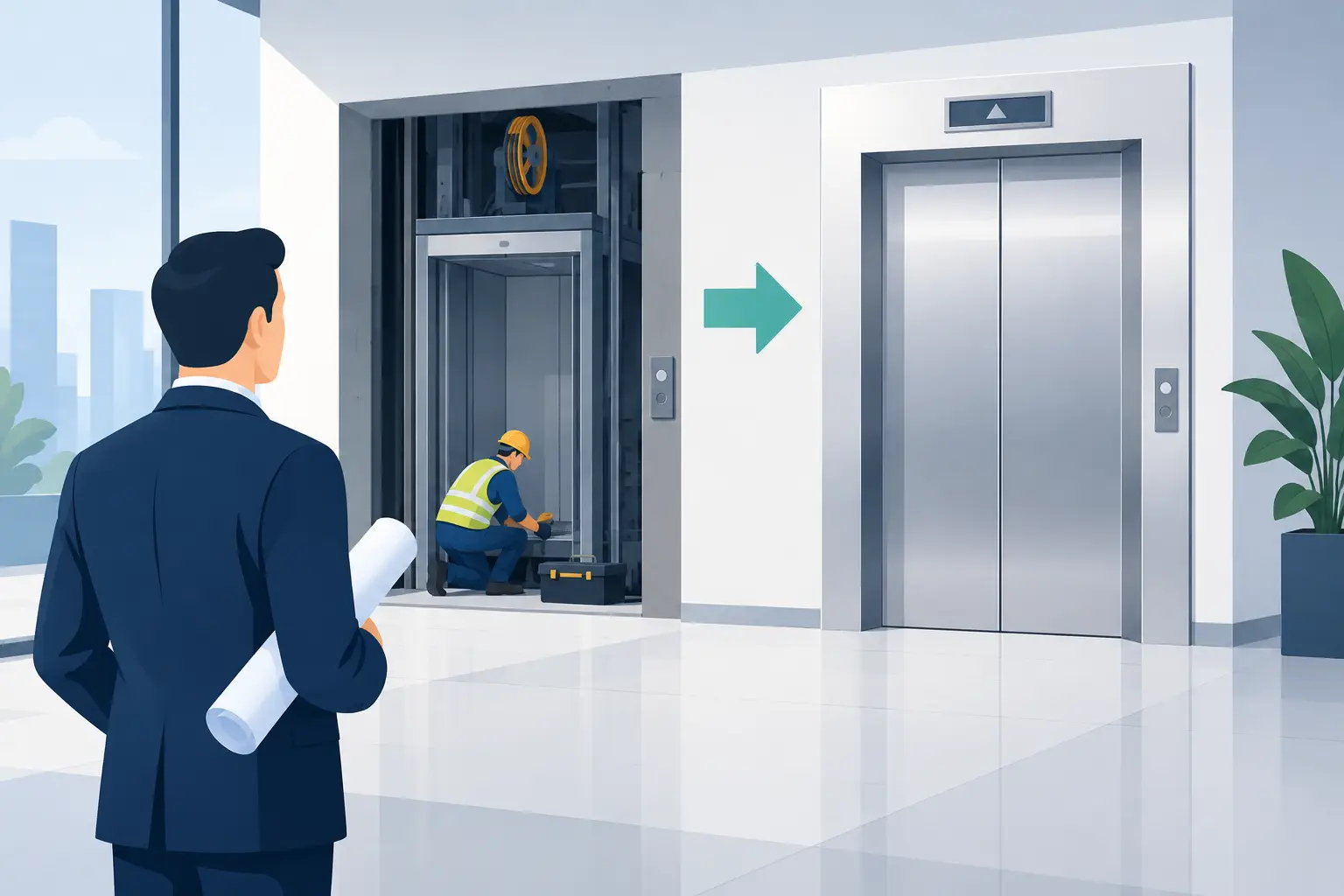
A lift that regularly breaks down, cannot reliably source parts, or no longer meets the needs of occupants can quickly become more than a maintenance issue. It affects accessibility, tenant confidence, building operations and safety planning. Knowing how to replace a lift starts with recognising that a replacement is a managed building project, not simply an equipment swap.
For property owners, facility managers and developers, the right approach balances safety, compliance, downtime, budget and the future use of the building. A properly planned lift replacement can improve reliability, reduce ongoing repair costs and provide a better experience for passengers, residents and staff.
When should you replace a lift?
A lift does not need to be replaced solely because of its age. Some older systems remain suitable with targeted modernisation, while others have reached a point where replacement is the more practical long-term option. The decision depends on the condition of the lift, the availability of components, its usage levels and whether it can still meet current operational and accessibility requirements.
Frequent service calls are an obvious warning sign, particularly where the same faults continue to return. Long periods out of service, obsolete controllers, unreliable door equipment and escalating repair costs can also indicate that the lift is nearing the end of its useful life. In commercial, healthcare, aged care and high-traffic residential buildings, downtime can create serious access and operational problems.
A replacement may also be necessary when a building changes use. For example, an office conversion to apartments may require a different lift capacity, finish, access-control arrangement or level of accessibility. An industrial facility may need a goods or service lift designed for heavier loads and more demanding operating conditions.
Replacement or modernisation: choosing the right path
Before committing to a full replacement, arrange a detailed assessment by qualified lift technicians. This assessment should look beyond the cabin appearance. The condition of the controller, machine equipment, door operators, guide rails, wiring, landing fixtures, shaft structure and safety systems all need consideration.
Modernisation can be a cost-effective choice where the lift’s core structure remains sound. Replacing the controller, doors, fixtures, communication systems or selected mechanical components may improve performance without removing the entire installation. It can also be staged to reduce disruption in some buildings.
Full replacement is often the stronger option where the equipment is extensively obsolete, unreliable or unsuitable for the building’s current needs. It may allow for a new drive system, improved ride quality, better energy efficiency, updated safety features and a cabin designed to suit the property. Although the upfront investment is higher, replacement can provide greater certainty where piecemeal repairs have become expensive and unpredictable.
How to replace a lift with a clear project plan
The best lift replacement projects are planned around the building, not just the equipment. A lift specialist should begin with a site inspection and consultation to understand how the lift is used each day. Passenger volumes, peak periods, building access, shaft dimensions, electrical supply, fire requirements and delivery constraints all affect the proposed solution.
For a residential building, the focus may be reliable everyday access, quiet operation and finishes that complement common areas. In a hospital or aged care setting, stretcher dimensions, dependable availability and accessibility are central considerations. Retail, office and industrial sites may place greater priority on carrying capacity, traffic flow, goods movement or integration with security systems.
At this stage, clear scope documentation is essential. It should identify what will be removed, what equipment will be installed, whether shaft or machine-room works are needed, how the site will be protected and what testing will be completed before handover. A clear scope reduces the risk of unexpected variations once work begins.
Select equipment for the building’s real requirements
A replacement lift should be sized and specified for current and expected demand. Choosing a system solely on initial price can lead to poor performance over its operating life. Capacity, speed, door configuration and cabin dimensions all influence passenger movement and suitability.
Consider whether the building needs a passenger lift, home elevator, goods lift or service lift. Features such as durable wall finishes, vandal-resistant fittings, restricted access, emergency communication, destination controls or larger doors may be worthwhile depending on the environment. The equipment should also be practical to maintain, with approved components and service support available locally.
Plan for downtime and occupant communication
Most lift replacements require the existing lift to be unavailable for a period. The length of downtime depends on the extent of works, site conditions, equipment lead times and whether building alterations are required. In a single-lift building, this needs especially careful planning.
Property managers should notify occupants well before work starts and provide realistic information about access arrangements. Consider residents with mobility limitations, delivery requirements, rubbish collection, trades access and emergency procedures. Where practical, plan major works around lower occupancy periods or coordinate temporary access measures.
For buildings with multiple lifts, the project may be staged so that one lift remains available while another is replaced. This is not always possible, but it can significantly reduce operational disruption in busy sites.
Compliance, safety and site coordination
Lift replacement work must be managed with safety at the centre of every decision. The project needs to comply with applicable Australian standards, building requirements and local approval processes. Requirements may vary depending on the building type, lift design and the extent of associated construction works.
During installation, the lift shaft is an active work area that must be properly secured. Contractors need safe access arrangements, suitable isolation procedures and clear coordination with other trades. This is particularly important on construction sites, in occupied strata buildings and in facilities that operate around the clock.
Fire service interfaces, emergency communications, electrical upgrades and accessibility provisions should be considered early rather than treated as late additions. Early coordination helps prevent delays and ensures the completed lift performs as intended within the wider building environment.
Installation, testing and handover
Once the new lift equipment is manufactured and delivered, installation can begin. This may include removing the existing cabin, controller, drive equipment, doors, travelling cables and fixtures, then preparing the shaft and installing the new system. The exact process varies considerably between a like-for-like replacement and a project involving changes to capacity, speed or shaft configuration.
Installation is followed by commissioning and thorough testing. Technicians check operation across every landing, door performance, levelling accuracy, safety devices, emergency functions, communication systems and ride quality. Any required inspections and certification should be completed before the lift returns to service.
Handover should not end when the lift starts moving. Building representatives need clear information about daily operation, emergency contacts, maintenance requirements and any user controls. For facility teams, a practical handover also includes relevant records and a defined service plan.
Protect the investment with planned maintenance
A new lift is a major asset, but it still requires regular maintenance. Planned servicing helps identify wear before it becomes a breakdown, supports reliable operation and protects the life of key components. It also gives building managers a clear point of contact when an issue arises.
The maintenance schedule should reflect the lift’s use and environment. A lightly used home elevator has different service needs from a busy commercial passenger lift or industrial goods lift. Consistent maintenance by approved technicians is the most effective way to keep the replacement delivering the reliability it was designed to provide.
Replacing a lift is an opportunity to improve access, safety and confidence across the building for years to come. A detailed site assessment and an experienced lift partner will help turn a complex upgrade into a controlled project with minimal disruption and a dependable result.