


Door Operators, Controllers, Drives: Which Lift Part Fails First?
Lift systems contain several components that work together to move the car, control its speed, and open and close its doors. When a lift starts operating unreliably, the cause may be a worn door operator, an ageing controller, a faulty drive, or another component.
So, which lift part fails first? There is no universal failure order. The first component to develop faults depends on the lift’s age, usage, maintenance history, operating conditions, and component design. However, door operators, controllers, and drives are common areas that technicians inspect when diagnosing recurring lift problems.
Understanding what each component does can help building owners recognise warning signs and decide when to consider repairs or lift modernisation services in Sydney.
Which Lift Component Is Most Likely to Fail First?
The door operator is often exposed to frequent mechanical movement because lift doors open and close during normal operation. This makes it an important component to inspect when a lift develops recurring door faults.
However, frequent use does not mean the door operator always fails before the controller or drive. Each component experiences different types of wear.
| Lift component | Main function | Common warning signs |
| Door operator | Opens and closes the lift doors | Slow doors, unusual noises, incomplete closing, repeated reopening |
| Controller | Manages lift operations and coordinates system functions | Intermittent faults, unexpected stops, inconsistent responses |
| Drive | Controls the lift motor’s speed and movement | Jerky starts, rough travel, inconsistent speed, drive faults |
A qualified lift technician must inspect the system to identify the actual cause. Similar symptoms can result from different mechanical, electrical, or control-related problems.
1. Door Operators: Why Door Faults Are Common
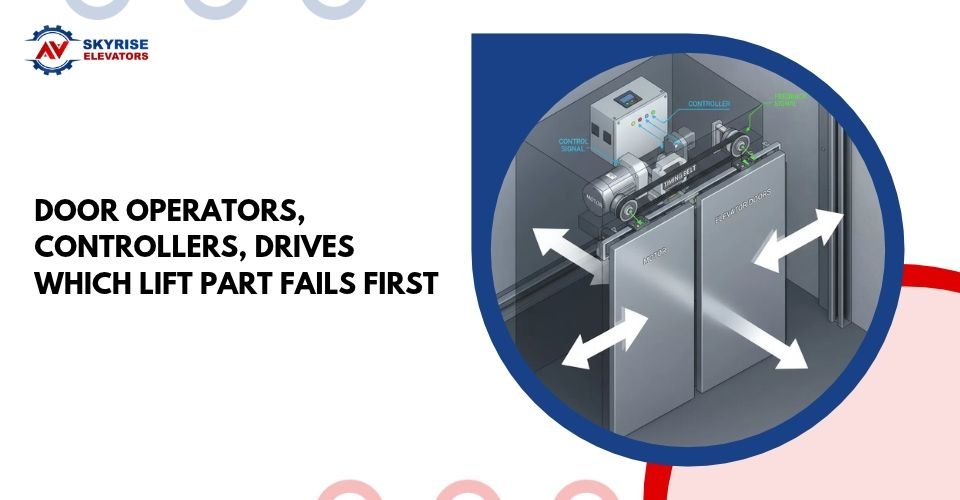
The door operator controls the movement of the lift doors. It uses a motor and associated mechanical components to open and close the doors in response to the lift’s control system.
Because doors operate repeatedly throughout the day, their components experience regular movement and mechanical stress. Busy residential buildings, offices, shopping centres, and commercial properties may place particularly high demands on lift door systems.
Common Door Operator Problems
Door operator faults can involve several parts, including:
- Worn rollers and tracks: Wear or misalignment can make door movement noisy or uneven.
- Motor problems: A faulty door motor may cause slow or incomplete opening and closing.
- Belt wear: A worn or damaged belt can affect the transfer of movement.
- Sensor faults: Door sensors may incorrectly detect an obstruction or fail to respond as expected.
- Mechanical misalignment: Incorrect alignment can cause resistance during door movement.
Warning Signs to Watch For
Building managers may notice that the doors take longer to open, close unevenly, make unusual noises, or reopen without an obvious obstruction. A lift may also remain out of service because the doors cannot complete their operating cycle.
These symptoms should not be ignored. Door faults can affect lift availability and passenger access. Technicians should inspect the operator, door tracks, sensors, and related components before recommending repairs or replacement.
2. Lift Controllers: The System’s Operating Centre
The lift controller manages the lift’s operating functions. It processes signals from buttons, sensors, safety circuits, and other components to coordinate movement and door operation.
An ageing controller may become less reliable, particularly when its electronic components or associated systems are no longer operating consistently.
Common Controller Problems
Controller-related faults may include:
- Electronic component deterioration: Ageing circuit boards and electrical components may develop faults.
- Intermittent communication problems: Signals between the controller and other lift components may become unreliable.
- Outdated control technology: Older controllers may have limited compatibility with newer equipment.
- Recurring system faults: The controller may register errors that require technical investigation.
- Unreliable responses: The lift may respond inconsistently to calls or operating commands.
Warning Signs to Watch For
A controller problem may cause unexpected stops, intermittent operation, inconsistent responses to floor calls, or recurring fault messages.
However, these symptoms do not automatically confirm controller failure. Faults in wiring, sensors, door systems, safety circuits, or other components can produce similar problems.
A technician should review the fault history and test the relevant circuits before deciding whether the controller needs repair, replacement, or modernisation.
3. Lift Drives: Controlling Speed and Movement
The lift drive controls the electrical power supplied to the motor and helps regulate the lift’s speed and acceleration. Depending on the lift design, it may also support smooth starting, stopping, and levelling.
Drive performance affects the quality of the passenger journey. A faulty or ageing drive can cause noticeable changes in how the lift moves.
Common Drive Problems
Drive-related issues may involve:
- Electrical component wear: Ageing components can affect drive performance.
- Overheating: Excessive heat or inadequate ventilation may contribute to drive faults.
- Electrical supply issues: Voltage fluctuations or electrical problems can affect operation.
- Inconsistent speed control: The drive may struggle to regulate motor speed correctly.
- Fault codes: The drive may display errors that require specialist diagnosis.
Warning Signs to Watch For
Passengers may notice jerky starts, rough movement, unusual vibration, or inconsistent stopping and levelling. A lift may also experience drive-related fault messages or interruptions during operation.
These symptoms can have other causes, including motor, braking, mechanical, or control-system problems. A qualified technician should assess the complete system rather than replacing the drive based on symptoms alone.
What Causes One Lift Component to Fail Before Another?
The condition of a lift depends on more than its installation date. Several factors influence how quickly individual components wear or develop faults.
1. Lift Usage and Passenger Traffic
A lift in a busy commercial building may complete many more operating cycles than one in a small residential property. Frequent door movement can increase wear on door operators, while repeated starts and stops place demands on the motor and drive system.
2. Maintenance History
Regular inspections and servicing help technicians identify wear, alignment problems, and developing electrical faults. Missed maintenance can allow smaller issues to become more serious.
3. Component Age and Availability
Older lifts may contain components that are difficult to source or support. When replacement parts become unavailable, repairs may take longer and become more complicated.
4. Operating Environment
Dust, moisture, temperature changes, and inadequate ventilation can affect electrical and mechanical equipment. The impact depends on the lift’s location, installation, and protection measures.
5. Installation and Adjustment
Incorrect alignment, poor adjustment, or unsuitable component settings can contribute to recurring faults. A component may appear to be failing when the underlying problem is related to installation or another connected part.
Repair or Modernisation: How Do You Decide?
A single component fault does not necessarily mean the entire lift needs modernisation. In some cases, repairing or replacing the affected part may be appropriate.
However, repeated breakdowns, ageing equipment, and limited parts availability may indicate that a wider assessment is necessary.
| Situation | Possible next step |
| One isolated component fault | Inspect and repair or replace the affected component |
| Repeated door faults | Assess the door operator, sensors, tracks, and related controls |
| Recurring controller errors | Investigate the controller and connected electrical systems |
| Rough movement or inconsistent speed | Inspect the drive, motor, braking system, and related components |
| Multiple ageing components | Consider a broader lift modernisation assessment |
| Replacement parts are difficult to source | Assess the long-term practicality of continued repairs |
Lift modernisation may involve upgrading selected components or replacing outdated equipment to improve system reliability, performance, and compatibility. The appropriate scope depends on the lift’s condition, design, safety requirements, and the building’s needs.
Skyrise Elevators provides lift modernisation services in Sydney for building owners considering upgrades to existing lift systems.
When Should Building Owners Consider Lift Modernisation?
Building owners should consider a modernisation assessment when the lift experiences recurring faults, requires increasingly frequent repairs, or contains ageing components that are difficult to maintain.
Other reasons include:
- Repeated service interruptions affecting building access.
- Door systems that continue to develop faults after repairs.
- Outdated controllers or drives with limited parts support.
- Poor ride quality, inconsistent movement, or levelling problems.
- Increasing maintenance requirements across several lift components.
- Plans to improve the lift’s long-term performance and suitability for the building.
Modernisation should be based on a technical assessment rather than the age of one component alone. A technician can identify which parts need attention and whether targeted replacement or a wider upgrade is more suitable.
Why a Professional Lift Assessment Matters
Door operators, controllers, and drives perform different functions, but they also depend on one another. A door fault may involve the operator, sensors, wiring, or controller. Rough lift movement may involve the drive, motor, braking system, or mechanical components.
Replacing the first component that shows a fault may not resolve the underlying problem. A professional assessment helps identify the source of the issue and determine whether repair, component replacement, or modernisation is appropriate.
For building owners comparing options, working with an experienced lift company in Sydney can help establish the condition of the existing system and plan suitable maintenance or upgrades.
Frequently Asked Questions
Which lift part usually wears out first?
Door operators are often exposed to frequent mechanical movement because lift doors open and close during normal operation. However, there is no fixed failure order. Usage, maintenance, component quality, and operating conditions all influence which part develops faults first.
How do I know if my lift controller is failing?
Possible signs include recurring fault messages, unexpected stops, intermittent operation, and inconsistent responses to floor calls. These symptoms can also result from other electrical or mechanical faults, so a technician must test the system before confirming controller failure.
Can a faulty lift drive cause jerky movement?
Yes. A drive fault can affect motor speed, acceleration, and deceleration, which may cause jerky starts or rough travel. However, motor, braking, and mechanical problems can produce similar symptoms.
Should I replace a faulty component or modernise the lift?
The decision depends on the condition of the component and the wider lift system. If one part has an isolated fault, targeted repair may be sufficient. If several components are ageing or breakdowns keep recurring, a broader modernisation assessment may be more practical.
How often should lift components be inspected?
Inspection and maintenance intervals depend on the lift’s design, usage, condition, applicable requirements, and maintenance recommendations. Building owners should follow the maintenance plan established by their lift service provider and address reported faults promptly.
Final Thoughts
Door operators, controllers, and drives can all develop faults, but none is guaranteed to fail first. Door operators experience frequent mechanical movement, controllers manage the lift’s operating functions, and drives regulate motor performance.
The most useful approach is to identify the cause of each fault and assess the condition of the wider system. When repairs become frequent or several components are ageing, lift modernisation services in Sydney may provide a suitable way to plan upgrades.
Skyrise Elevators can help building owners assess their existing lift systems and consider appropriate modernisation options.