


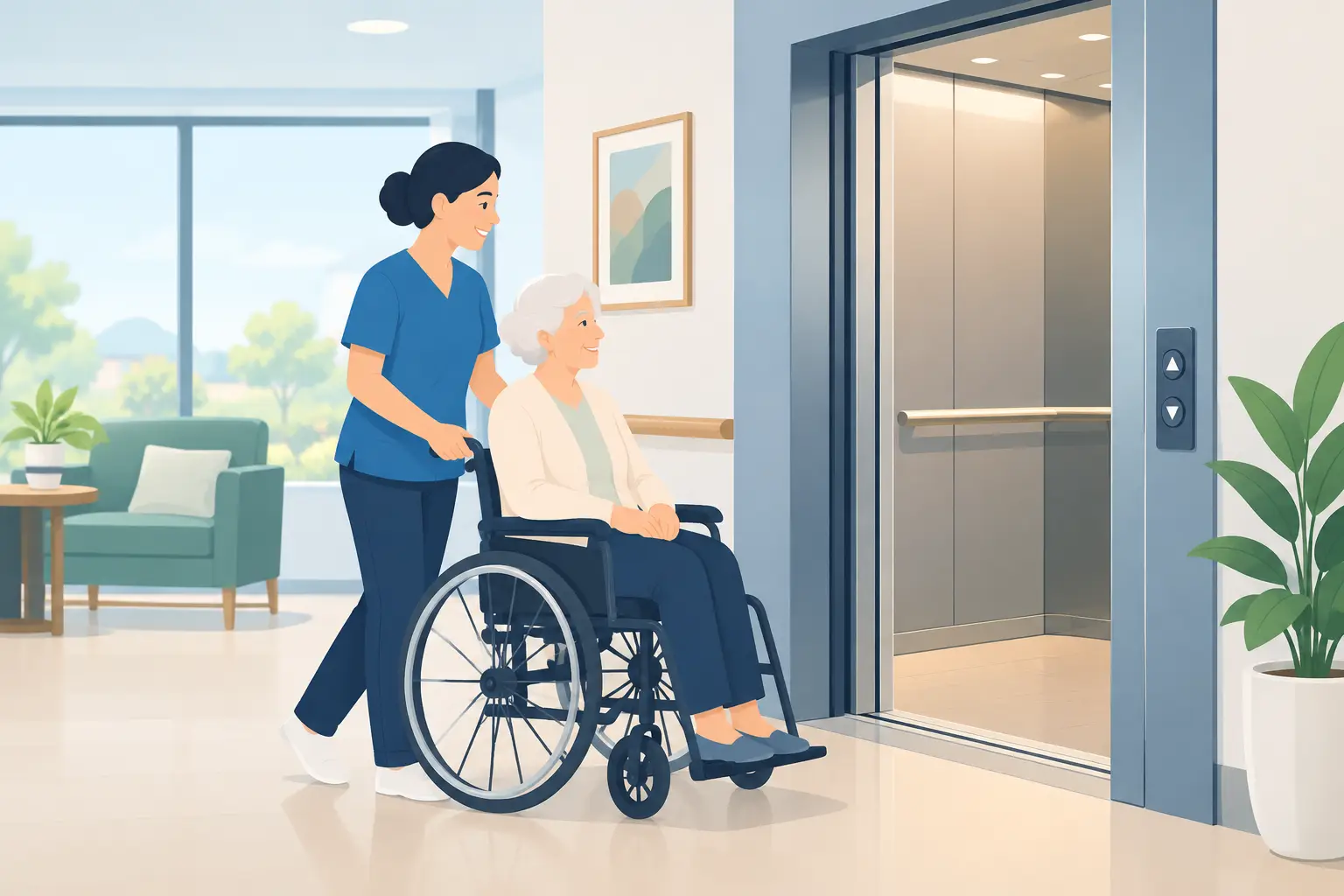
An Aged Care Lift Case Study in Safer Access
A lift outage in an aged care home is more than an inconvenience. It can interrupt meals, appointments, cleaning schedules, visitor access and the safe movement of residents between floors. This aged care lift case study looks at how a practical lift upgrade strategy can improve daily access while supporting staff, residents and facility operations.
The example is representative of the issues commonly found in established multi-storey aged care facilities. Every site has different building constraints, resident needs and compliance requirements, so the right outcome starts with a detailed site assessment rather than a one-size-fits-all lift specification.
The facility challenge
The facility was a two-level residential aged care home with accommodation, shared dining areas and activity spaces spread across both floors. Its existing passenger lift was reaching the end of its useful service life. Breakdowns had become more frequent, door operation was inconsistent and the lift was too slow during the busiest periods of the day.
For residents who used wheelchairs, walking frames or required assistance from carers, this created avoidable delays. Staff were also spending more time coordinating trips between floors, particularly around meal services, medical appointments and changeovers. The issue was not simply lift speed. It was the reliability of a critical pathway through the building.
The facility manager needed a solution that would improve availability without causing unnecessary disruption to residents. They also needed confidence that service, repairs and future modernisation support could be managed by an experienced lift provider.
What the aged care lift assessment identified
An effective aged care lift assessment considers how people use the lift across a full day, not just the dimensions of the shaft. In this case, the review focused on traffic patterns, the condition of the existing equipment, resident accessibility and the building’s capacity for an upgrade.
Morning care routines and meal periods created clear peak demand. During these times, residents using mobility equipment often travelled with a carer, meaning the lift needed sufficient car space, dependable door operation and controls that were easy to reach and understand.
The assessment also considered equipment that regularly moved through the building. This included meal trolleys, linen carts, cleaning equipment and, where applicable, medical transport equipment. A lift that is technically compliant but impractical for daily care operations can still create delays and safety concerns.
The existing landing doors, controller and drive equipment showed signs of age-related wear. Replacement parts were becoming harder to source, increasing the risk that a minor fault could lead to extended downtime. Rather than continuing with reactive repairs, the facility considered a staged modernisation and replacement approach.
Accessibility is more than car size
Aged care lift design needs to account for the people using it under real conditions. A clear entrance, appropriate car dimensions and easy-to-read controls all matter. So do handrails, lighting, non-slip flooring and accurate levelling at each floor.
For some facilities, a larger lift car may be required for a wheelchair user and carer to travel comfortably together. Others may need capacity for beds or specialised equipment. The suitable configuration depends on the building layout, resident care model and whether the lift also serves back-of-house functions.
Voice annunciation, visual floor indicators and appropriately positioned buttons can further assist residents with vision, hearing or mobility limitations. These features should be selected carefully to suit the facility, rather than added as a generic package.
The proposed lift solution
The recommended approach was to replace ageing control and drive components while upgrading key passenger-facing elements. This provided a reliable operational outcome without requiring an unnecessary full shaft rebuild.
A modern controller and drive system were specified to improve performance, fault monitoring and energy efficiency. Door equipment was upgraded to provide smoother, more consistent opening and closing. New landing indicators and accessible car controls improved the experience for residents and visitors.
The lift car finishes were selected with durability and hygiene in mind. In an aged care environment, surfaces need to withstand frequent cleaning and regular contact from mobility aids, carts and equipment. A practical finish can also help the lift remain presentable over its service life, reducing the need for cosmetic repairs.
The project also included a lift communication system so an occupant could call for assistance if needed. This is an essential consideration for any passenger lift, but particularly in a setting where residents may be vulnerable or travelling independently.
Why replacement was not automatically the first choice
A full lift replacement can be the right decision when the shaft, car, machinery and core systems are no longer suitable for the building’s needs. However, it can involve more building work, longer lead times and greater capital cost.
In this case, the lift structure remained suitable, and a targeted modernisation addressed the main reliability and usability concerns. That decision reduced disruption while extending the operational life of the lift. If car dimensions had been inadequate for resident movement or if major structural deficiencies had been identified, a full replacement would have been more appropriate.
Managing installation around resident care
Planning was central to the project. Aged care facilities cannot simply close a lift and expect daily operations to continue as normal. The works program needed to account for residents who relied on vertical transport, staff movements, emergency planning and visitor communication.
Before works began, the facility mapped which residents required regular access between floors and adjusted room allocations and activity schedules where practical. Staff received clear information about lift downtime, alternative routes and support arrangements. The project team coordinated noisy or disruptive work around quieter periods wherever possible.
For buildings with only one lift, temporary access planning is especially important. Depending on the building, this may involve staged works, use of alternative accessible routes, temporary changes to service locations or carefully managed resident movements. There is no universal contingency plan, which is why site-specific planning matters.
Clear communication also helped reduce anxiety for residents and families. Explaining what was happening, how long works were expected to take and who could assist gave the facility greater control during the transition.
Results after modernisation
Once the upgraded lift returned to service, staff reported smoother door operation and more reliable travel between floors. Residents benefited from a more comfortable, predictable journey, while carers spent less time managing delays caused by lift faults.
The greatest operational gain was improved confidence. Rather than treating the lift as a recurring maintenance risk, the facility had a system better suited to the demands of daily care. Faster fault diagnosis through modern control equipment also supported more efficient service response when attention was required.
It is worth being realistic about outcomes. Modernisation does not remove the need for maintenance, and every lift will require inspections, adjustments and occasional repairs. What it does provide is a more reliable foundation, better parts availability and a clearer pathway for managing the lift over the long term.
Ongoing maintenance protects the investment
An aged care lift should be maintained according to its equipment, usage levels and operating environment. Busy facilities place consistent demand on door systems, buttons, rollers, locks and drive components. Planned maintenance helps identify wear before it develops into a resident-impacting breakdown.
A structured maintenance program should include regular checks of safety devices, door operation, ride quality, levelling accuracy, emergency communications and control system performance. Technicians should also review fault history. Repeated door faults or intermittent levelling issues can point to a developing problem that needs attention before it becomes more disruptive.
Facility managers should keep a clear record of service visits, repairs, shutdowns and resident-impacting incidents. This information supports future budgeting and helps determine whether a repair remains cost-effective or whether modernisation is the more sensible next step.
What this aged care lift case study shows
The main lesson from this aged care lift case study is that lift decisions should be made around care delivery, not equipment alone. A dependable lift supports resident dignity, enables staff to work efficiently and helps a facility maintain safe access across every floor.
Whether the right path is a repair, modernisation or full replacement depends on the condition of the lift, building limitations, traffic demand and the needs of residents. A thorough assessment gives facility managers the information needed to plan works, manage risk and avoid making short-term decisions that create larger problems later.
For aged care operators, a lift is part of the daily care environment. Treating it as essential infrastructure, with the right design and planned support behind it, helps keep residents moving safely and staff focused on the work that matters most.