


Aged Care Elevator Retrofit for Safer Access
A lift stopping between floors is disruptive in any building. In an aged care residence, it can delay care, limit a resident’s independence and place extra pressure on staff already managing a demanding shift. An aged care lift retrofit is a practical way to address ageing equipment before reliability, accessibility or safety concerns become daily operational problems.
Retrofit work does not always mean replacing the entire lift. It may involve modernising the controller, doors, fixtures, drive system and safety components while retaining serviceable parts of the existing installation. The right scope depends on the lift’s condition, building layout, resident needs and the level of continuity the facility requires throughout the works.
When an aged care lift retrofit is the right call
Older lifts can continue operating long after their design has become unsuitable for a modern care environment. Recurrent call-outs, extended wait times, unreliable levelling and doors that hesitate or reopen repeatedly are clear signs that attention is needed. So are obsolete components that are difficult to source, particularly where a minor fault can lead to extended downtime.
A retrofit is often appropriate when the lift shaft, car frame and major structural elements remain sound, but the equipment controlling movement and passenger access is nearing the end of its useful life. Modernising these systems can improve reliability without the cost, disruption and building work associated with a complete replacement.
However, a retrofit is not automatically the best answer. A full replacement may be more suitable where the lift cannot accommodate mobility equipment safely, the available car size is too restrictive, the shaft condition is poor or the system has reached a point where repairs are no longer economical. A detailed site assessment should identify which option provides the strongest long-term outcome rather than simply the fastest short-term fix.
Safety and accessibility come first
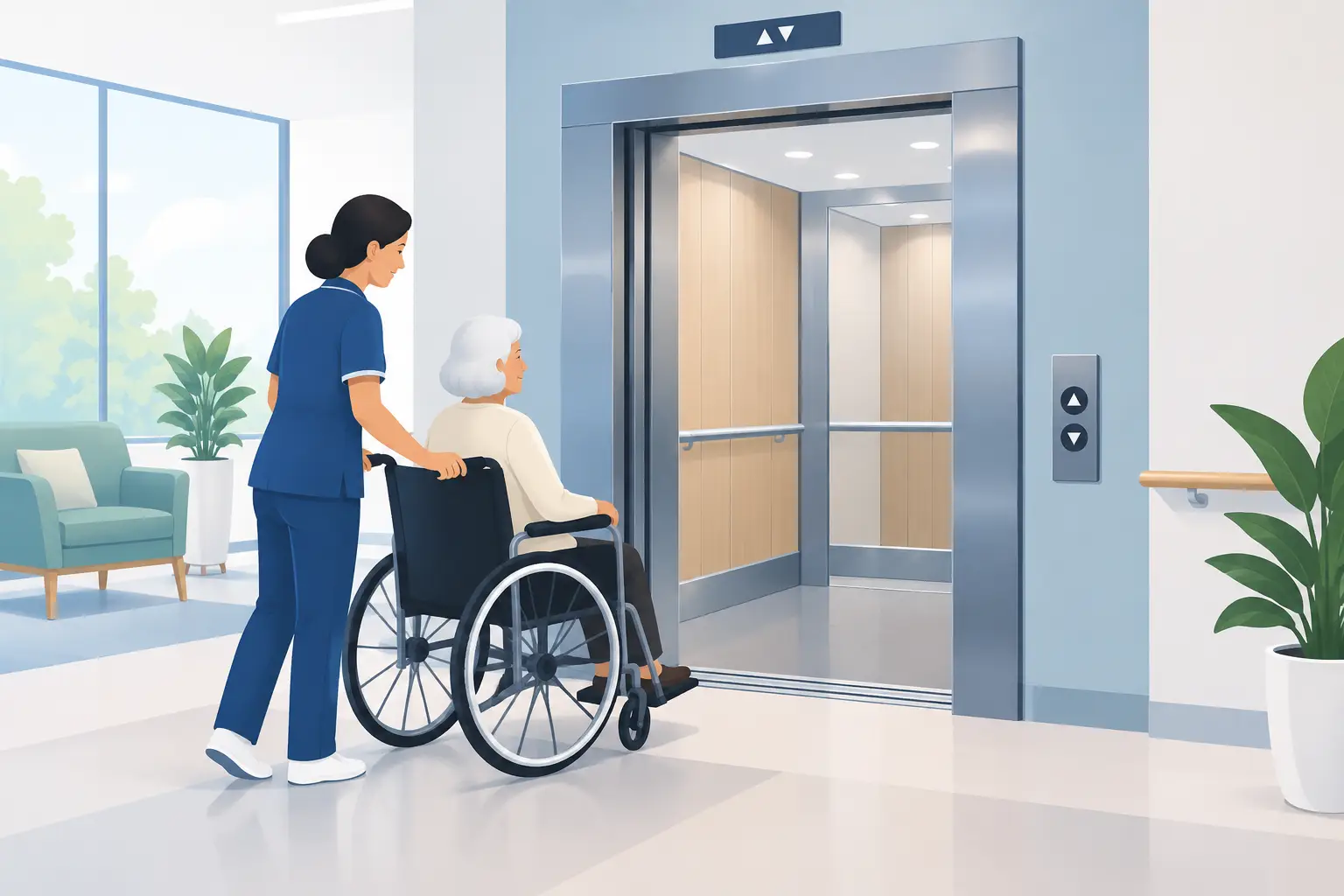
Aged care lifts carry more than passengers. They support residents using walkers, wheelchairs and mobility scooters, staff moving care equipment, visitors, cleaners and, at times, emergency personnel. Every element of the upgrade should reflect this reality.
Accurate floor levelling is a priority. Even a small gap or uneven threshold can create a trip hazard or make it difficult to move a wheelchair in and out of the car. Door operation also matters. Doors need to open reliably, provide suitable clearance and respond appropriately when a resident or piece of equipment is still in the entrance.
Controls should be easy to locate, read and use. This may involve appropriately positioned buttons, clear visual indicators, audible announcements and accessible alarm communications. Car lighting, handrails and non-slip floor finishes can also make a meaningful difference to confidence and usability.
The retrofit design should be reviewed against applicable Australian requirements, the building’s existing approvals and the practical needs of its residents. Compliance is a necessary baseline, but a care facility benefits from looking beyond the minimum. A lift that technically meets requirements but is slow, confusing or difficult to use still creates avoidable challenges for residents and staff.
Plan the works around resident care
The greatest concern for many facility managers is not the equipment itself. It is how work will affect residents and daily care routines. Successful lift modernisation starts with a clear staging plan that considers meal services, visiting times, clinical appointments, deliveries and emergency access.
Where a building has more than one lift, work can often be staged so that another lift remains available. In a single-lift building, temporary access arrangements need careful planning before work begins. This may include changing activity locations, scheduling deliveries outside construction periods and establishing support arrangements for residents who cannot use stairs.
Communication is equally important. Residents, families and staff should understand what is happening, when access will be affected and who to contact if they need assistance. Clear, calm communication helps reduce anxiety and allows care teams to prepare for altered movement through the building.
A capable contractor will also manage site safety carefully. Work areas need to be controlled, noisy tasks planned thoughtfully and access paths kept clear. Dust, noise and unfamiliar trades can be unsettling in a residential care setting, so practical site management is part of the service, not an afterthought.
What a well-scoped retrofit can include
The scope of an aged care lift retrofit varies, but the most valuable upgrades usually focus on the components that affect reliability, safety and daily usability. Rather than selecting items in isolation, assess how they work together across the full lift system.
A typical modernisation program may include:
- A new controller and drive system to improve ride performance, fault monitoring and availability of replacement parts.
- Door operator upgrades, safety sensors and refreshed landing equipment to improve access and reduce door-related faults.
- New car operating panels, landing call buttons, indicators and emergency communication systems suited to accessible use.
- Car interior improvements such as lighting, handrails, flooring and protective finishes that support resident comfort and ongoing durability.
Remote monitoring can be valuable where available, particularly for identifying developing faults before they cause a shutdown. It should not replace routine maintenance or responsive technicians, but it can give facility teams greater visibility over lift performance and recurring issues.
The best scope is not necessarily the one with the longest list of new parts. If the car size, door width or lifting capacity does not suit the facility’s current needs, those constraints must be addressed honestly. Spending on controls alone will not solve a building access issue created by an undersized lift.
Choosing a partner for lifecycle support
A retrofit should be treated as the beginning of the next stage of a lift’s life, not the end of a construction project. The equipment needs structured servicing, timely repairs and technicians who understand what has been installed. This is especially important in aged care, where prolonged outages can quickly affect resident wellbeing and staff workload.
When assessing providers, ask how they approach condition reporting, parts availability, after-hours response and planned maintenance following the upgrade. Confirm who will coordinate the project, how residents and staff will be protected during works, and whether the provider can support the lift once it returns to service.
It is also worth reviewing the facility’s broader vertical transport needs. A passenger lift may share traffic patterns with service deliveries, linen trolleys or waste movement. In some properties, a dedicated goods or service lift can reduce pressure on the main passenger lift and improve day-to-day operations. The right solution is shaped by how the building actually functions, not by a standard specification.
Skyrise Elevators approaches lift modernisation with this full lifecycle view, helping facility managers assess existing equipment, plan practical upgrades and maintain dependable performance after handover.
Build certainty before equipment fails
Waiting for a major breakdown can force a facility into rushed decisions, costly temporary arrangements and unnecessary disruption. A planned condition assessment gives managers time to understand the lift’s remaining service life, budget for the right scope and schedule works around residents rather than around an emergency.
For aged care operators, a reliable lift is part of delivering respectful, consistent care. Start with an honest assessment of the equipment, involve care teams early and choose an upgrade path that keeps residents moving safely and comfortably for years ahead.