


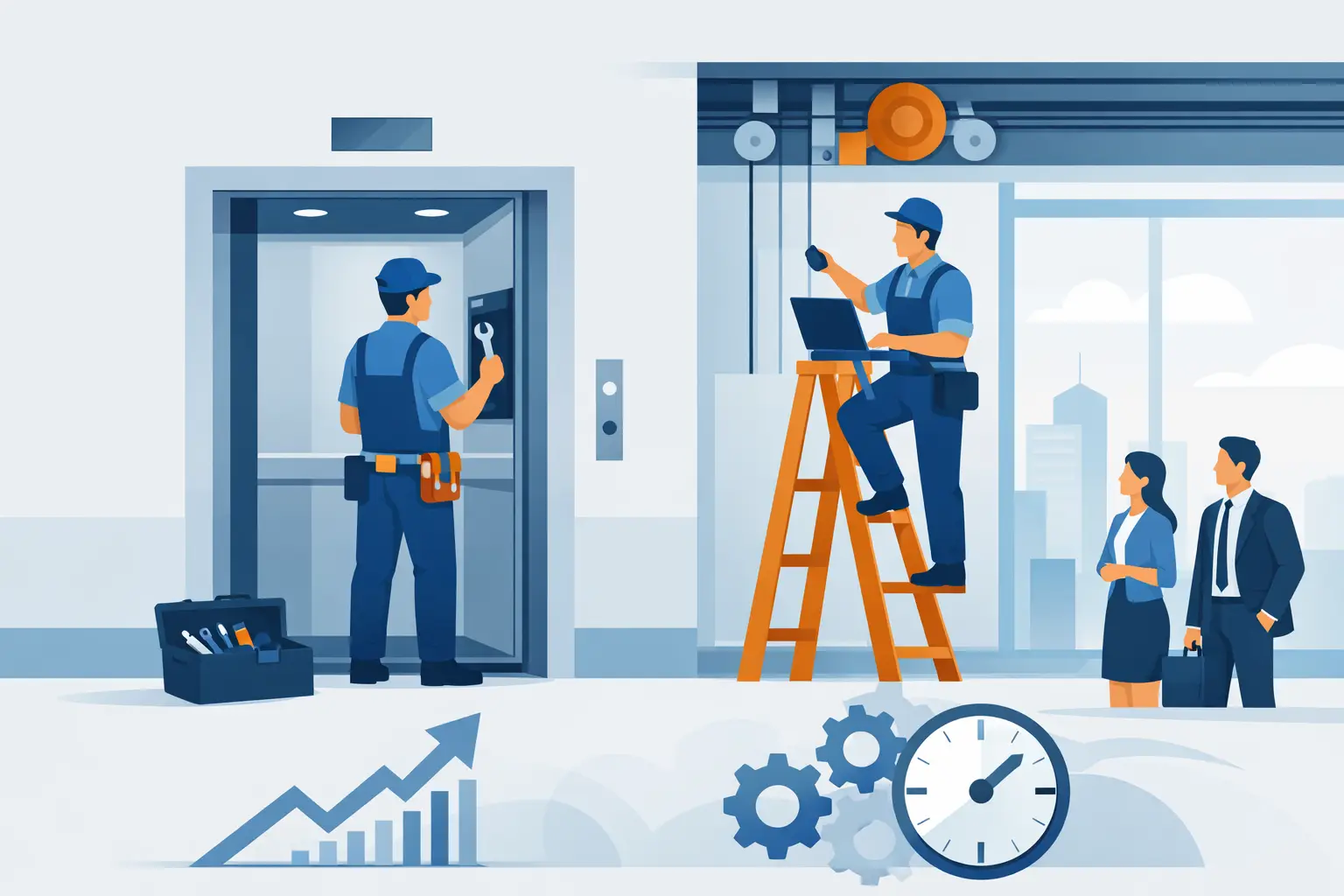
Elevator Maintenance Programs That Protect Uptime
A lift that stops without warning rarely creates a small problem. It can disrupt resident access, delay goods movements, affect customer flow and leave building teams managing urgent calls. Well-managed lift maintenance programme reduce that exposure by identifying wear, testing critical systems and planning repairs before a fault becomes an outage.
For property owners and facility managers, maintenance is not simply a compliance task. It is a practical way to protect people, building operations and the long-term value of a major asset. The right programme should reflect how the lift is used, its age, its equipment and the expectations of everyone who relies on it.
What a lift maintenance programme should achieve
A maintenance programme is a scheduled service arrangement designed to keep a lift, escalator or moving walk operating safely and reliably. During planned visits, qualified technicians inspect equipment, complete routine adjustments, test safety components and record the condition of key systems.
The purpose is not to promise that a breakdown will never occur. Components can fail unexpectedly, particularly in older or heavily used equipment. The purpose is to reduce avoidable failures, spot developing issues early and provide a clear service history when a repair, modernisation or replacement decision is required.
A good programme also gives building managers a clearer picture of cost. Instead of responding only when equipment fails, they can prioritise recommended work according to urgency, risk and budget. That is especially valuable in strata buildings, healthcare settings, aged care facilities, retail centres and industrial sites where a lift outage can have a direct operational impact.
Safety comes first
Lift equipment includes moving mechanical parts, electrical systems, doors, braking equipment, ropes or belts, and safety devices that must work together correctly. Regular servicing helps confirm that these systems are operating as intended and that concerns are addressed before they compromise safe use.
Maintenance also supports the owner’s responsibility to keep equipment in suitable operating condition. Exact requirements can vary by state, territory, building type and equipment configuration, so maintenance schedules should be considered alongside applicable regulations, inspection obligations and manufacturer recommendations.
Reliability is built through routine attention
Many lift issues show warning signs before a complete shutdown. Doors may close inconsistently, levelling may become less accurate, unusual noises may appear in the machine room, or fault records may show repeat calls for the same component. A technician who sees the equipment regularly is better placed to recognise these patterns.
That continuity matters. A service record can reveal whether a repair is an isolated event or part of a wider reliability issue. It also helps a property manager make an informed choice between another repair and a planned upgrade.
What is included in lift maintenance programmes?
The scope of lift maintenance programmes should be clear from the outset. It should state the service frequency, included inspections, reporting process, call-out arrangements and exclusions. The exact work varies between lift types and manufacturers, but planned servicing commonly focuses on the lift car, landing doors, shaft equipment, controller and machine room or machinery space.
Technicians may inspect door operation and safety edges, check car levelling, review controller faults, assess lubrication points where applicable, examine lighting and communication equipment, and test selected safety functions. They also look for signs of wear, water ingress, heat, contamination or unauthorised changes that may affect performance.
For a goods lift or service lift, the programme should account for heavier loads, loading practices and the environment in which the equipment operates. In industrial buildings, dust, moisture and higher usage can change maintenance needs considerably. A residential lift generally has a different service profile again, with greater emphasis on accessibility, quiet operation and dependable day-to-day use.
Escalators and moving walks need their own planned approach. Their steps or pallets, handrails, comb plates, drive systems and safety devices experience different loads and risks to an elevator. Treating all vertical transport equipment as if it has the same servicing needs can lead to missed issues and unnecessary cost.
Setting the right service frequency
There is no single service interval that suits every building. A low-use home elevator has very different demands to a passenger lift in a busy mixed-use tower, a hospital lift moving beds, or a freight lift operating across a warehouse shift.
Usage is one factor, but it is not the only one. Equipment age, past breakdown history, building conditions, manufacturer guidance and the critical nature of the lift all influence the maintenance plan. A building with one lift may need a more proactive approach than a site with several lifts, because there is no alternative service when that lift is unavailable.
Increasing visit frequency can improve oversight for high-use or ageing equipment, but it will not solve problems caused by obsolete parts, unsuitable equipment or major system deterioration. In those cases, a targeted repair or modernisation plan may provide better value than simply adding more routine visits.
The value of clear reporting and communication
A maintenance visit should leave more than a signed logbook. Property managers need a clear record of what was checked, what was completed, what requires attention and how urgent each recommendation is. This makes it easier to report to owners’ corporations, budget for works and avoid surprises.
Useful reporting separates immediate safety concerns from recommended repairs and longer-term improvement opportunities. If a door operator is showing early wear but remains functional, the building team can plan the work. If a safety-critical fault is identified, the response must be more immediate. Those are different conversations, and they should be communicated plainly.
Communication is equally important when a lift does stop. Residents, tenants and staff need realistic information about access arrangements, expected response and any restrictions on use. A maintenance provider that understands the building and its equipment can respond with greater accuracy, rather than starting from scratch during every call-out.
When maintenance should lead to modernisation
Regular maintenance extends the useful life of many lifts, but it cannot make ageing technology new. As equipment gets older, parts availability, recurring faults, energy use and passenger expectations may point towards modernisation.
Modernisation does not always mean replacing the entire lift. Depending on the condition of the installation, it may involve upgrading controls, door equipment, car interiors, communication systems or selected mechanical components. A staged approach can reduce disruption and spread costs, although it may not be suitable where several major systems are nearing end of life at once.
The advantage of a structured maintenance history is that these decisions can be made before reliability declines sharply. Rather than approving repeated emergency repairs, owners can compare the likely cost and benefit of retaining existing equipment against a planned upgrade.
Choosing a maintenance provider
Price matters, but a low monthly figure does not tell the full story. When comparing providers, ask how they assess equipment condition, how quickly they communicate recommendations, what support is available during faults and whether their technicians can service the specific lift type installed in your building.
It is also sensible to understand what is included and what will be quoted separately. Routine servicing, breakdown attendance, replacement parts, after-hours work and major repairs may be treated differently under each agreement. Clear terms prevent frustration when urgent work is needed.
Look for a provider that can support the full equipment lifecycle. The team maintaining the lift should be able to advise honestly when a repair is appropriate, when a modernisation should be considered and when replacement may be the safer long-term option. For buildings with a mix of passenger lifts, goods lifts and accessibility equipment, that breadth of capability simplifies service coordination.
A practical plan for better lift performance
Start by reviewing the current lift condition, call-out history and building usage. If recurring faults, passenger complaints or long repair times are becoming familiar, those are signs that the existing arrangement deserves closer attention. Make sure service records are accessible, recommendations are prioritised and planned works are discussed before a failure forces the decision.
Skyrise Elevators can help property owners and managers establish maintenance arrangements that suit their equipment, building activity and reliability needs. A considered programme keeps the focus where it belongs: safe operation, fewer interruptions and a lift service that supports the people moving through your building every day.