


When Escalator Handrail Replacement Is Due
A handrail that slips, cracks or runs unevenly is more than a presentation issue. Escalator handrail replacement may be required to protect passengers, prevent further component wear and keep a busy building’s people flow moving safely. In retail centres, transport facilities, hospitals, education campuses and mixed-use properties, a faulty handrail can quickly turn into an operational disruption.
Unlike a cosmetic repair, replacing an escalator handrail is a specialised task. The handrail must suit the escalator’s design, track correctly through the balustrade system and travel in sync with the steps. A qualified technician assesses the full operating condition before recommending replacement, because the visible issue may also point to worn drive components, guide systems or tensioning equipment.
Signs Escalator Handrail Replacement May Be Needed
Escalator handrails are continually exposed to friction, movement, passenger contact and environmental conditions. Over time, the rubber material can harden, stretch, lose grip or develop surface damage. In high-traffic environments, wear can progress faster than building teams expect.
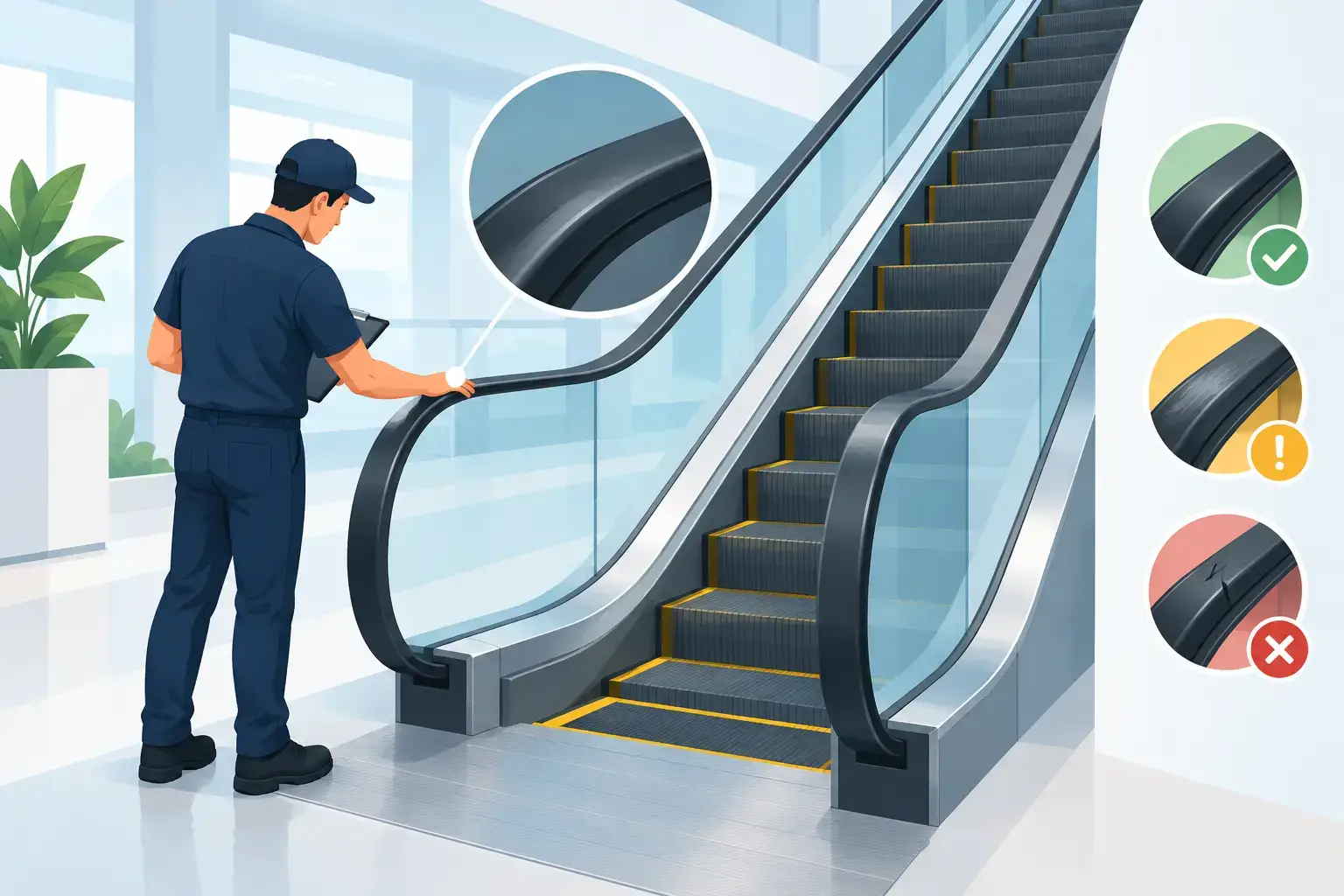
The most obvious sign is cracking, splitting or visible deterioration along the outer surface. These faults can affect grip and may worsen as the handrail moves around bends and through the escalator’s internal mechanism. A handrail that feels sticky, excessively smooth or uneven should also be investigated.
Tracking problems are another common trigger. If the handrail drifts away from the guide, rubs against the balustrade, moves at an inconsistent speed or stops while the steps continue to travel, take the escalator out of service and arrange an inspection. Handrail speed monitoring systems are designed to detect some faults, but they do not replace regular visual checks and professional maintenance.
Noise matters too. Squealing, scraping, knocking or repeated rubbing sounds can indicate misalignment, contamination, worn guides or a problem in the handrail drive system. Replacing the handrail alone without correcting the cause may shorten the life of the new component.
Why a Worn Handrail Cannot Be Treated as a Minor Defect
Passengers naturally rely on the handrail for balance while stepping on and off an escalator. This is particularly relevant for older people, children, people carrying bags and anyone with limited mobility. A damaged or poorly synchronised handrail can reduce confidence and increase the risk of a stumble.
For facility managers, there is also a practical business impact. An escalator placed out of service can create congestion at peak times, alter customer movement through a retail space and place additional demand on lifts and stairways. In a hospital or transport setting, reduced vertical circulation can affect the experience of patients, visitors and staff.
A deteriorated handrail can also cause secondary damage. Continued rubbing against a guide or balustrade may wear related components and increase the scope of repairs. Acting early often gives building owners more control over scheduling, procurement and downtime.
What Is Involved in Escalator Handrail Replacement?
A professional replacement begins with a site assessment. The technician confirms the escalator make and configuration, measures the existing handrail, reviews its condition and identifies why it has failed. There are important differences between escalator models, and the correct handrail profile, material and joining method must be selected for the specific equipment.
The escalator is isolated and made safe before work begins. The existing handrail is removed carefully, with access panels opened as required to inspect the drive, guide rails, rollers, tension arrangement and related components. If contamination, damaged guides or worn drive surfaces are present, these issues should be addressed before the new handrail is fitted.
The replacement handrail is then installed, joined and adjusted to travel correctly around the escalator’s route. Proper tension is essential. A handrail that is too loose may slip or track poorly, while one that is too tight can create excessive load and premature wear. Once fitted, the technician carries out operational checks to confirm smooth movement, speed synchronisation, alignment and safety device performance.
The final stage is not simply switching the escalator back on. Testing should confirm that the handrail operates consistently under normal conditions and that no rubbing, abnormal noise or tracking issues remain. Where a replacement is being completed in an occupied building, the contractor should also coordinate access and work timing to minimise disruption to tenants, customers and staff.
Selecting the Right Time for the Work
The best timing depends on the building and the condition of the equipment. A handrail with minor surface wear may be monitored as part of a planned maintenance programme, provided it remains safe and operational. A cracked, slipping or misaligned handrail needs prompt attention and may require the escalator to be removed from service.
For shopping centres and other high-footfall sites, replacement work is often planned outside trading peaks. However, availability of the correct handrail and the extent of associated repairs can affect the programme. Early inspection gives managers the best chance to plan works around building activity rather than responding to an unexpected shutdown.
Replacement, Repair or Modernisation?
Not every handrail concern calls for immediate full replacement. Cleaning, guide adjustment or correction of a drive issue may resolve a limited operational fault where the handrail itself remains in sound condition. The decision should be based on inspection findings, not appearance alone.
Replacement is generally the appropriate option where the handrail material is cracked, stretched, hardened, worn beyond adjustment or repeatedly causing tracking problems. If several escalator components are approaching the end of their service life, a broader modernisation assessment may be more cost-effective than addressing individual faults as they occur.
This is where an experienced provider adds value. The right recommendation considers passenger safety, equipment age, parts availability, usage levels and the property’s operational priorities. A school with predictable term breaks may schedule planned works differently from a retail centre that relies on continuous weekend traffic.
Reducing Future Handrail Failures
A structured maintenance programme is the most reliable way to identify handrail wear before it becomes a shutdown event. During routine visits, technicians can check surface condition, tension, tracking, guide wear, handrail drive operation and speed monitoring performance. These checks should sit alongside the wider inspection of steps, comb plates, skirt panels, brakes and safety circuits.
Building teams can support this process by reporting changes quickly. Staff should not ignore a new noise, visible crack or handrail that appears to be moving differently from the steps. Clear reporting, supported by photos where safe to take them, helps technicians diagnose the issue and prepare the appropriate parts.
Good housekeeping also matters. Rubbish, spilled drinks and inappropriate cleaning products can affect the handrail and its surrounding components. Use cleaning methods suitable for the equipment, and ensure cleaning staff know when an escalator issue requires escalation rather than a surface clean.
Choosing a Contractor for Escalator Handrail Replacement
Escalator work should be completed by technicians with the training, equipment and experience to work on the specific system. Ask whether the contractor will inspect related drive and guidance components, test the escalator after installation and provide clear advice on any further work required.
It is also worth considering service continuity. A contractor that can support maintenance, repairs, modernisation and replacement can build a detailed understanding of the equipment over time. That knowledge helps with forecasting, parts planning and reducing avoidable downtime across the building’s vertical transport assets.
Skyrise Elevators supports property owners and facility teams with practical escalator service solutions focused on safety, dependable operation and minimal disruption. Whether the issue is a worn handrail or a broader performance concern, a timely inspection gives you a clearer path to safe, reliable passenger movement.
A handrail fault rarely improves with continued use. Arrange an assessment when the first signs appear, then plan the work around your building’s needs while the repair remains manageable.