


Lift Communication Systems That Support Safe Travel
A passenger trapped in a lift should not be left wondering whether anyone knows they need help. Lift communication systems give occupants a direct way to call for assistance and give building teams confidence that an emergency can be managed promptly, even when the lift is out of service.
For property owners and facility managers, this equipment is more than a handset or speaker behind a panel. It is part of the lift’s safety function, its ongoing compliance position and the experience occupants have when something does not go to plan. The right system must suit the building, the lift equipment, the available communications network and the people who use it.
What lift communication systems do
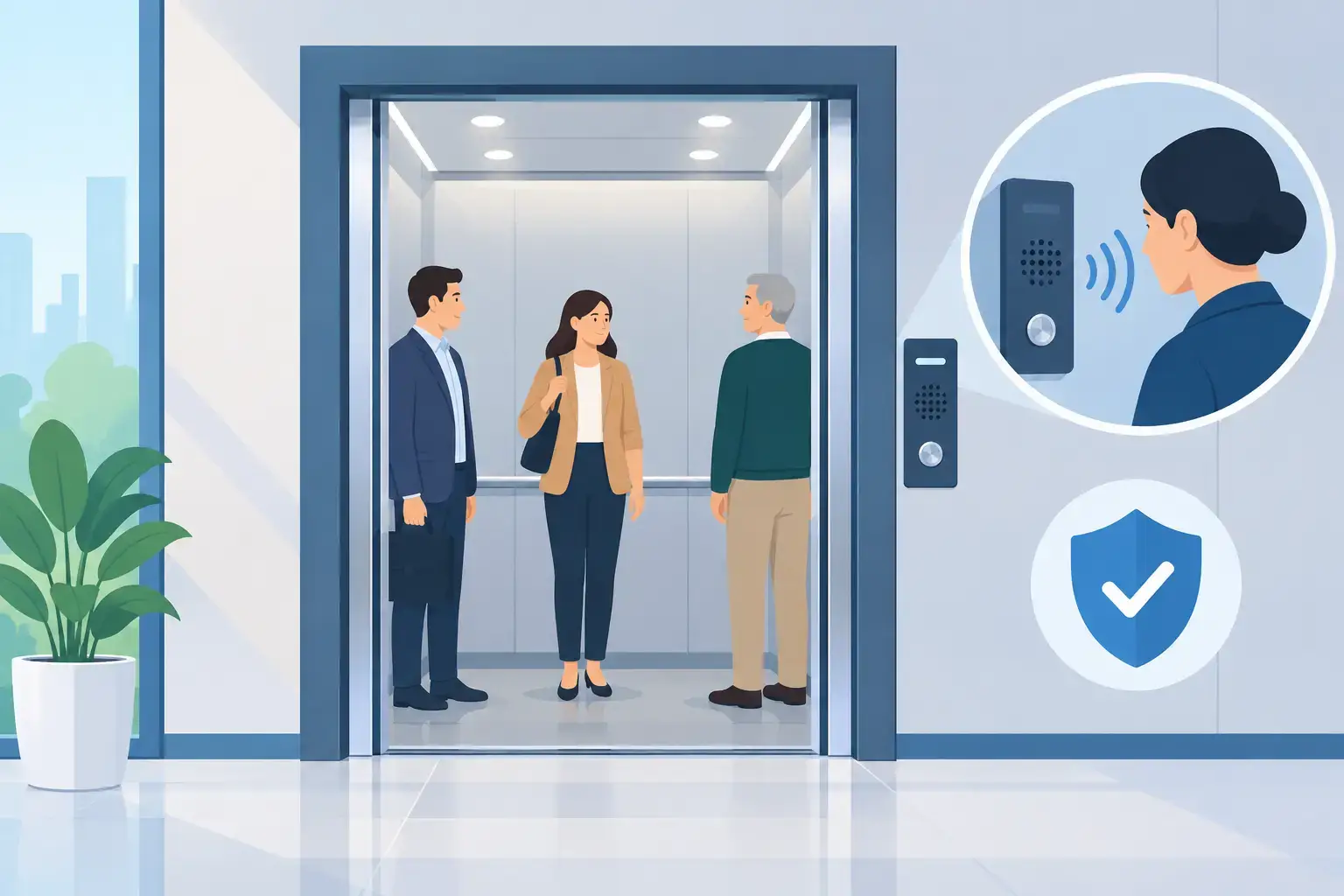
A lift communication system provides two-way contact between a person inside the car and a nominated assistance point. In an emergency, a passenger activates the alarm button or telephone unit and can speak with a monitoring centre, building representative or lift service provider, depending on how the system has been configured.
Most systems include an alarm button, in-car speaker and microphone, and an autodialling unit or lift telephone. Some installations also connect with a machine room, security desk or remote monitoring platform. Where appropriate, visual indicators can confirm that an alarm call has been received, which is particularly helpful for passengers who may not be able to rely on verbal communication alone.
The purpose is straightforward: enable a reliable call for help when it is needed. The technical details, however, vary significantly between a single residential lift and a high-traffic commercial building with several lift cars.
Why a standard phone line is no longer always enough
Many older lifts still rely on legacy fixed telephone lines. As communications providers progressively retire or alter older network services, some existing lift phones can become unreliable or unsuitable without an upgrade. A dial tone at the time of a routine test does not necessarily prove that a system will perform as intended during a power interruption or fault condition.
Modern lift phone systems commonly use mobile-network technology, subject to signal availability and site conditions. These units can be configured to call nominated contacts and may be supported by battery backup, fault reporting and remote testing features. For many sites, this reduces dependence on ageing copper services and makes communications arrangements easier to manage across a portfolio.
Mobile connectivity is not automatically the best answer in every building. Basements, concrete cores, regional locations and plant areas can have weak signal strength. A proper site assessment should consider network coverage, antenna placement, backup power, call routing and the way emergency calls will be answered at all hours.
The response plan matters as much as the device
Installing a new autodialler is only one part of the job. The contact list must be current, calls need to route to someone capable of taking action, and building staff should understand what to do when an entrapment call comes through.
For a small residential building, a monitored service may be more suitable than relying on a committee member’s mobile. In a hospital, aged care facility or major retail site, the arrangement may need to integrate with on-site security or facilities personnel. The appropriate response path depends on the building’s operating hours, occupancy, location and risk profile.
Choosing the right lift communication system
The best system is rarely chosen from a specification sheet alone. It should be selected after reviewing the lift’s age, controller type, existing wiring, building use and service requirements. A communication upgrade is also a sensible time to assess the condition of the alarm button, car operating panel, travelling cable and backup power components.
In practical terms, property teams should consider four areas:
- Call reliability: The system needs a dependable connection from the lift car to the nominated response point, including during relevant fault or power-loss scenarios.
- Accessibility: Controls, audio quality and visual feedback should support the needs of the building’s users, including older occupants and people with disability.
- Serviceability: Approved technicians should be able to test, maintain and diagnose the unit without unnecessary disruption.
- Lifecycle fit: The system should work with planned lift modernisation, future network changes and the expected life of the lift equipment.
A residential home lift may need a simple, easy-to-use emergency phone that reaches family members or a monitoring service. A commercial office tower may require centralised call management across multiple cars. Industrial sites may need durable equipment suited to dusty, noisy or isolated work environments. The communication requirement changes with the setting.
Testing, maintenance and compliance considerations
Emergency communication equipment cannot be treated as fit-and-forget. Routine lift maintenance should include checks of the alarm function, call connection, speech quality and any battery-backed operation. Where mobile-based units are installed, technicians should also confirm that signal conditions and call routing remain suitable.
Building owners have responsibilities around lift safety, and applicable requirements can vary according to the lift type, building classification, location and upgrade scope. Australian Standards, state requirements and project-specific obligations may all be relevant. A qualified lift provider can review the existing installation and advise on practical upgrade options, rather than assuming a single product will satisfy every site.
Records are equally useful. Keeping test results, service reports, fault history and emergency contact details together helps facility managers identify recurring issues before they become a serious operational problem. It also makes handovers easier when a building changes managers or ownership.
Common issues that deserve early attention
Poor audio is one of the most common problems in older lift communication systems. A call may connect, but background noise, a damaged microphone or a failing speaker can make the conversation difficult. Water ingress, loose wiring and worn travelling cables can also create intermittent faults that only appear when the lift is moving.
Outdated contact numbers are another preventable risk. If an alarm call goes to an unattended office, a former contractor or a staff member who has left the business, valuable time can be lost. Contact lists should be reviewed regularly, especially after changes to security arrangements, building management or maintenance providers.
False alarms should not simply be ignored either. They may indicate a worn alarm button, a wiring fault or a configuration issue. A technician can determine whether the cause is within the car operating panel, the controller, the communications unit or the external network.
Communication upgrades as part of lift modernisation
A lift modernisation project is an ideal opportunity to improve emergency communications. When controllers, car operating panels or electrical systems are being upgraded, communication equipment can be selected as part of a coordinated solution rather than added later as a separate patch.
This approach can improve reliability and present a cleaner result inside the lift car. It can also reduce repeated shutdowns by completing related work at the same time. That said, a full modernisation is not always necessary. If the lift is otherwise operating reliably, a targeted phone-system upgrade may be the most cost-effective way to address a network or communication concern.
An experienced provider will explain the trade-off clearly. Targeted upgrades can resolve an immediate issue with less capital expenditure, while broader modernisation may provide better long-term performance where components are ageing or faults are becoming more frequent.
A practical approach for building managers
Start with an assessment of what is installed now. Confirm how emergency calls are made, who receives them, whether the system has been tested recently and whether the underlying telecommunications service remains suitable. Then consider the building’s real operating conditions, including after-hours access, occupant needs and the availability of staff on site.
From there, a lift technician can recommend an appropriate system, complete installation and test the full call path. The job should not finish when the equipment is fitted. Clear records, current contacts and scheduled maintenance are what keep the system dependable over time.
Skyrise Elevators can assess lift phone systems as part of ongoing maintenance, repairs or a broader modernisation plan. Whether your property has one home lift or a multi-car commercial installation, the aim is the same: a clear, reliable path to assistance when passengers need it most.
A well-maintained lift should move people safely and efficiently. When it stops unexpectedly, dependable communication helps ensure the response is just as reliable.