


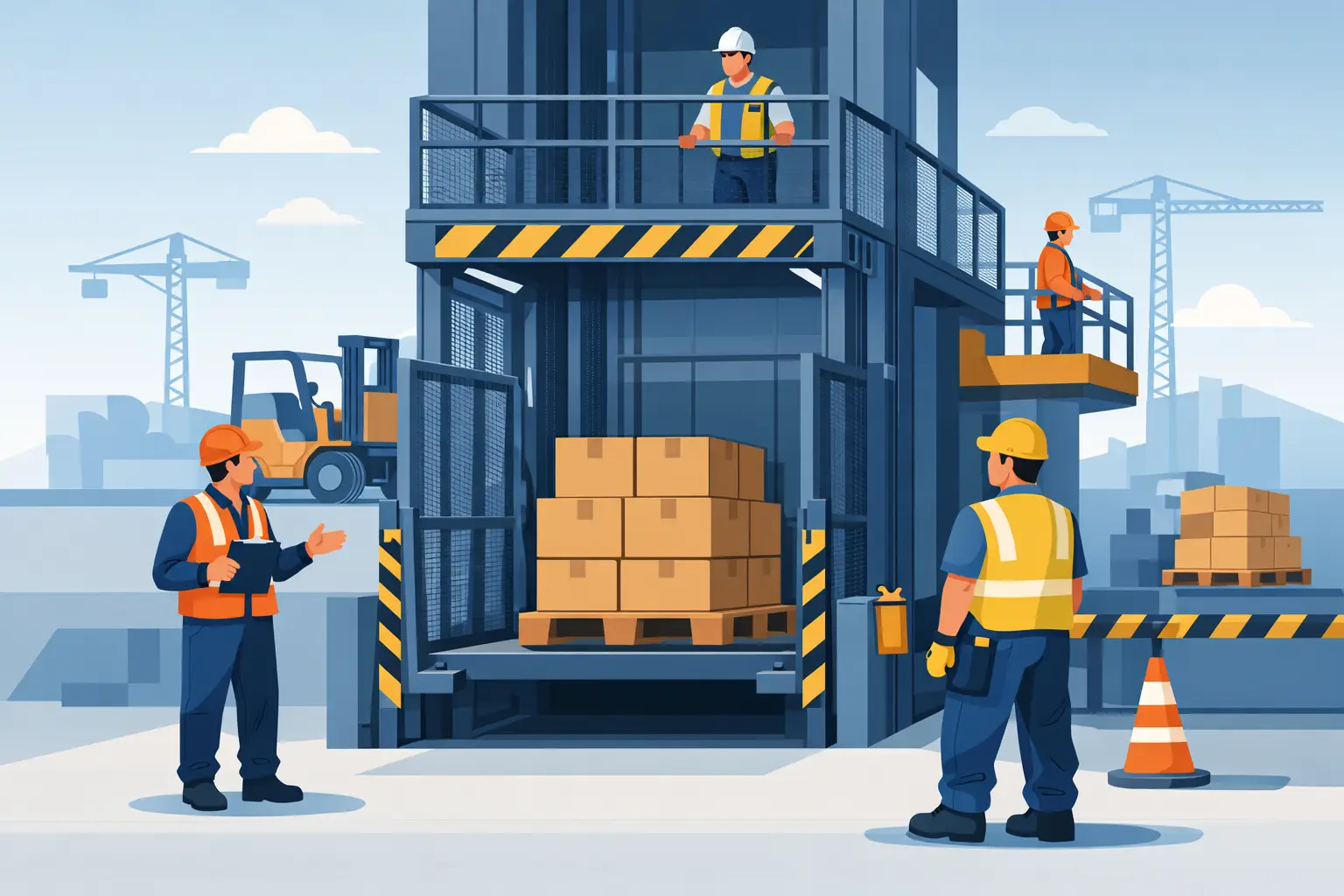
Industrial Freight Lift Safety for Busy Sites
A pallet that shifts halfway through a journey, a damaged landing door interlock or an overloaded platform can stop an industrial operation far more quickly than most teams expect. Industrial freight lift safety is not limited to a compliance check or a warning sign on the door. It depends on the way the lift is specified, used, maintained and managed every day.
For facility managers, builders and property owners, the objective is clear: move goods efficiently without placing operators, contractors or nearby workers at risk. A well-maintained goods lift also protects stock, reduces unplanned downtime and helps keep loading, storage and production areas running to schedule.
Start with the right lift for the task
Many safety issues begin before a lift is installed. A freight lift must suit the loads it will carry, the available shaft or hoistway space, traffic patterns and the operating environment. A lift intended for occasional boxed goods will not necessarily suit daily pallet movements, trolleys, roll cages or heavy equipment.
Rated capacity is particularly important. The figure displayed in the lift is the maximum safe working load, not a target to work up to every trip. The total load includes the pallet, trolley or stillage as well as the goods placed on it. Where handling equipment enters the car, its weight must also be allowed for.
Platform size and door configuration matter just as much. Loads need to enter without being forced against car walls or doors, and operators need enough clearance to position them safely. For sites with frequent material movements, a tailored freight lift solution can reduce manual handling risks and prevent rushed loading practices that lead to damage.
Freight lifts are not passenger lifts
A goods lift should only be used as designed and approved. Unless the installation is specifically rated and configured for an accompanying person, workers must not ride in the car with freight. This is a critical control, especially where staff are trying to save time during busy periods.
Clear signage, staff induction and site supervision should reinforce who may operate the lift, what it can carry and whether rider operation is permitted. If site requirements have changed, such as a new warehouse workflow or heavier stock, arrange an assessment before changing how the lift is used.
Safe loading protects people and equipment
The most common day-to-day risks occur at the landing and inside the lift car. A consistent loading process gives teams a practical way to manage these risks without slowing operations unnecessarily.
Before loading, operators should check that the car is level with the landing, the floor is clear and the load is stable. Pallets with loose wrap, protruding timber, leaking containers or uneven weight distribution should not be sent until they have been made safe. A load can be within the rated capacity and still be unsafe if it is likely to move during travel.
Keep the load centred and away from doors, gates and controls. Do not stack goods so high that they strike the car ceiling, obscure the controls or prevent doors from closing correctly. Long materials, such as pipe, steel sections or timber, require particular care because their movement can damage car finishes, door equipment and safety devices.
Workers should never reach into a closing doorway, hold doors open by force or bypass a door lock. These safeguards are designed to prevent the lift moving while a landing is exposed. A door that will not close, opens unexpectedly or requires force to operate is a fault that needs prompt attention, not a workaround.
Industrial freight lift safety relies on trained operators
Even a high-quality installation is only as safe as the people using it. Operators do not need to be lift technicians, but they should understand the lift’s rated capacity, controls, loading rules and emergency procedure. This is especially relevant where contractors, casual staff or multiple tenants use shared loading areas.
Site procedures should cover the practical situations workers encounter: what to do when the lift stops between floors, who can isolate the lift, how faults are reported and where people should wait while assistance is arranged. Staff should know never to attempt a self-rescue, climb through a hatch or force open landing doors.
A simple pre-use visual check is worthwhile on high-traffic sites. Operators can look for unusual noise, damaged buttons, misaligned doors, water near the entrance, loose flooring, warning lights or signs that the car is not levelling correctly. Any defect should be reported immediately and the lift taken out of service where its safe operation is in doubt.
Maintenance is a safety control, not an optional extra
Freight lifts work harder than many passenger lifts. Repeated loading cycles, impacts from trolleys, dusty environments and high-capacity use can accelerate wear on doors, guides, switches, safety gear and control components. Planned maintenance identifies developing issues before they become a breakdown or a safety incident.
A structured maintenance programme should be based on the lift type, age, usage level and site conditions. A warehouse lift operating throughout the day may need a different service schedule from a goods lift in a low-traffic back-of-house area. The right approach balances operational requirements with the manufacturer’s guidance, applicable Australian requirements and the condition of the equipment.
During a service visit, approved technicians can inspect critical systems, test safety devices, check doors and interlocks, assess levelling performance, identify wear and record required repairs. Maintenance records provide useful evidence that the lift is being managed responsibly and help facilities teams plan work before a fault affects operations.
Delaying repairs can create a false economy. A worn door component may begin as an intermittent fault but can soon cause repeated lockouts, delivery delays and costly call-outs. Timely repairs help maintain safe access while protecting the larger investment in the lift.
When modernisation should be considered
Older equipment can remain serviceable with the right care, but ageing controls and door systems may become less reliable or harder to support. Frequent faults, extended downtime, obsolete parts and changes in building use are all reasons to review whether modernisation is the more practical option.
Modernisation can improve control reliability, door performance, fault monitoring and user safety without always requiring full lift replacement. The best option depends on the condition of the existing installation, available budget, expected service life and the operational impact of taking the lift out of service. A site assessment can clarify whether targeted upgrades or replacement will deliver better long-term value.
Manage the environment around the lift
Lift safety extends beyond the shaft and car. Loading zones need adequate lighting, clear access and enough room for trolleys, forklifts and pedestrians to move without conflict. Marked exclusion areas or traffic controls may be necessary where forklifts approach lift entrances.
Water, dust and debris deserve attention. Wet floors can create slip risks and allow moisture to affect equipment, while packaging waste and broken pallets can obstruct doors or prevent safe levelling. In food processing, manufacturing or outdoor-adjacent areas, cleaning practices should be appropriate for lift equipment rather than relying on high-pressure methods that may cause damage.
Fire and emergency planning should also account for the goods lift. Staff must understand that lifts are generally not used during a fire evacuation unless specifically designed and directed for that purpose. Keep emergency contact details current, make sure access to the lift machine equipment is controlled, and ensure emergency services can be directed to the relevant landing if needed.
Choose responsive technical support
When a freight lift is unavailable, the impact can extend well beyond one floor. Stock may be stranded, deliveries delayed and manual handling exposure increased as staff look for alternatives. A service provider that understands industrial operations can prioritise safe fault diagnosis, clear communication and practical repair planning.
Skyrise Elevators supports industrial lift owners with installation, maintenance, repairs, modernisation and replacement services. Working with qualified technicians and a planned service approach helps keep equipment reliable while giving site teams a clear path to report issues and arrange assistance.
If your goods lift is showing signs of unreliable operation, has changed use, or has not been reviewed against current site demands, arrange a professional assessment before a minor concern becomes an operational interruption. Safe freight movement starts with equipment that is fit for purpose and supported throughout its working life.