


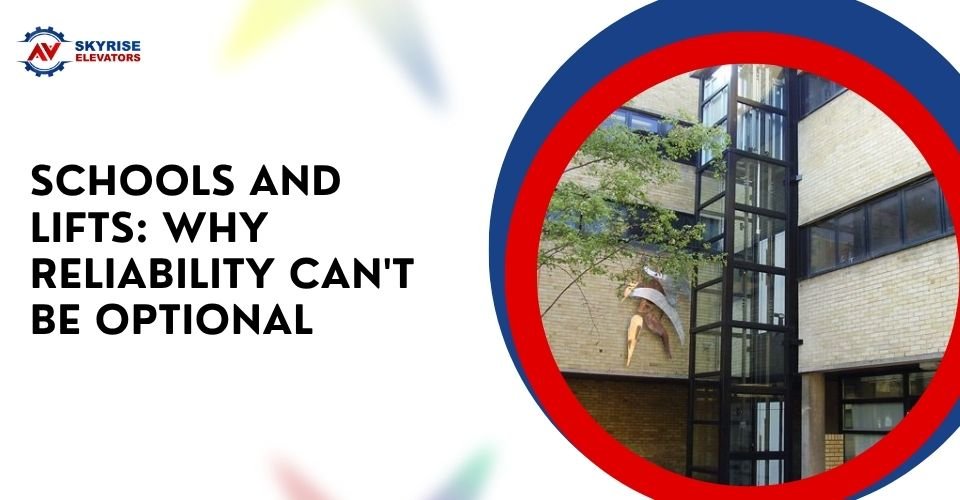
Schools and Lifts: Why Reliability Can’t Be Optional
Schools depend on many systems working reliably every day. From lighting and heating to doors, security systems, and lifts, each facility component supports the daily movement of students, teachers, staff, and visitors.
Lifts can be particularly important in schools with multiple floors or students and staff who require accessible movement throughout the building.
A lift that frequently breaks down can create more than an inconvenience. It can affect accessibility, disrupt schedules, increase maintenance requirements, and create additional pressure on school staff.
That is why lift reliability should be treated as an important part of school facility management.
Why Schools Have Different Lift Requirements
A school lift may experience a different usage pattern from a residential or small commercial lift.
Schools can have concentrated periods of activity throughout the day. Students may move between classrooms, libraries, laboratories, halls, and other facilities during short periods between lessons.
This can create repeated demand on the lift system.
Depending on the school, lifts may be used by:
- Students
- Teachers
- Administrative staff
- Visitors
- Maintenance workers
- Contractors
- Students with mobility requirements
- Staff transporting equipment
The combination of regular traffic and peak usage makes dependable operation important.
Reliability Supports Accessibility
Accessibility is one of the most important reasons schools need dependable lifts.
A student, teacher, staff member, or visitor with limited mobility may rely on a lift to access different areas of a school building.
If the lift is unavailable, the impact can be much greater than a simple delay.
Schools may need to consider alternative routes or arrangements. In some buildings, suitable alternatives may not be available on short notice.
Reliable lift operation therefore supports more consistent access to classrooms, facilities, and shared spaces.
School Lifts Can Experience High Daily Usage
School buildings can have busy periods where many people are moving at the same time.
For example, lift usage may increase:
- Before classes
- During lesson changes
- During lunch periods
- At the end of the school day
- During school events
- During examinations
- When large groups move between facilities
Frequent starts, stops, door cycles, and passenger movement can contribute to normal equipment wear.
Regular maintenance helps identify issues before they become larger operational problems.
Lift Doors Need Particular Attention
Lift doors are among the components that experience frequent movement.
Every school day can involve repeated door opening and closing cycles.
Problems with doors can affect the entire lift operation. A door that does not close correctly, responds slowly, or develops mechanical issues can cause delays or prevent the lift from operating.
Maintenance programs can include inspections of:
- Door mechanisms
- Door operators
- Sensors
- Safety edges
- Tracks
- Door alignment
- Opening and closing performance
Addressing small problems early may help reduce the likelihood of larger interruptions.
Preventive Maintenance Is Better Than Waiting for Failure
Reactive maintenance means dealing with a problem after a component has already failed.
Preventive maintenance takes a different approach.
A scheduled maintenance program allows technicians to inspect equipment and identify signs of wear before they become major failures.
Depending on the lift system, maintenance may involve checking:
- Motors
- Braking systems
- Control equipment
- Safety systems
- Door components
- Cables and suspension systems
- Electrical connections
- Emergency communication systems
The exact maintenance requirements depend on the lift type, age, manufacturer, usage, and building environment.
Why Schools Need Planned Maintenance
Schools operate according to schedules.
Classes, examinations, assemblies, sporting events, meetings, and other activities are often planned well in advance.
Unexpected lift downtime can interfere with these schedules.
Planned maintenance gives facility managers an opportunity to arrange servicing around school operations where possible.
For example, maintenance may be scheduled outside peak periods or during school holidays when practical.
This does not eliminate every possible breakdown, but it can support more predictable facility management.
Older Lifts May Need More Attention
The age of a lift does not automatically mean it is unreliable.
However, older equipment may contain components that are becoming harder to source or may require more frequent maintenance.
Schools with older lift systems should consider:
- Current equipment condition
- Replacement parts availability
- Maintenance history
- Energy performance
- Safety systems
- Modernisation options
- Long-term operating costs
A maintenance professional can help assess whether continued maintenance or staged modernisation makes sense for the building.
Modernisation Can Improve Long-Term Performance
Lift modernisation does not always mean replacing the entire system.
Depending on the equipment and building requirements, modernization may involve upgrading selected components.
Potential areas can include:
- Control systems
- Door operators
- Lighting
- Communication systems
- Safety components
- Electrical equipment
- User controls
The appropriate approach depends on the condition of the existing system.
For schools, the decision should consider both current operational needs and the expected lifespan of the building.
Emergency Communication Should Not Be Overlooked
A reliable lift should also have appropriate emergency systems.
If a passenger becomes trapped inside a lift, communication with building staff or emergency assistance can be important.
Schools should ensure that emergency communication systems are maintained and tested according to applicable requirements.
Staff should also understand what to do if a lift stops operating.
Clear procedures can help reduce confusion during an incident.
Choosing the Right Lift Maintenance Provider
Schools should consider experience and service capability when selecting a maintenance provider.
A suitable provider should be able to understand the specific requirements of the building and its lift system.
Facility managers can consider:
- Maintenance experience
- Response procedures
- Technician availability
- Preventive maintenance programs
- Emergency support
- Parts availability
- Reporting processes
- Knowledge of the existing lift system
The cheapest maintenance arrangement is not necessarily the most suitable if it does not provide the required level of service.
Why Local Lift Support Matters
Local service availability can be important when a school experiences a lift issue.
A provider serving the Sydney area may be able to offer more practical support for inspections, scheduled servicing, and repairs.
Schools looking for an elevator service Sydney provider should consider how the company handles both routine maintenance and unexpected problems.
A clear service arrangement can help facility managers understand who to contact when an issue occurs.
Safety and Compliance Should Remain Central
Lift maintenance is not only about keeping the equipment running.
Safety should remain a core consideration.
School lifts can carry children, staff, visitors, and people who may require additional assistance. Maintenance programs should therefore account for the lift’s safety systems and applicable requirements.
Facility managers should keep maintenance records and address identified issues appropriately.
Regular professional inspections can also help schools maintain a clearer understanding of the equipment’s condition.
How Skyrise Supports Lift Maintenance
Skyrise provides lift and elevator services for different types of buildings across Sydney.
For schools, ongoing maintenance can help support reliable operation while identifying potential problems before they create significant disruption.
A home elevator company Sydney may sound focused on residential applications, but lift expertise can extend across different building environments and equipment requirements.
The appropriate maintenance plan should always be based on the specific lift system, building usage, age, and operational requirements.
Schools Should Think Beyond Emergency Repairs
A lift that only receives attention after it breaks down can create avoidable disruption.
A proactive maintenance strategy allows schools to monitor equipment condition and plan servicing more effectively.
Facility managers can keep track of:
- Service dates
- Previous repairs
- Recurring faults
- Component replacements
- Safety inspections
- Modernisation requirements
- Manufacturer recommendations
This information can help identify recurring problems and support better long-term planning.
Final Thoughts
Lift reliability matters in schools because lifts can support accessibility, daily movement, and building operations.
Frequent usage, peak traffic periods, repeated door cycles, and the needs of students and staff make regular maintenance important.
Preventive maintenance can help identify wear, maintain safety systems, and reduce unexpected disruptions. Older equipment may also benefit from a professional assessment to determine whether repairs or modernisation are appropriate.
For schools across Sydney, Skyrise can provide professional lift maintenance and service support based on the requirements of the building and its equipment.
Reliable lift operation is not simply a convenience. For many school communities, it is an important part of keeping the building accessible and functional every day.