


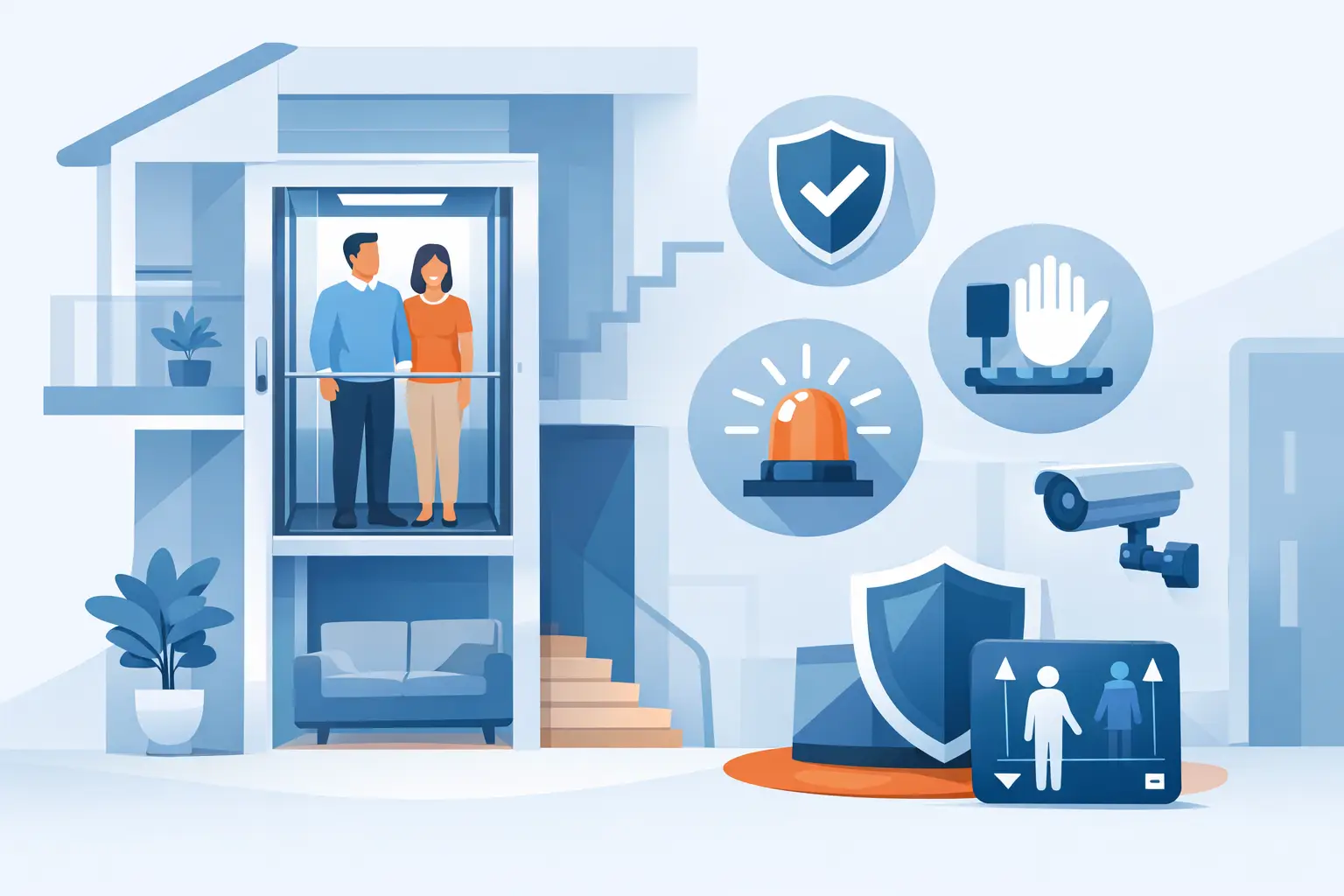
Top Home Lift Safety Features to Look For
A home lift should make everyday movement easier without creating new risks for the people who use it. The top home lift safety features are not simply optional extras – they are the systems that control access, prevent unsafe movement and provide a clear response if power or equipment fails. For homeowners planning for ageing in place, families with young children, and builders delivering accessible homes, safety needs to be considered from the first design discussion.
The right combination will depend on the lift type, travel distance, available space and how the home will be used. A compact lift serving two levels has different design considerations from a larger car travelling through a multi-storey residence. What should not vary is the need for properly specified equipment, professional installation, commissioning and ongoing maintenance.
Top home lift safety features for daily confidence
Door interlocks and landing door protection
A lift must not travel unless its doors are fully closed and secured. Door interlocks are designed to prevent the landing door from being opened when the lift car is not at that floor, reducing the risk of someone stepping into an empty shaft. They also stop the lift from moving if a door is open or not properly locked.
This is one of the most fundamental protections in any residential lift. Ask how the interlocking arrangement works at every landing, particularly where the lift is installed near bedrooms, living areas or spaces used by children. The doors should be suited to the layout and chosen lift system, with reliable locking hardware and clear operation for all users.
Obstruction detection at doors
Automatic doors need a way to recognise an obstruction while they are closing. Depending on the lift design, this may include safety edges, light curtains or infrared sensors. When the system detects a person, mobility aid, pet or object in the doorway, it should stop and reopen the door rather than continue closing.
This feature is particularly useful in homes where a wheelchair, walker or pram may be used. However, sensors should not be treated as a reason to crowd the doorway or delay regular servicing. Dirty, damaged or misaligned sensors can affect performance, which is why inspection by an approved technician remains part of safe ownership.
Emergency alarm and two-way communication
If a passenger becomes stopped inside the lift, they need a dependable way to call for help. An emergency alarm and dedicated communication device, such as a lift phone or monitored communication system, provide that connection. The arrangement should be easy to activate from inside the car and suitable for the property’s communication setup.
Mobile coverage can be inconsistent inside some homes, particularly in lower-ground areas or buildings with dense construction. Relying on a personal mobile alone is not a strong emergency plan. During selection, discuss where emergency calls are directed, how the system is tested and whether it requires a separate service arrangement.
Emergency lowering and rescue operation
A power outage should not leave passengers stranded. Many residential lift systems can include battery-backed emergency lowering or another approved rescue operation that moves the car to a landing and allows occupants to exit. The exact method depends on the drive system and lift configuration.
This is a feature worth discussing in detail rather than assuming all lifts work in the same way. Ask what happens during a mains power failure, which landing the lift returns to, how long the backup supply is expected to operate, and whether a trained person is required to assist. A clear rescue procedure gives homeowners and carers confidence when the lift is used daily.
Speed control, braking and overspeed protection
A well-designed lift controls its speed under normal operation and has independent measures to stop or hold the car if an abnormal condition occurs. Depending on the system, this can involve a governor, safety gear, braking system or hydraulic protection devices. These components are largely out of sight, but they are central to passenger safety.
The practical question for a homeowner is not whether they can see these devices. It is whether the equipment is appropriately selected, installed, tested and maintained for the particular lift. Residential lifts should be supplied and commissioned in line with applicable Australian requirements and the manufacturer’s specifications. Your provider should be able to explain the safety systems in plain language and document the testing completed at handover.
Safety features around the lift, not just inside it
Level accuracy and threshold safety
The lift car should stop level with the landing floor so users can enter and leave safely. Poor levelling can create a trip hazard, especially for older residents, people with limited mobility and wheelchair users. Modern control systems can monitor position closely, but levelling performance must also be checked over time.
Small changes in ride quality, stopping position or door operation should be reported early. They may be minor adjustments, but leaving them unattended can affect safe access and lead to avoidable wear on the equipment.
Car size, handrails and accessible controls
A safe home lift is one that suits its users. If a wheelchair or walking frame will be used, the car dimensions, door opening and landing access need to be planned around real movement space, not just minimum clearances. A car that is technically large enough but awkward to turn into may not deliver the accessibility benefit the homeowner expects.
Handrails can provide support while travelling, while clearly positioned controls assist users with reduced reach, vision or dexterity. Button height, tactile markings, lighting and visual indicators are all worth considering. These are not identical requirements for every home, but they can make the difference between a lift that is merely installed and one that is genuinely comfortable to use.
Lighting, ventilation and car finishes
Good internal lighting helps passengers see the controls, floor level and doorway clearly. It is especially valuable where the lift may be used at night or by someone with reduced vision. Emergency lighting can also provide reassurance during a power interruption.
Car finishes should be durable and easy to keep clean, but safety also matters here. Flooring needs enough slip resistance for the intended use, particularly if residents may enter with wet shoes, walking aids or mobility equipment. Ventilation should be appropriate for the lift design so the car remains comfortable during normal travel and any unexpected delay.
Protected shaft, pit and machine areas
Safety extends to the spaces that passengers do not normally see. The lift shaft, pit and any equipment area need controlled access so children, visitors and unqualified people cannot enter hazardous zones. These spaces also need to allow technicians to carry out inspection, maintenance and repairs safely.
This is where early coordination between the lift provider, builder and other trades matters. Structural openings, electrical supply, drainage considerations, access panels and clear working space should be resolved before installation. Retrofitting a lift into an existing home can be highly effective, but it requires a careful site assessment rather than a one-size-fits-all approach.
Fire and emergency planning need a site-specific approach
A home lift is not automatically an evacuation lift. During a fire or other emergency, the appropriate action depends on the property, the lift design and the emergency plan. In many situations, occupants should use the stairs and follow emergency services advice rather than use the lift.
Where a home has particular accessibility needs, discuss emergency planning early with the relevant building and safety professionals. The goal is to understand how residents can be assisted, what the lift will do under alarm conditions, and what alternative arrangements are available. Clear planning is more useful than relying on assumptions in a stressful situation.
Maintenance keeps safety systems ready to work
Even the best specified safety features need regular attention. Door locks, sensors, batteries, alarms, brakes, controls and levelling systems can be affected by use, age, environmental conditions and component wear. A structured maintenance program helps identify issues before they cause a shutdown or compromise safe operation.
Homeowners should also know who to call if the lift stops, makes an unfamiliar noise or shows a fault message. Fast, informed support can reduce downtime and prevent a small issue becoming a more complex repair. Keep the lift clear of stored items, do not override safety devices, and arrange service promptly when performance changes.
For a new home lift or an upgrade to an older unit, Skyrise Elevators can assess the property, explain practical safety options and support the lift throughout its working life. The most helpful outcome is a lift that fits the home, suits the people using it and continues to operate safely through consistent professional care.