


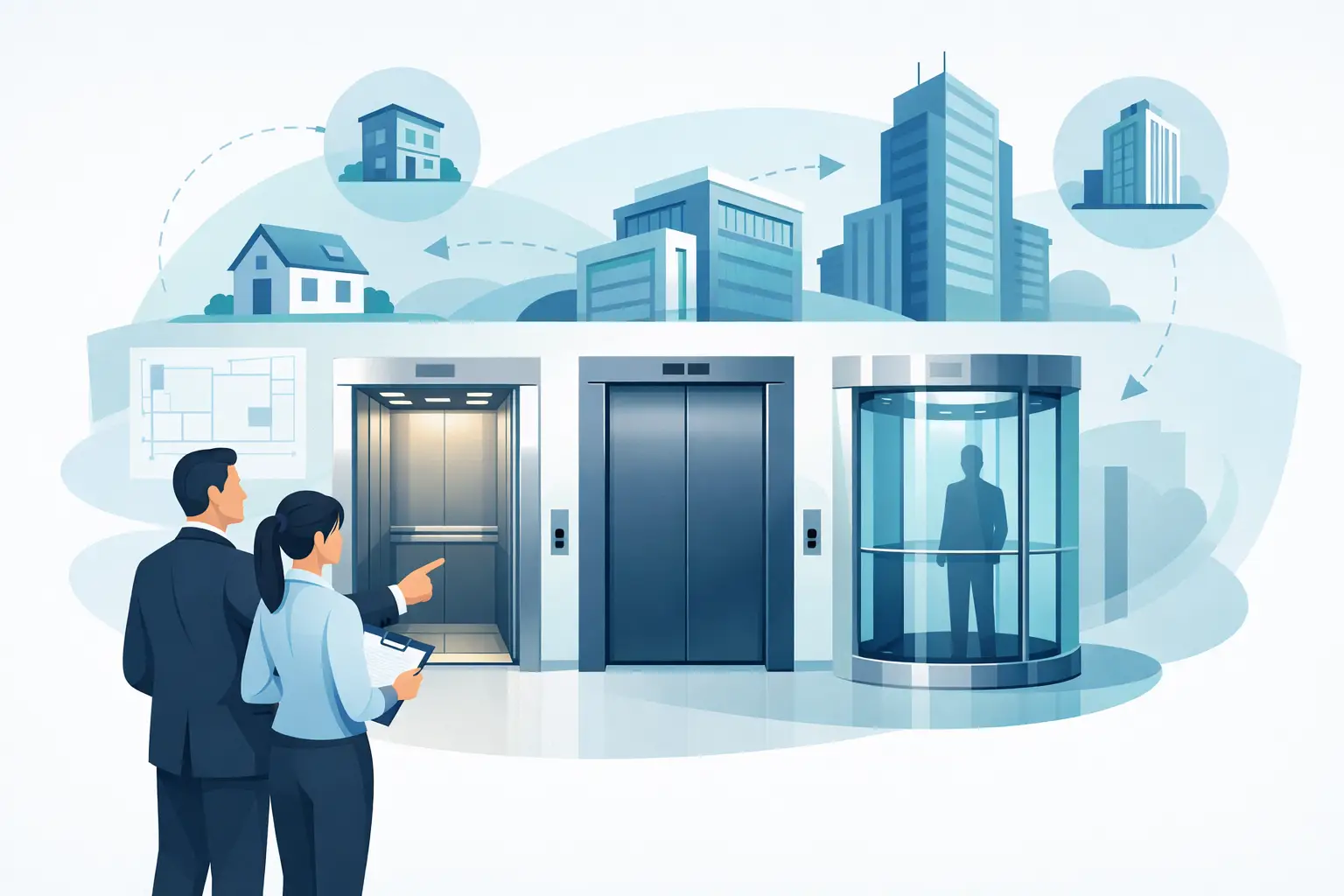
How to Choose Elevators for Any Building
A lift that looks right on paper can still become a daily problem once the building is occupied. Long wait times, poor cab sizing, awkward access, noise complaints and avoidable breakdowns usually come back to one issue at the start – the wrong specification. If you are working out how to choose lifts, the best decisions come from matching the lift to the building’s real use, not just the available shaft or the lowest quote.
For property owners, developers and facility managers, that means looking beyond the car finish and initial install cost. The right elevator should suit traffic patterns, compliance needs, accessibility requirements, service demands and long-term maintenance expectations. A lift is not a standalone product. It is part of the building’s daily operation.
How to choose lifts based on building use
The first question is simple: who will use the lift, and how often? A home elevator, a passenger lift in a mixed-use development and a heavy-duty goods lift may all travel between floors, but they are built for very different conditions.
In residential settings, convenience, compact design, low noise and accessibility are often the priority. Homeowners may be planning for ageing in place, improved mobility or easier movement between levels. In that case, travel height, footprint, entry configuration and finish options matter, but so does ease of use for every member of the household.
In commercial buildings, the focus shifts to traffic handling, uptime and tenant experience. Office buildings, medical centres, retail sites and schools all place different demands on an elevator system. A lift that is acceptable in a low-traffic boutique building may struggle badly in a busy healthcare environment where beds, wheelchairs, staff and visitors all need reliable movement throughout the day.
Industrial and service environments usually need a more durable solution. Goods lifts and service lifts must be selected around load capacity, frequency of use, door type and resistance to wear. Here, under-specifying the lift often leads to operational delays and higher repair costs.
Start with capacity, size and traffic flow
One of the most common mistakes when choosing a lift is focusing only on how many people it can carry. Capacity matters, but the dimensions of the car and the way people or goods move into and out of it matter just as much.
A passenger lift in an apartment building needs to support peak periods such as mornings, evenings and move-ins. A lift in aged care or healthcare may need enough internal space for mobility aids, carers or stretchers. A goods lift might need to handle pallets, trolleys or bulky equipment with enough door clearance to make loading practical rather than frustrating.
Traffic flow also affects how many lifts are needed. One lift may be enough for a low-rise site with moderate use. In a larger building, relying on a single lift can create bottlenecks and business interruption whenever service is required. That is where lift planning becomes a building performance issue, not just a transport decision.
Why peak usage matters
If the lift is busiest for only short parts of the day, a simpler configuration may still work well. If traffic is constant, the system needs to keep up without excessive wait times. Builders and developers should think about the occupied building, not just the handover stage. The way residents, staff, visitors and contractors use the space over time should guide the specification.
Accessibility and compliance are not optional
If you are considering how to choose lifts for a public, multi-residential or commercial building, accessibility should be part of the early design discussion. Door width, car size, button height, handrails, levelling accuracy and audio or visual indicators all affect whether the lift is genuinely usable for everyone.
Compliance requirements will vary depending on building class, use and location, but the broader point stays the same: the elevator must support safe and lawful access. Trying to retrofit accessibility later usually costs more and limits your options.
This is also where working with an experienced provider helps. A lift may technically fit within the shaft, but that does not guarantee it will meet code requirements or practical user needs. For homeowners planning future accessibility, it is worth thinking ahead even if current needs are modest. A slightly larger or better-configured lift can make the home more usable and more valuable over time.
Choose the right drive system and performance level
Not all lifts operate the same way, and the choice of drive system affects ride quality, speed, energy use, noise and maintenance.
For some low-rise applications, a simpler system may be cost-effective and entirely suitable. For larger commercial buildings, higher performance is often necessary to keep passengers moving efficiently. The right answer depends on travel distance, frequency of use, available space and the building’s operational priorities.
Noise can be a deciding factor in homes, apartment buildings and hospitality settings. Speed becomes more important in taller buildings where slow travel quickly becomes noticeable. Energy efficiency may matter more in facilities with long operating hours and tight running costs.
There is always a trade-off somewhere. A lower upfront cost may come with more limitations in performance or future upgrades. A more advanced system may offer better efficiency and user comfort, but only if the building actually needs that level of capability.
Finishes matter, but reliability matters more
Cab interiors, landing doors and fixtures should suit the building’s design, especially in premium residential and commercial environments. Presentation matters because the lift is part of the everyday experience of the property.
That said, aesthetics should never come ahead of serviceability. Specialty finishes, custom interiors and non-standard features can be worthwhile, but they should be chosen with maintenance in mind. In busy buildings, durable materials often perform better over time than highly decorative finishes that show wear quickly.
A practical fit-out is usually the smarter long-term option for schools, healthcare sites, industrial premises and high-traffic commercial properties. In premium developments, customisation can add value, but only when paired with dependable engineering underneath.
Think beyond installation day
A lift is a long-term asset. That is why one of the most important parts of how to choose lifts is understanding what happens after commissioning.
Maintenance access, parts availability, technician support and response times all affect the true cost of ownership. A lift that is cheaper to install can become more expensive if servicing is difficult, faults are frequent or replacement parts are hard to source. For facilities managers, downtime is not a minor inconvenience. It affects occupants, staff, logistics and reputation.
This is where a full-service provider adds real value. Installation should be aligned with ongoing maintenance, repair and future modernisation planning. Skyrise Elevators works with clients across the full lift lifecycle because the best result is not just a successful install – it is a lift that continues to perform safely and reliably year after year.
Ask these questions early
Before approving a lift solution, ask how often it will need servicing, who will carry out repairs, what the expected response times are and how modernisation or replacement would be handled in future. These are practical questions, and they often reveal the difference between a short-term supplier and a long-term service partner.
New installation, modernisation or full replacement?
Sometimes the right choice is not a brand-new lift. If an existing elevator is structurally sound but underperforming, a modernisation may improve reliability, safety and appearance without the disruption of full replacement.
Modernisation can be a strong option for older commercial and residential buildings where parts are becoming obsolete, breakdowns are increasing or compliance expectations have changed. It may involve control systems, doors, interiors, safety components or ride performance improvements.
Full replacement is more appropriate when the lift no longer suits the building, major components are beyond economical repair or the existing system cannot support current needs. The decision usually comes down to lifecycle cost, downtime risk and whether the building has outgrown the original specification.
How to choose lifts with confidence
The best elevator choice is rarely the one with the shortest brochure or the lowest price. It is the one that fits the building, the people using it and the level of service expected over the years ahead.
That means being clear about usage, capacity, compliance, accessibility, design expectations and maintenance support before the project is locked in. It also means choosing a provider that can guide the specification properly, not just sell a unit.
If you are planning a home lift, a commercial passenger lift, a goods lift or an upgrade to an ageing system, the right advice early on saves time, cost and disruption later. A well-chosen lift should feel dependable from day one and continue to support the building without becoming a constant management issue.
When you are weighing up options, the clearest path is usually the most practical one – choose the lift that will keep people moving safely, efficiently and with the least trouble over the long run.