


Do Lifts Need Phones? Safety, Rules and Options
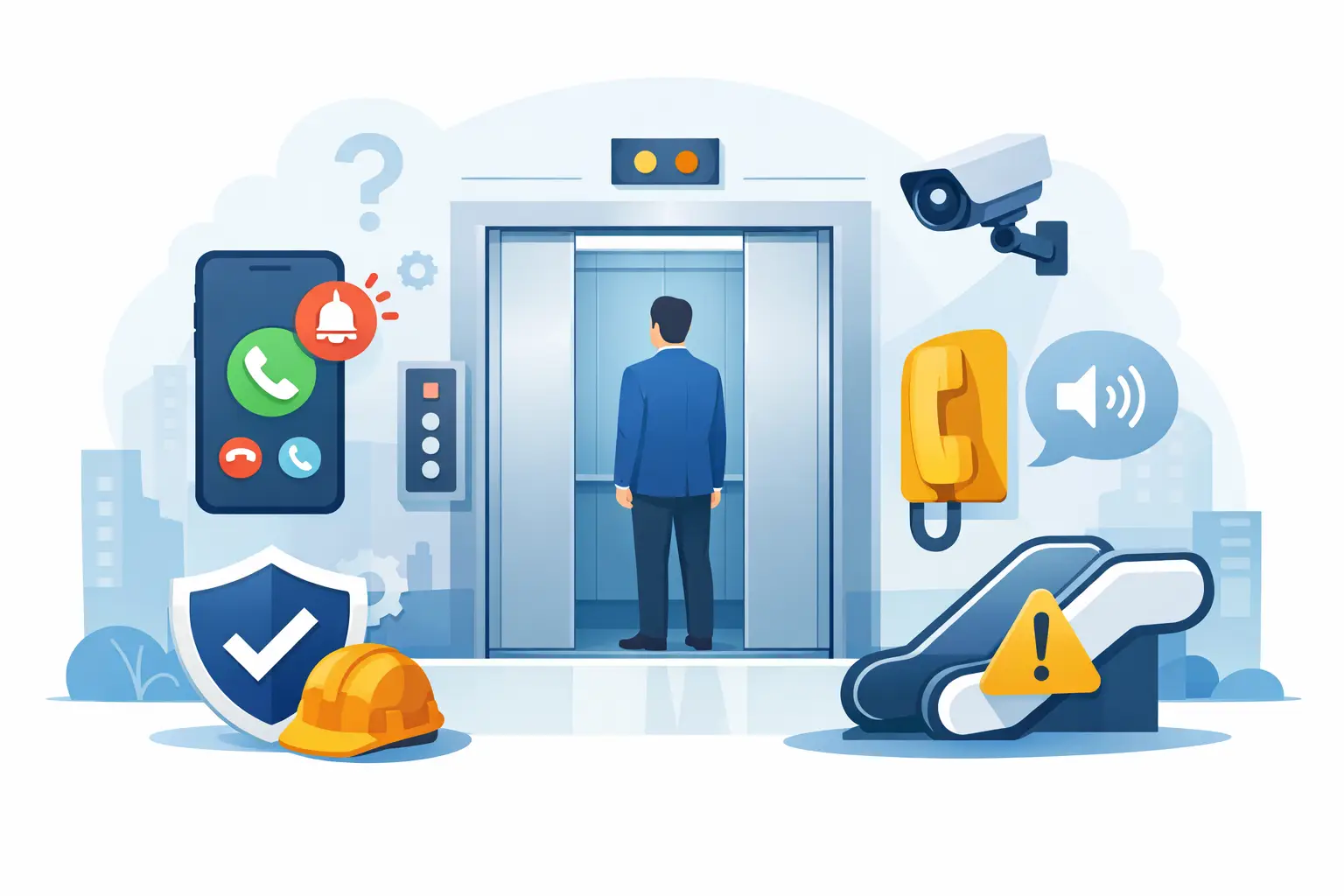
A passenger is trapped between floors. The car lighting is on, but there is no mobile coverage, their mobile’s battery is flat, and nobody can hear them calling from the corridor. This is the situation emergency communication is designed for. So, do lifts need phones? In most passenger lift applications, the practical answer is yes: the lift needs a reliable, dedicated way for an occupant to call for help.
That does not always mean a traditional wall-mounted telephone handset. Modern lifts may use a hands-free emergency intercom, autodialler, or monitored communication unit. What matters is that the system enables effective two-way contact with a responsible person or service provider when the lift is stopped and someone is inside.
For property owners and facility managers, this is not a minor accessory. It is part of a lift’s safety system and should be considered alongside doors, alarms, lighting, backup power and preventive maintenance.
Do Lifts Need Phones Under Australian Requirements?
Australian lift obligations are shaped by the National Construction Code, applicable state and territory requirements, relevant Australian Standards, the lift type, and the age of the installation. Passenger lifts are generally expected to have emergency alarm and communication arrangements that allow a trapped person to obtain assistance.
A lift phone remains one of the most familiar ways to meet that need. Pressing the emergency button can automatically call a 24-hour monitoring centre, building concierge, security desk or nominated response contact. The person answering should be able to speak with the passenger, identify the lift where possible, and arrange a safe response.
The exact compliance position should not be assumed from a single rule of thumb. Requirements can differ for a new lift, a major modernisation, and an older existing installation. The standard that applied when the lift was installed may also be relevant, while a refurbishment or change of use can create new obligations. A qualified lift provider can inspect the equipment and advise whether the emergency communication arrangement remains suitable for the building and its users.
A phone is not the only acceptable technology
The key distinction is between a mobile phone carried by a passenger and a lift emergency communication system. A passenger’s mobile is useful, but it is not a dependable substitute. Coverage can be poor in lift shafts and basements, visitors may not have a phone, and an injured or distressed person may be unable to use it.
A dedicated system is installed for the environment. It can be positioned at an accessible height, clearly marked, connected to nominated contacts and supported by the lift’s emergency power arrangements. Many systems also provide an indication that an alarm call has been received, which gives an isolated passenger reassurance that help is being organised.
Why Emergency Lift Phones Matter
A lift entrapment is often resolved without major technical work. A technician may reset a fault, restore a door circuit or safely release passengers before completing repairs. Yet the time between the lift stopping and help arriving can feel far longer to someone inside, particularly a child, an older person, a person with a disability or a patient travelling in a healthcare facility.
Two-way communication improves the response at every stage. The caller can confirm whether anyone is injured, whether there is more than one person in the car, and whether there are immediate concerns such as heat, anxiety or a medical issue. The operator can instruct passengers to stay clear of the doors, avoid forcing them open and wait for trained assistance.
For building management, a working lift phone also helps prevent avoidable escalation. It provides a clear record of the call, directs the incident to the right responder and reduces the chance that a trapped person relies on an unmonitored building contact after hours. In residential towers, shopping centres, aged care facilities and industrial sites, that level of preparedness supports both occupant safety and operational continuity.
Which Lifts Need Emergency Communication?
Passenger lifts should be treated as requiring dependable emergency communication. This includes lifts in apartment buildings, offices, hotels, retail sites, schools, medical facilities and public buildings. Home lifts also need careful consideration, especially where they support a resident with limited mobility or are installed in a multi-level home where assistance may not be immediately available.
Goods and service lifts require a more specific assessment. Some goods-only lifts are not designed for people to ride in them, so their safety requirements differ from those of passenger lifts. However, many service lifts, goods-passenger lifts and industrial lifting installations can carry authorised personnel. Where a person can be inside the lift car, an alarm and communication solution may be necessary or strongly advisable.
Platform lifts and accessibility lifts should not be overlooked. Their users may be travelling alone and may have a greater need for quick assistance if a fault occurs. The appropriate arrangement depends on the equipment, its location, supervision levels and the governing requirements.
Common Problems With Existing Lift Phones
Having an emergency button in the car does not prove that the communication system works. Lift phones can fail quietly, particularly where the building has changed its telecommunications service or the lift has not been tested as part of a planned maintenance program.
The retirement of older telecommunications networks has created a particular risk for lifts using outdated mobile communicators. A unit may still appear physically intact but be unable to complete a call consistently. Analogue phone lines can also be disconnected during building upgrades, NBN changes or tenancy works without anyone realising the lift relies on that connection.
Other common faults include incorrect programmed numbers, calls diverting to a former contractor, poor audio quality, a flat backup battery, damaged wiring and no response process at the receiving end. A phone that calls a number nobody answers is not an effective emergency arrangement.
Testing must cover more than a dial tone. The emergency button should initiate the intended call, the receiving party should be able to communicate clearly with the lift car, and the response contact should know the site address, lift identification and escalation procedure. Any change to building security, reception hours, maintenance providers or emergency contacts should trigger a review.
Choosing the Right Lift Phone System
A suitable system starts with the building, not the cheapest device. A small residential building may need an autodialler that contacts a monitored service and nominated building representative. A hospital, university or large commercial site may require integration with a staffed control room, security team or facilities helpdesk.
In many applications, a hands-free unit is preferable to a handset. It is simple to operate, remains available even if a handset is damaged, and can be installed with clear visual instructions. For accessible environments, controls, signage and audio should be considered with the needs of all likely users in mind.
The communication path also matters. Wired connections can be appropriate where a reliable service is available and protected. Cellular systems can provide flexibility, but signal strength inside the shaft and motor room needs to be assessed rather than assumed. Any system should be installed and configured to maintain communication during a power interruption in line with the lift’s safety design.
When modernising an older lift, the emergency communication unit is often a sensible priority. Replacing obsolete equipment can improve call reliability, simplify monitoring and ensure the system is compatible with current telecommunications infrastructure. It is also an opportunity to confirm that the alarm button, car lighting, battery backup and rescue procedures work together.
Maintenance Is What Keeps the System Useful
Lift phones need ongoing attention, just like door operators and safety circuits. Include emergency communication testing in the maintenance schedule, document the results and rectify faults promptly. Facilities teams should also keep a current contact list and make sure after-hours staff know what to do when an emergency lift call is received.
A competent technician can test the device, inspect its power supply, review call programming and identify ageing components before they become a problem. Where equipment is unreliable or obsolete, replacement is usually more cost-effective than repeated call-out repairs and far safer than leaving occupants without a proven way to request help.
Skyrise Elevators can assess lift phone systems as part of lift maintenance, repairs or modernisation planning, helping property owners select an arrangement that suits their building, users and operational requirements.
A working emergency communication system gives a trapped passenger one clear action to take and gives building management a clear path to respond. If there is any doubt about whether your lift phone still connects, treat a test and professional assessment as a priority rather than waiting for the next entrapment.