


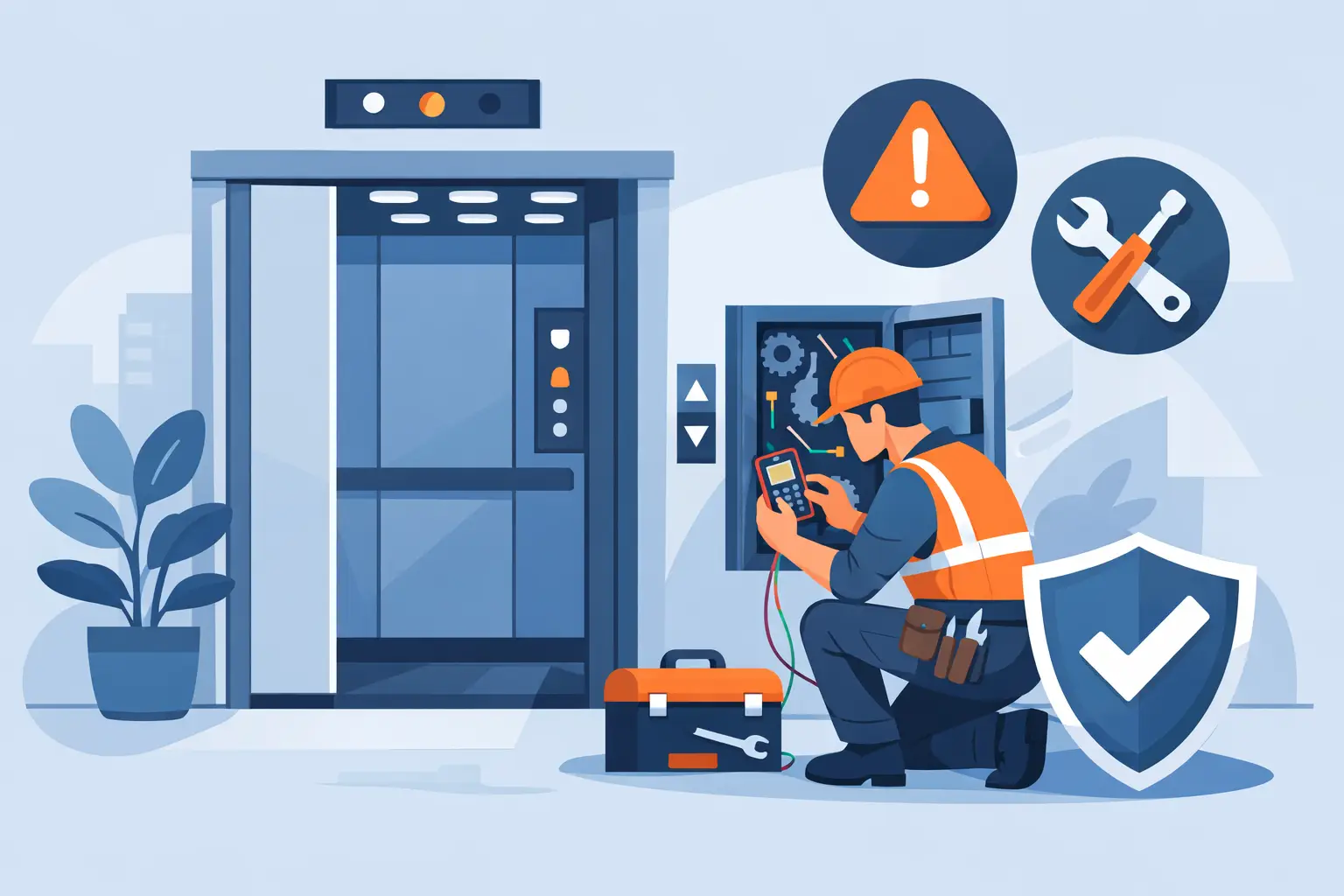
How to Troubleshoot Elevator Problems Safely
A lift fault can disrupt far more than a trip between floors. For a facility manager, it can affect accessibility, tenant confidence, deliveries and building operations. For a homeowner, it can remove essential access within the home. Knowing how to troubleshoot lift issues starts with a clear boundary: occupants can report and observe safely, while inspection, testing and repair must be handled by qualified lift technicians.
The right first response protects people, preserves useful fault information and helps reduce avoidable downtime. It also prevents a minor operational issue from becoming a safety risk through well-intended but unsuitable intervention.
How to troubleshoot lift faults safely
Start by confirming whether anyone is inside the lift. If passengers are trapped, keep communication calm, ask them not to force doors open or attempt to climb out, and contact your lift service provider or emergency service procedure straight away. A trapped-passenger call requires a prompt response from trained personnel, even where the passengers feel safe and the car has stopped level with a floor.
If the lift is empty and displaying a fault, take it out of normal use where your building procedures allow. Place clear signage at the landing to prevent further calls or attempted entry. Do not enter the lift shaft, open landing doors, access the car roof or interfere with the controller. These areas contain moving equipment and electrical systems that require specialist training, approved access methods and appropriate isolation procedures.
From there, record what has happened. This is one of the most useful parts of troubleshooting because a precise report gives technicians a stronger starting point when they arrive.
Note the time and date, the lift number or location, the floor where the issue occurred and any message shown on the car operating panel or landing display. Record whether the doors were slow, repeatedly reopening, failed to close, or whether the lift stopped, jolted, made an unusual noise or did not respond to calls. If it is safe to do so, take a photo of the display or fault message. Avoid photos of open shaft doors, machinery spaces or any unsafe condition.
Separate urgent faults from service issues
Not every issue requires the same response. A lift that remains safely levelled, continues to operate normally and has a non-critical display message may require a scheduled service visit. A lift with passengers trapped, doors that will not secure, a burning smell, smoke, water entry, repeated uncontrolled movement, unusual grinding noises or a car that has stopped between floors needs urgent attention.
If there is smoke, fire or an electrical burning smell, follow the building’s emergency plan and contact emergency services where required. Do not use lifts during a fire event unless directed by emergency personnel. Lifts can be affected by power isolation, water from firefighting activity and changing conditions within the building.
Water is another issue that should be treated seriously. A leak near landing doors, within the lift car or around electrical equipment can affect safe operation. Keep people away from the affected area and report the location and extent of the water ingress. The source may be a burst pipe, weather event, cleaning activity or building drainage problem, but the lift should be assessed before it returns to service.
Check the simple building-side causes
There are a few observations that building staff can make without touching lift equipment. These checks can help determine whether the fault may be associated with the building rather than the lift itself.
First, check whether the building has experienced a power interruption. A lift may stop or return to a designated floor during a power outage, generator transfer or voltage disturbance. Other signs might include affected lighting, air conditioning, access control or tenant equipment. Report the timing of the outage to the technician, as this can help identify whether the lift controller has logged a power-related event.
Next, consider whether the fault is limited to one lift or affects a group. In a building with multiple cars, identify which lifts remain in service and whether the issue occurs at a particular landing. If one floor button does not register, for example, the fault could relate to that landing fixture. If all cars are unavailable, the cause may be more broadly connected to the building power supply, fire system interface or shared equipment.
Also note recent building works. Painting, flooring replacement, deliveries, renovations and cleaning can all introduce dust, moisture, damage or obstructions around lift entrances. Goods lifts are particularly exposed to impacts from trolleys, pallets and equipment. This does not establish the cause, but it gives the service team relevant context.
Door faults need careful handling
Doors are among the most common sources of lift call-outs because they operate constantly and rely on precise alignment, detection systems and clear door tracks. A door that keeps reopening may have detected an obstruction, while a door that closes slowly or makes noise could be affected by wear, contamination or alignment issues.
Building staff should check only the obvious public-facing area. Look for rubbish, packaging, loose floor mats or items caught near the entrance that can be removed without reaching into the door gap or using tools. Keep hands and objects clear of moving doors. Do not hold doors open, force them shut or attempt to reset them by repeatedly pressing buttons. Repeated calls can complicate the fault and increase inconvenience for other users.
If doors are damaged by an impact, restrict access to that lift and arrange a technician visit. Even if the car appears to run, door damage can compromise reliable operation and should not be left for a future maintenance visit.
Give technicians a useful fault report
A good service request is specific, factual and focused on what was observed. Rather than reporting that the lift is “not working”, explain the sequence: the car arrived at Level 3, its doors opened normally, the doors then reopened three times, and the display showed a code before the car went out of service.
Include whether passengers were inside, whether the lift was level with the floor, how many times the issue occurred and whether it has happened before. Mention recent power events, water leaks, fire alarm testing, building works or delivery impacts. If the fault is intermittent, ask users to report the time and location of each occurrence rather than continuing to test the lift.
Technicians use this information alongside controller records, safety circuit checks, door equipment inspection and operational tests. Modern lifts may provide diagnostic information, but fault codes do not always identify the complete cause. A code can point to a symptom, while the underlying issue may involve a component, wiring connection, adjustment, environmental condition or communication fault. That is why professional investigation matters.
Prevent repeat faults with planned maintenance
Troubleshooting should not end when the lift starts running again. Recurring door faults, levelling concerns, nuisance shutdowns or unusual ride quality are signs worth tracking. A service provider can review call-out history and maintenance findings to identify patterns before they lead to longer outages.
A structured maintenance programme helps keep safety devices, doors, drive systems, communications and other critical components under regular review. The appropriate maintenance frequency depends on the lift type, age, usage, environment and building requirements. A high-traffic commercial lift, hospital facility or goods lift may face very different demands from a low-use residential elevator.
Older equipment can often be maintained effectively, but there is a point where repeated repairs, unavailable parts or increasing downtime make modernisation the more practical option. Modernisation can improve reliability, ride quality, energy performance and access to compatible components without necessarily requiring a full lift replacement. The right approach depends on the condition of the existing system and the building’s operational needs.
For property owners and managers, the safest troubleshooting process is straightforward: protect occupants, remove an affected lift from use where needed, document the symptoms and engage approved technicians for diagnosis and repair. Skyrise Elevators can help assess faults, restore reliable operation and put a maintenance plan in place that supports safer, more dependable vertical transport.