


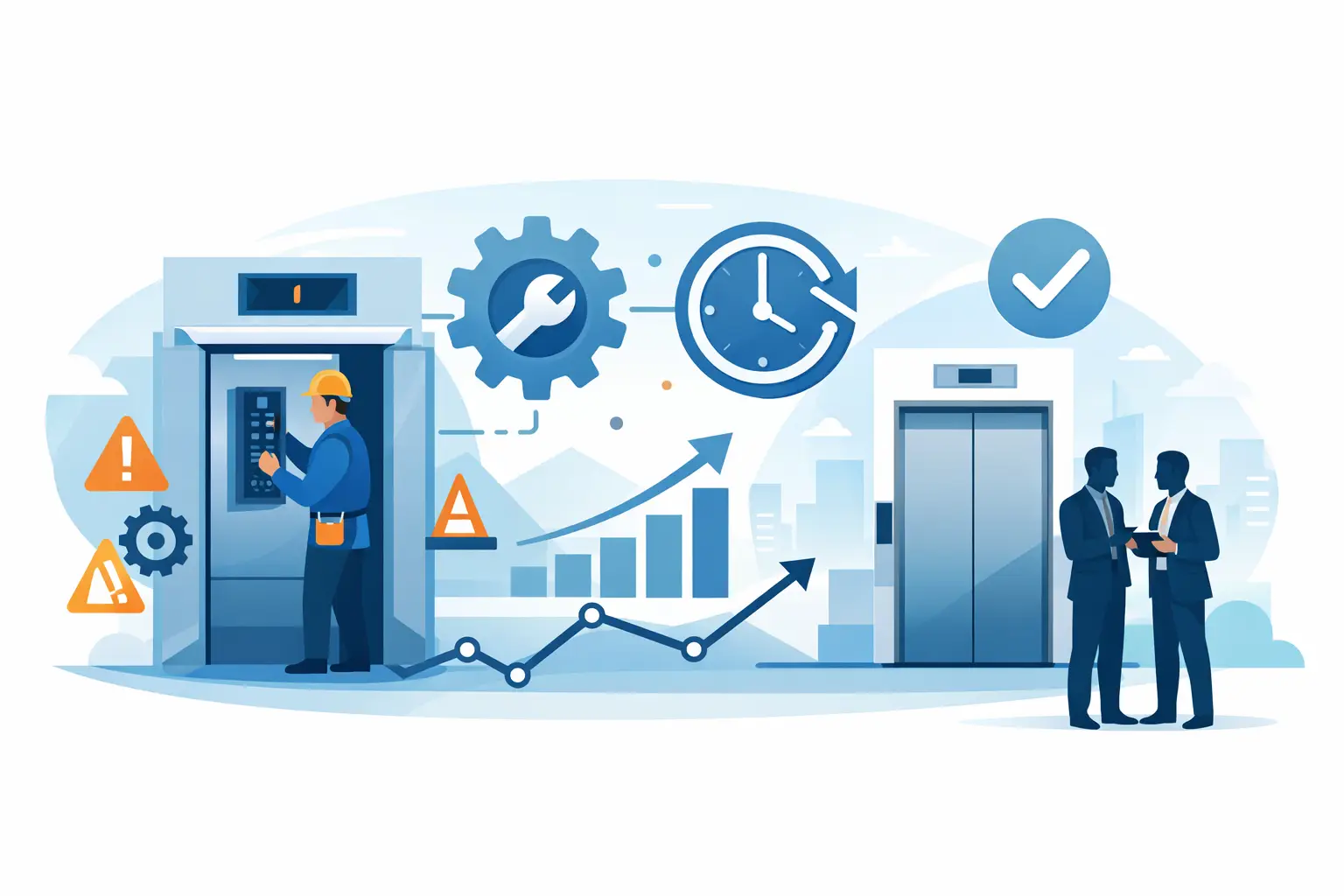
Lift Downtime Reduction Strategies That Work
A lift out of service does more than slow traffic through a building. It affects tenant satisfaction, accessibility, staffing, deliveries and, in some settings, patient care or resident wellbeing. That is why lift downtime reduction strategies matter well beyond maintenance budgets. For property owners and facility managers, the real goal is not just fixing faults quickly, but reducing how often faults happen in the first place.
The most effective approach starts with a simple shift in thinking. Downtime is rarely caused by one dramatic failure alone. More often, it builds from smaller issues that were missed, deferred or poorly diagnosed. Wear in door systems, inconsistent levelling, intermittent controller faults, damaged buttons, poor ride performance and ageing components can all become larger service interruptions if they are not addressed early.
Why lift downtime happens in the first place
Most lift downtime falls into one of three categories. The first is preventable wear and tear. Components such as door operators, rollers, locks, contacts and landing equipment are under constant use, particularly in commercial and multi-residential buildings. When service intervals are too far apart or checks are too superficial, these parts fail earlier than they should.
The second is age-related reliability decline. Older lifts often remain operational for years, but reliability usually drops before total failure occurs. Parts become harder to source, controls are less responsive, and recurring faults become more common. At that point, repeated call-outs can cost more in disruption than a planned modernisation.
The third is external or operational pressure. Power quality issues, water ingress, misuse, vandalism, overloaded cars and poor building conditions can all trigger avoidable shutdowns. In industrial and service environments, heavy usage patterns can also place stress on equipment that was not designed for the actual load cycle.
Understanding which category applies to your building is what separates reactive maintenance from a proper uptime strategy.
The most practical lift downtime reduction strategies
A dependable maintenance program is the foundation. That sounds obvious, but the detail matters. A scheduled visit only reduces downtime if it includes meaningful inspection, testing, adjustment and reporting. Tick-box servicing does not help much when the issue is an intermittent fault that has already shown warning signs.
The best maintenance plans are based on lift type, age, traffic volume and site conditions. A residential lift in a low-use environment does not need the same service structure as a hospital or retail centre. Matching the program to actual operating conditions helps identify wear earlier and avoids both over-servicing and under-servicing.
Fast fault response is equally important, but response alone is not enough. The quality of diagnosis determines whether a repair solves the issue or simply resets it until the next breakdown. Approved technicians who know the equipment, carry the right parts and understand the building’s service history are far more likely to deliver a lasting repair.
Communication also reduces downtime, especially in larger properties. When building managers report faults with clear detail such as floor location, time of occurrence, noise, levelling behaviour or door movement, technicians can narrow the likely cause faster. That shortens diagnosis time and often improves first-visit repair rates.
Preventive maintenance should be condition-based, not just calendar-based
Calendar intervals are useful, but they are only part of the picture. Lift downtime reduction strategies work better when maintenance also reflects usage patterns and equipment condition. A lift that carries heavy traffic during school hours, shift changes or shopping peaks may need more frequent door system checks than one with similar age but lower use.
Condition-based servicing focuses attention on components showing early signs of decline. That might include unusual motor noise, slowed door cycling, repeat nuisance faults, inconsistent stopping accuracy or control lag. These are the warning signs that often appear before a shutdown.
For building operators, this means reports should be more than a record of attendance. They should show what was inspected, what was adjusted, what is wearing out and what should be planned next. That visibility helps with budgeting and prevents urgent decisions under pressure.
Spare parts planning can save days, not hours
One of the most overlooked causes of extended downtime is parts availability. A straightforward repair can become a lengthy outage if a key component has to be sourced after failure, especially for older or less common equipment.
For critical buildings, it often makes sense to identify high-risk parts in advance. Door rollers, locks, contactors, relays, display components and common control items are all worth reviewing. The right spare parts strategy depends on the age of the lift, the risk profile of the building and the consequence of an outage.
There is a trade-off here. Holding stock ties up some cost, but for aged care, healthcare, commercial towers or sites with limited lift redundancy, the cost of waiting can be much higher. In those cases, planned parts availability supports continuity.
When repairs stop being the best answer
Not every recurring fault means a full replacement is needed, but repeated shutdowns are usually a sign that the current maintenance approach is no longer enough on its own. If the same issues keep returning, the question changes from “how do we repair this?” to “which part of the system is no longer reliable?”
Modernisation is often the most effective next step. Controls, door operators, signalling systems and safety components can usually be upgraded in stages, depending on the condition of the lift. That allows building owners to improve reliability without committing immediately to a full replacement.
This is where lift downtime reduction strategies need a lifecycle view. Spending modestly on repeated reactive repairs may feel cost-effective month to month, but over time it can create more disruption, more tenant complaints and more unpredictable spend. A planned upgrade can reduce call-outs, improve ride quality and extend the useful life of the asset.
For some older lifts, however, full replacement is the better long-term decision. If parts are obsolete, compliance upgrades are extensive, and the equipment no longer suits the building’s needs, replacement may provide stronger value than continued patchwork repair.
Building conditions have a direct impact on uptime
Lift performance is not just about the lift itself. Site conditions matter. Dust, heat, moisture, power instability and poor ventilation can shorten component life and trigger faults that appear mechanical but are actually environmental.
Machine rooms, shafts and pit areas should be kept clean, dry and accessible. Water ingress in particular is a major risk. Even minor moisture can affect electrical systems, door equipment and safety circuits. In some buildings, simple improvements to drainage, seals or housekeeping can remove the underlying cause of repeat shutdowns.
User behaviour also plays a role. Forced doors, overloaded goods lifts, trolley impacts and misuse of controls all contribute to avoidable wear. In busy commercial or industrial settings, signage and staff awareness can reduce damage without adding complexity.
Choosing a service partner that supports uptime
Not all lift service models are built for the same result. If your priority is uptime, look for a provider that combines maintenance, repair, modernisation and replacement capability. That broader service scope matters because downtime is not always solved by a call-out alone. Sometimes it requires a planned upgrade path, a design adjustment or a realistic replacement strategy.
Consistency also matters. Technicians who know the site, understand the asset history and can spot recurring patterns will usually identify problems earlier than someone attending the lift for the first time. For many property owners and managers, that continuity is what turns maintenance from a cost centre into an operational safeguard.
At Skyrise Elevators, this is why structured maintenance and responsive technical support sit alongside installation, repair and modernisation services. Buildings need more than emergency attendance. They need a partner who can help reduce breakdowns over the full life of the equipment.
What to review if your lift keeps going offline
If a lift in your building is experiencing repeat downtime, start with a practical review. Look at fault frequency, repeat call-out types, parts delays, service reports, age of equipment and how the lift is actually being used. A pattern usually emerges quickly. It may point to under-maintenance, ageing controls, heavy door wear, environmental factors or a mismatch between the lift design and site demands.
From there, the right response becomes clearer. In some cases, adjusting the maintenance plan and replacing a small group of worn components will stabilise performance. In others, the smarter move is to schedule a modernisation before another outage disrupts residents, tenants or operations.
Reliable lift service is not about waiting for the next problem and reacting faster. It is about reducing the chance of that problem happening at all. When downtime is treated as a measurable operational risk rather than an occasional inconvenience, better decisions follow – and buildings run the way they should.