


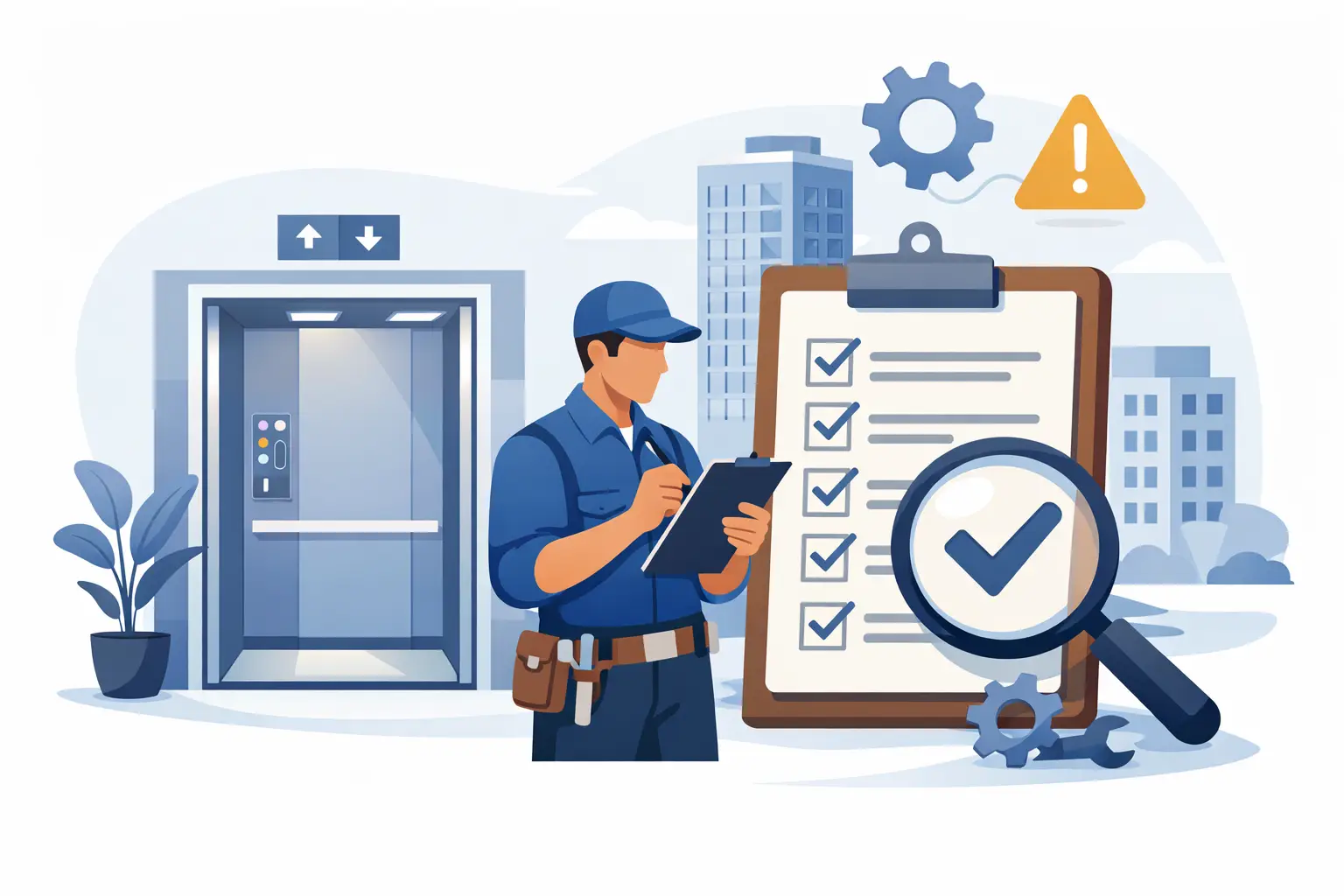
Lift Maintenance Audit Checklist for Buildings
A lift that stops unexpectedly does more than inconvenience tenants or staff. It affects safety, access, building operations and, in many cases, your reputation as the party responsible for keeping the site running. That is why a lift maintenance audit checklist matters. It gives property owners, facility managers and building operators a practical way to assess whether their current maintenance program is actually reducing risk and downtime.
For some buildings, an audit is driven by repeated breakdowns. For others, it follows a contract review, a compliance concern, or a change in building use. Either way, the point is not to create paperwork for its own sake. A useful audit helps you identify gaps in servicing, confirm what is being done well, and decide whether your lift maintenance approach is fit for the building you manage.
What a lift maintenance audit checklist should cover
A proper lift audit looks beyond whether the car is moving from one floor to the next. It should test the full maintenance picture – safety, reliability, compliance, record keeping and responsiveness.
That means reviewing the physical condition of the equipment, but also the quality of the maintenance regime behind it. A lift can appear operational while still carrying unresolved wear, poor documentation or avoidable service risks. In residential buildings that may show up as resident complaints and nuisance faults. In commercial, healthcare or aged care environments, the consequences can be more serious, particularly where vertical transport is tied to accessibility, patient movement or daily operations.
The checklist should also reflect the type of equipment on site. A home lift, goods lift and high-traffic commercial passenger lift do not face the same usage patterns. Audit standards should always account for age, load, traffic volume, building hours and the critical role the lift plays in that property.
Core areas to review in a lift maintenance audit checklist
1. Service records and maintenance frequency
Start with the maintenance history. If records are incomplete, inconsistent or hard to retrieve, that is already a warning sign. You should be able to verify service dates, technician attendance, completed works, fault history and any outstanding recommendations.
Check whether the service frequency matches the lift’s actual usage and risk profile. A lightly used residential lift may not need the same maintenance pattern as a busy retail or office building, but under-servicing any lift creates avoidable exposure. The key question is simple – is the maintenance schedule based on real operating conditions, or just the minimum pattern written into a contract years ago?
2. Condition of critical lift components
The audit should assess the condition of major mechanical and electrical components. That includes the door systems, landing doors, control equipment, drive system, levelling accuracy, safety circuits, communication systems and alarm functions.
Doors deserve particular attention because they account for a large share of service call-outs. If doors are slow, misaligned, noisy or frequently obstructed, that can point to wear, poor adjustment or a need for replacement parts. Small issues at this stage are often manageable. Left too long, they tend to become downtime events.
3. Safety systems and emergency readiness
A lift audit must confirm that core safety functions are being maintained and tested correctly. This includes emergency communication devices, alarm operation, door protection, lighting, backup features where fitted and any rescue procedures relevant to the equipment.
It is also worth reviewing how clearly emergency contacts, service response procedures and after-hours support arrangements are documented. In a real incident, confusion costs time. The best maintenance arrangements are not just technically sound. They are operationally clear for building staff and occupants as well.
4. Compliance and statutory obligations
Compliance is not always straightforward because obligations can vary depending on the building type, the lift type and local requirements. A checklist should confirm that inspections, testing, logbooks and certification requirements are being met and kept current.
This is one area where assumptions create problems. Many sites believe they are compliant because servicing is occurring, but servicing alone does not guarantee that every required inspection, report or record has been completed correctly. An audit helps separate routine maintenance activity from actual compliance performance.
5. Fault trends and recurring issues
One breakdown may be an isolated event. Repeated faults in the same system usually indicate an underlying issue that routine attendance has not resolved. Review call-out history over the past 12 to 24 months and look for patterns in entrapments, door faults, levelling issues, controller alarms or shutdowns.
This part of the audit is useful because it shows whether the maintenance provider is solving problems or merely resetting them. Frequent temporary fixes can make a contract look active while reliability continues to slide.
How to judge maintenance quality, not just activity
A common mistake in lift audits is to focus only on whether scheduled visits occurred. Attendance matters, but it is not enough. A lift can receive regular service and still be poorly maintained if inspections are rushed, defects are not escalated, or recommendations are delayed without reason.
Look at the quality of notes in the service records. Vague comments such as checked operation or tested unit do not tell you much. Better records identify component condition, fault cause, work completed and any further action required. Clear records give building owners and managers confidence that the maintenance team is paying attention to the actual condition of the equipment.
Response time is another important measure. Fast attendance sounds good, but if the same lift is failing again a week later, the service model may still be falling short. Good maintenance balances preventive work, technical capability and prompt support when faults do occur.
When an audit points to repair, modernisation or replacement
Not every issue uncovered in a lift maintenance audit checklist can be solved through routine servicing. Sometimes the maintenance team is doing the right work on ageing equipment that has simply reached the point where parts are unreliable, obsolete or uneconomical to keep patching.
That is where a practical audit becomes valuable. It helps you distinguish between poor maintenance and equipment at the end of its useful service life. The response may be a targeted repair, a component upgrade, or a broader modernisation program to improve reliability and safety.
For older buildings, modernisation can often reduce call-outs, improve passenger comfort and bring systems closer to current expectations without requiring full replacement. In other cases, especially where shutdowns are frequent or parts support is limited, replacement may be the more sensible long-term decision. It depends on the age of the unit, the operational demands of the site and the cost of continuing reactive repairs.
Who should use this checklist
This type of audit is useful for more than large commercial assets. Facility managers often use it to review contract performance and risk. Strata committees and residential building owners use it to understand whether repeated faults are normal wear or signs of a deeper maintenance issue. Developers and building owners may also use an audit before handover periods end, so any defects or servicing concerns are identified early.
For healthcare, aged care, education and industrial sites, the stakes are even higher because lift performance can directly affect access, workflow and safety. In those environments, an audit should be less about cost cutting and more about operational continuity. The cheapest maintenance arrangement is rarely the best one if it increases outages and disruption.
A practical lift maintenance audit checklist approach
The most effective approach is straightforward. Review records first, inspect the equipment condition second, then compare fault history against the current maintenance program. If those three areas do not align, there is usually a reason.
You should also ask whether the maintenance scope still suits the building as it stands today. Traffic volumes change. Tenancies change. Equipment ages. A maintenance contract that worked five years ago may no longer be adequate now.
For building owners and managers who want dependable outcomes, the goal is not to chase paperwork or over-service equipment. It is to make sure lifts are safe, compliant and available when people need them. That calls for clear records, capable technicians and a service plan built around the actual demands of the site.
If your current performance leaves too many questions unanswered, a structured review is the sensible next step. Skyrise Elevators works with residential, commercial and specialised building environments where lift reliability is not optional. A well-run audit does not just tell you what is wrong. It gives you a clear path to safer operation, better uptime and fewer surprises.