


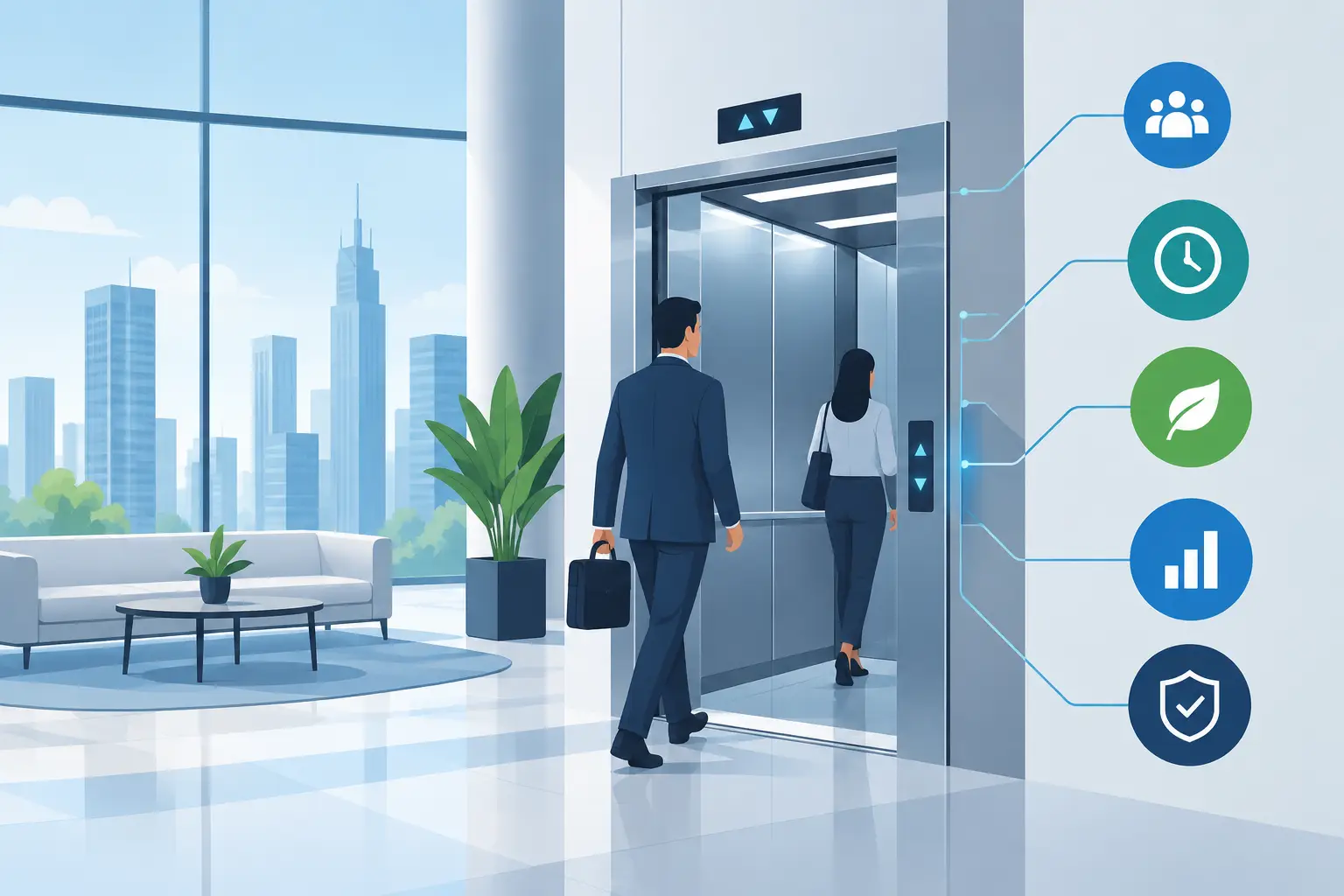
How Smart Elevators Improve Building Performance
A lift that repeatedly stops at every floor, develops faults without warning, or leaves occupants waiting at peak times creates a building problem, not simply an equipment problem. Smart lifts use connected controls, sensors and data to help property owners manage lift performance more proactively. For Australian buildings, the value is practical: safer operation, better passenger flow, reduced energy use and clearer maintenance decisions.
What makes a lift smart?
Smart lifts are lift systems that collect, share and respond to operational information. Rather than relying only on scheduled inspections or reports from passengers, the system can monitor selected components and operating patterns in real time or at regular intervals.
The exact features vary by lift type, age and manufacturer. A modern installation may include destination control, touchless calling, access-control integration, remote monitoring and predictive maintenance tools. A modernised existing lift may gain only a connected controller or condition-monitoring sensors. Both can be useful, provided the upgrade solves a genuine building need.
The purpose is not to replace qualified technicians with software. It is to give building managers and lift service providers better information before a small issue becomes a shutdown. Mechanical wear, door faults, unusual travel times and recurring error codes can be identified earlier, allowing maintenance to be planned with less disruption.
How smart elevators improve daily building operations
For a busy commercial office, a hospital, an aged care facility or a mixed-use development, lift performance has a direct effect on how people experience the property. Smart technology can improve that experience in several ways.
Better passenger flow at busy times
Destination dispatch is one of the most visible smart lift features. Instead of pressing an up or down button inside the lift car, users select their destination before entering. The system groups passengers travelling to similar floors and assigns them to a particular car.
This can reduce unnecessary stops and improve handling capacity during morning arrivals, lunch periods and end-of-day departures. It is particularly valuable where there are multiple lift cars and predictable traffic patterns. In a low-rise building with one car and modest daily use, however, destination control may add cost without delivering a meaningful return.
Access systems can also work with lift controls. Staff, residents or authorised visitors may be directed only to permitted floors using a fob, card, mobile credential or reception-issued access pass. This supports security while reducing the need for occupants to navigate multiple systems.
Earlier visibility of developing faults
Traditional maintenance remains essential, but condition data can make it more targeted. Smart monitoring may track door cycles, levelling accuracy, motor performance, fault frequency, travel time and controller alerts. A repeated issue with a door operator, for example, can be investigated before it becomes the reason for an out-of-service lift.
Remote diagnostics can also help a technician arrive with a clearer understanding of the fault and appropriate parts where possible. That does not mean every issue can be repaired remotely. Physical inspection is still required for many mechanical, safety and electrical concerns. The advantage is better preparation and, in some cases, less downtime.
More efficient energy use
Lifts consume different amounts of power depending on their drive system, traffic levels and operating settings. Smart controls can place cars into an appropriate standby mode when demand is low, manage lighting and ventilation more efficiently, and provide data that highlights unnecessary energy use.
The savings will depend on the existing equipment. An older hydraulic lift with high usage may benefit from a broader modernisation, while a relatively recent traction lift may only need settings reviewed or selected control upgrades. Energy performance should be assessed as part of the full lifecycle cost, not treated as a standalone promise.
Clearer decisions for facilities teams
Facility managers are often asked to explain why a lift needs attention before passengers notice a problem. Operating data can support those conversations. It may show that faults are increasing, components are reaching the end of their service life, or peak-time demand is exceeding the capacity of the current lift group.
This helps move planning away from emergency repairs and towards scheduled work. A planned modernisation can be staged around building operations, tenant requirements and budget cycles. An unplanned breakdown rarely offers that flexibility.
Smart lift upgrades are not one-size-fits-all
The best approach depends on the building, the lift’s age, the current control system and how occupants use it. New developments can incorporate smart lift features into the design from the start. Existing properties need a more careful assessment of what is compatible and worthwhile.
A controller upgrade may be enough where the lift’s core mechanical components remain in good condition. If the drive, doors, wiring, car fixtures and safety components are all ageing, a partial upgrade may simply defer a larger project. In that situation, a full modernisation or replacement can provide better long-term value and reduce repeated disruption.
Residential buildings usually prioritise reliability, accessibility, security and reasonable running costs. Commercial properties may focus more heavily on traffic management, tenant experience and uptime. Healthcare and aged care settings require particular attention to accessibility, stretcher or bed movement, service continuity and safe operation. Industrial sites may need systems suited to goods movement, heavier loads and more demanding environments.
A site inspection should consider more than the lift car. The machine room or control space, shaft condition, electrical supply, communications, emergency systems and compliance requirements all influence the available options.
Safety and cybersecurity need equal attention
Connected lift technology should strengthen safety management, not introduce uncertainty. Any work must preserve required safety functions and be undertaken by approved, competent technicians. Monitoring data may help detect concerns earlier, but it does not remove the need for structured maintenance, testing and timely repairs.
Cybersecurity also deserves attention when lifts connect to building networks or remote service platforms. Property owners should understand who can access the system, what information is collected, how remote access is controlled and what support is available if connectivity fails. Access should be limited to authorised users, managed through appropriate credentials and reviewed as building personnel change.
It is also sensible to confirm what happens during a network outage. A lift must continue to operate safely according to its design and applicable requirements, rather than relying on an internet connection for normal operation. Smart functions should complement the lift’s core systems, not become a single point of failure.
Planning a smart lift project
A successful project begins with the problem the building needs to solve. Long wait times, recurring door faults, energy concerns, access control gaps and an ageing controller each point to different solutions. Buying features without a clear operational purpose can add complexity without improving the experience for occupants or the facilities team.
Start by reviewing service history, fault trends, peak traffic periods and feedback from users. Then assess the lift’s condition and the compatibility of its existing equipment. This provides a sound basis for deciding whether targeted upgrades, a staged modernisation or full replacement is the most sensible path.
The implementation plan matters as much as the technology. Buildings need clear communication, realistic outage windows and contingency arrangements where lifts are essential for accessibility or daily operations. For multi-car groups, work can often be sequenced to retain available lift service where conditions allow.
Skyrise Elevators can assess existing lift performance and advise on practical modernisation, maintenance and replacement options that suit the building’s use, budget and long-term operating requirements.
Smart lifts deliver their best results when they are matched to a well-maintained lift system and a clear operational need. The right upgrade gives owners better visibility, gives occupants a more dependable journey and gives facilities teams more control over the decisions that keep a building moving.